Clear Sky Science · en
Rheological modulation and drug delivery efficiency of carbon nanotube-integrated guar gum hydrogels
Why a Smarter Bandage Matters
Imagine a bandage that doesn’t just cover a wound but quietly delivers antibiotics at a steady, reliable pace for hours, without needing to be changed or refilled. That is the promise of this research. The authors worked with a naturally derived gel made from guar gum—a common plant-based thickener used in foods—and strengthened it using tiny carbon nanotubes. By tuning the material’s inner structure, they were able to slow down and smooth out the release of an antibiotic, turning a simple gel into a more intelligent drug delivery platform.
From Kitchen Thickener to Medical Gel
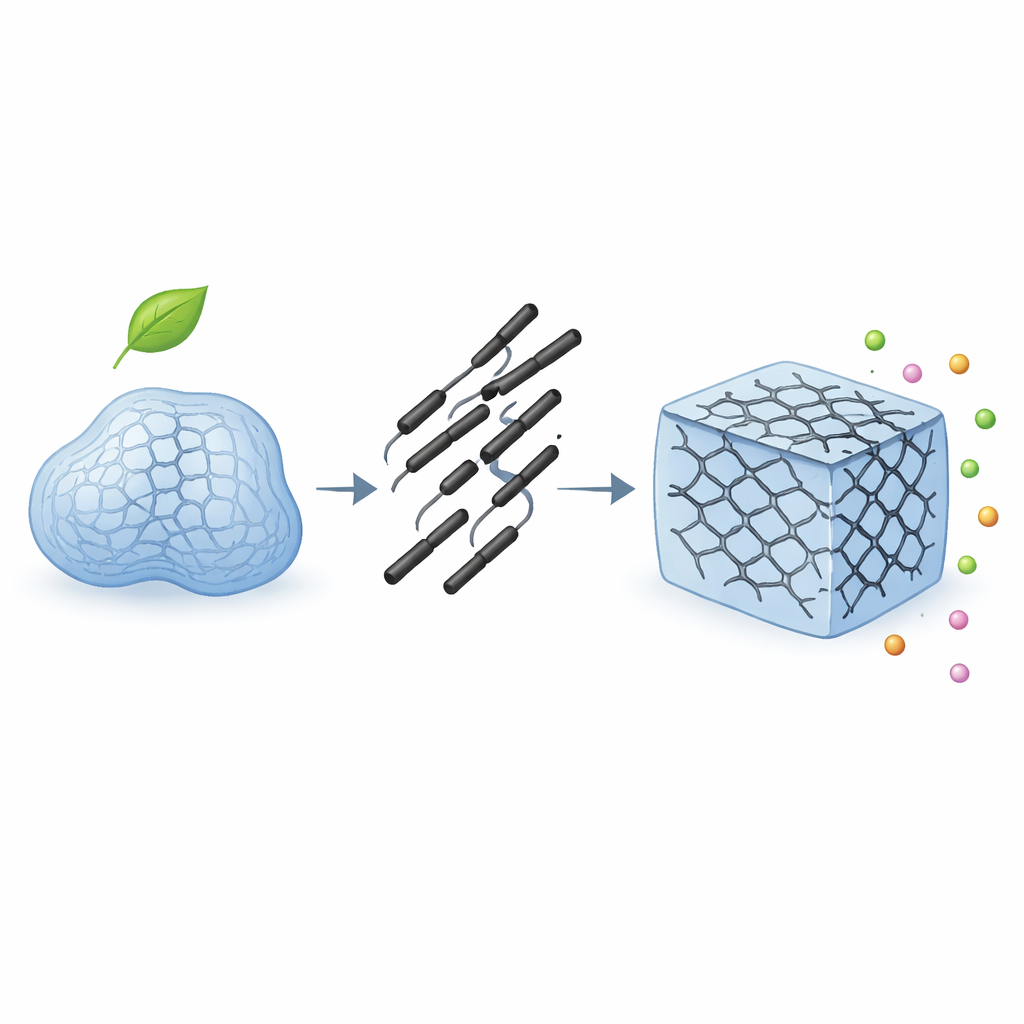
Guar gum comes from the seeds of a bean-like plant and is widely used to thicken sauces and ice cream. In medicine, the same property allows guar gum to form soft, water-rich gels, called hydrogels, that can hold and release drugs. These gels are gentle on the body and can soak up large amounts of fluid, which makes them attractive for wound dressings and localized therapies. However, in their plain form they are mechanically weak and tend to let most of the drug escape too quickly—a “burst release” that shortens treatment time and can waste medicine. The challenge is to make the gel tougher and more controlled without sacrificing its natural advantages.
Reinforcing the Gel with Tiny Tubes
To solve this, the researchers mixed very small amounts of multi-walled carbon nanotubes into the guar gum gel. These nanotubes are extremely thin, hollow cylinders made of carbon, known for their strength and stiffness. When dispersed in water and then combined with hot guar gum solution, they become threaded through the gel’s three-dimensional network. Subtle attractions between the tubes and the polymer chains act like extra physical ties, tightening and reinforcing the structure. Measurements of the gel’s response to gentle deformation showed that its “spring-like” behavior increased by more than tenfold at only 0.2 percent nanotube content, indicating a far more stable and solid-like network that can resist breaking apart.
How Structure Controls Swelling and Water Uptake
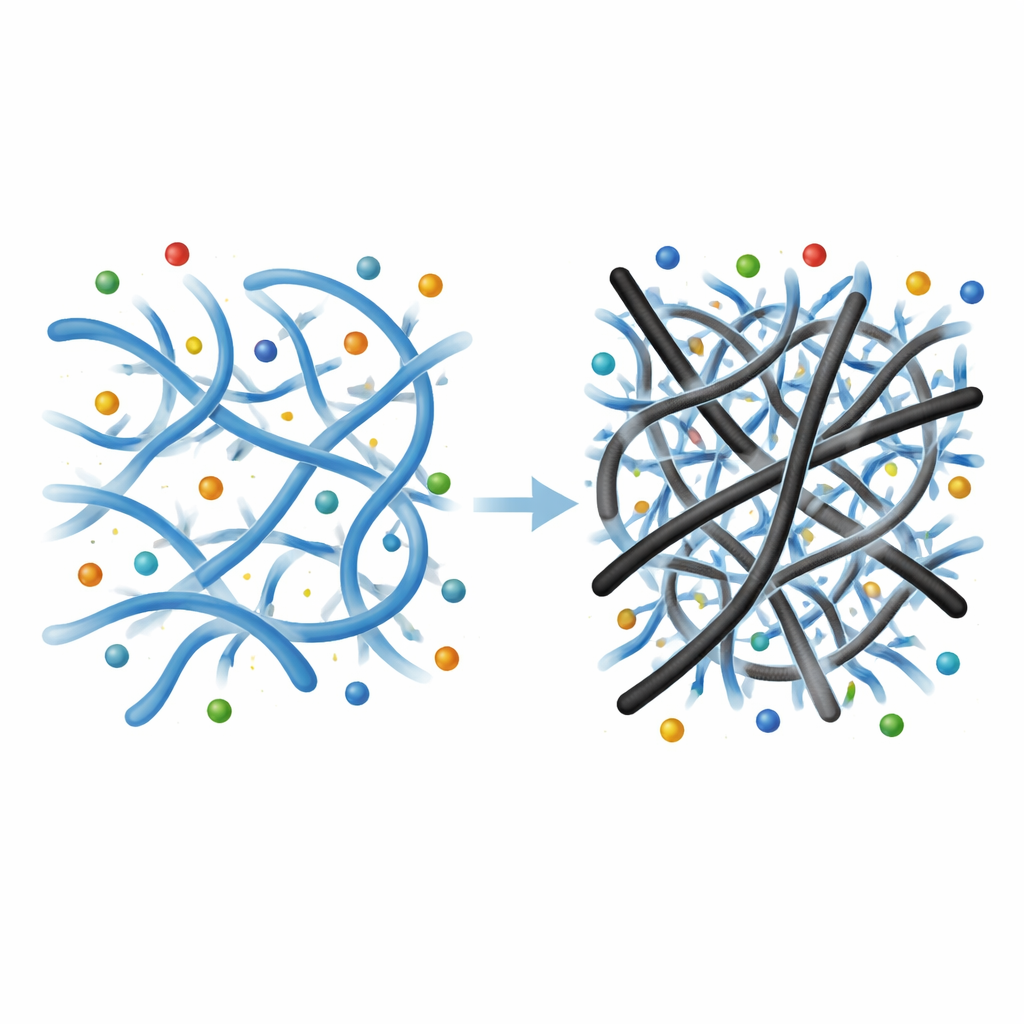
The way the gel swells in water is crucial because swelling opens up channels that drugs use to escape. The team examined how much water the reinforced gels absorbed under acidic, neutral, and basic conditions. All samples swelled quickly at first, then slowed as they approached a stable size. Gels with fewer nanotubes swelled more—over ten times their dry weight in acidic conditions—while those with more nanotubes swelled less. This behavior shows that adding nanotubes packs the network more tightly, leaving less empty space for water. Even so, the gels remained highly hydrated and stable, meaning they can stay intact and moist in different body-like environments while offering finer control over how quickly substances move through them.
Smoothing Out the Drug Release
To test real-world performance, the researchers loaded the hydrogels with the antibiotic levofloxacin and monitored how it left the gel over time in a salt solution similar to bodily fluids. A weaker, lightly reinforced gel released around 90 percent of the drug within about 6 to 8 hours, resembling a quick burst. In contrast, a gel with higher nanotube content released a similar total amount—about 96 to 97 percent—but stretched this process over roughly 28 hours, with a much more linear, steady pattern. The denser network and the presence of nanotubes force the drug molecules to follow more winding, obstacle-filled paths, slowing their escape without trapping them permanently. This combination of strength and controlled release makes the material particularly promising for long-lasting antibiotic therapies.
What This Could Mean for Future Treatments
In simple terms, this work shows how blending a familiar plant-based thickener with a tiny amount of advanced carbon material can turn a fragile, fast-releasing gel into a sturdy, slow-and-steady drug depot. The reinforced guar gum hydrogels hold their shape, take up water in a controlled way, and release medicine over many hours instead of all at once. While further studies are needed to confirm long-term safety and performance in living systems, the approach points toward smarter bandages, injectable depots, and localized treatments that deliver the right dose over the right time using minimal amounts of nanomaterial.
Citation: Sharma, S., Mulwani, P. Rheological modulation and drug delivery efficiency of carbon nanotube-integrated guar gum hydrogels. Sci Rep 16, 9298 (2026). https://doi.org/10.1038/s41598-026-39858-w
Keywords: hydrogel drug delivery, guar gum, carbon nanotubes, controlled release, antibiotic delivery