Clear Sky Science · en
Comparative outcomes of Toumai robotic and laparoscopic transabdominal preperitoneal inguinal hernia repair in a retrospective cohort
Why this matters for everyday surgery
Groin (inguinal) hernias are one of the most common reasons people need surgery, often causing pain, a bulge in the groin, and limits on daily activity. As operating rooms adopt new robotic tools, patients and hospitals face a practical question: do these expensive machines actually help people recover better than standard keyhole surgery? This study from a Chinese hospital takes a close look at a home‑grown surgical robot, called the Toumai system, and compares its performance with conventional laparoscopy in routine hernia repair.
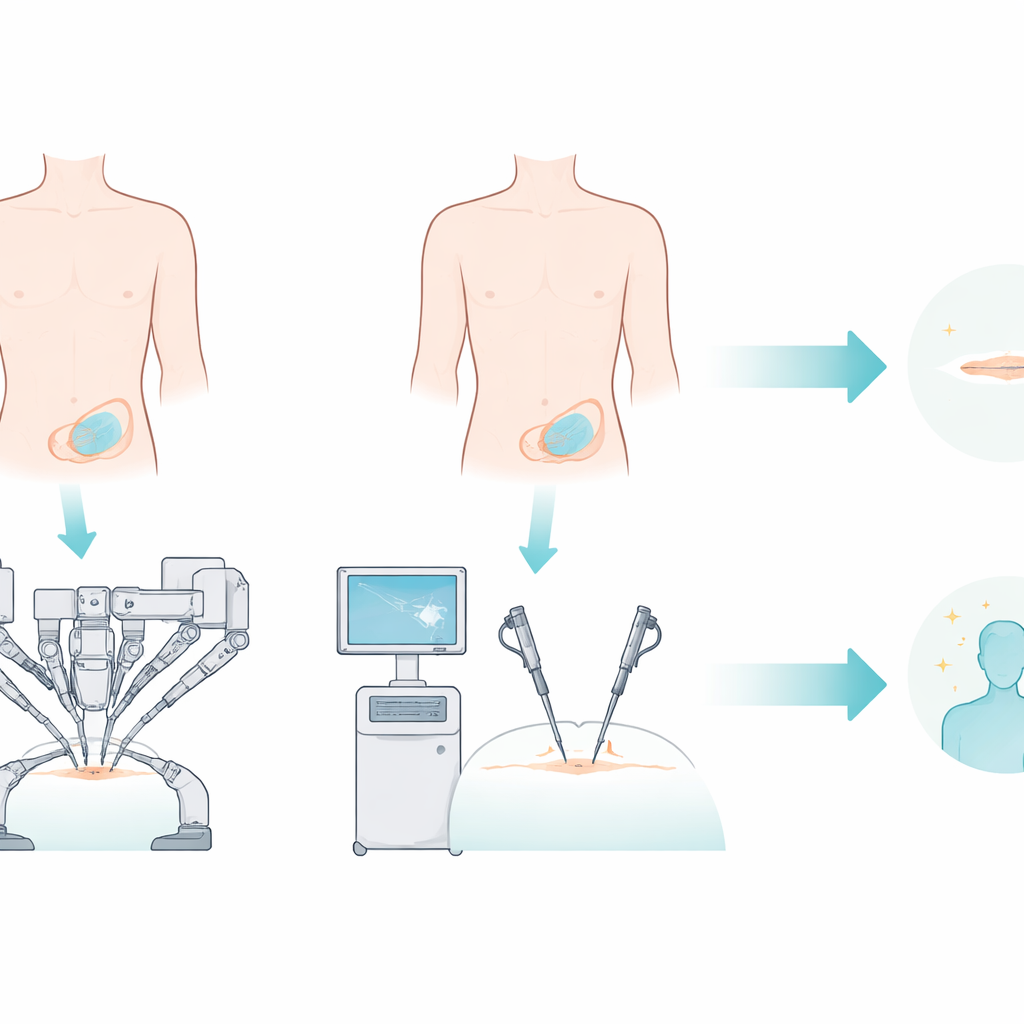
Two modern ways to fix a groin bulge
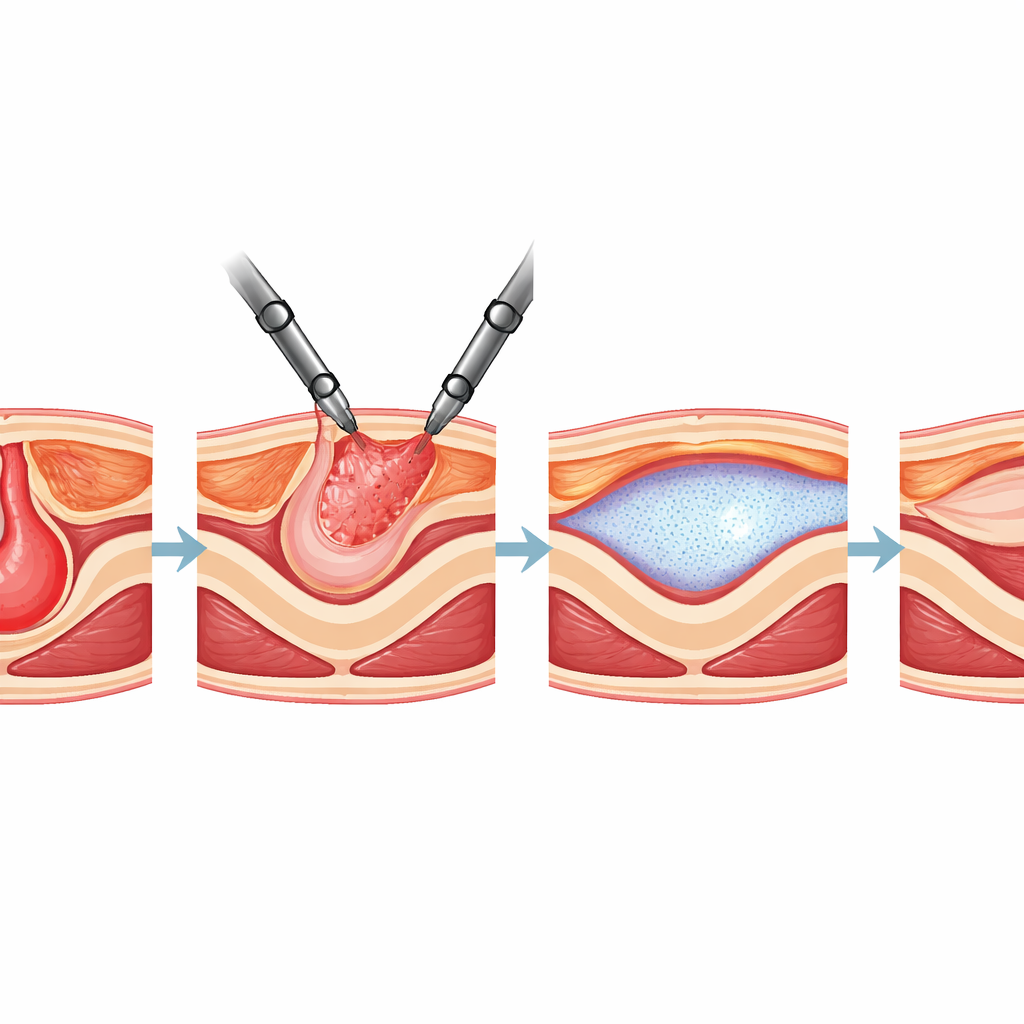
Both techniques studied are minimally invasive. Surgeons repair the hernia by placing a mesh inside the lower abdomen through small incisions, using a camera and long instruments. In standard laparoscopic surgery, the surgeon stands by the patient and directly manipulates rigid tools while viewing the operation on a flat screen. With the Toumai robot, the surgeon instead sits at a console, looking into a three‑dimensional display and guiding robotic arms that move inside the patient. The robot offers a steady, magnified view and wrist‑like joints at the instrument tips, designed to make delicate work easier and more precise.
How the study was set up
The researchers reviewed the records of 50 adults who underwent inguinal hernia repair at Gansu Provincial Hospital between early 2022 and late 2023. Sixteen people had surgery with the Toumai robot and 34 had standard laparoscopy; all operations used the same general approach through the abdominal cavity. The two groups were similar in age, sex, body weight, and type of hernia, which helps make the comparisons fair. The team tracked several aspects of care: time in the operating room, blood loss, length of hospital stay, level of pain after surgery, mental workload reported by the surgeons, and how well the wounds healed and whether hernias came back.
What the robot changed
The Toumai procedures took longer—about 104 minutes on average compared with 90 minutes for laparoscopy—partly because setting up and docking the robot adds extra steps. Yet the robot group bled less during surgery, stayed in the hospital for a slightly shorter time, and reported lower pain scores afterward. Surgeons themselves also felt less mentally strained, as measured by a standardized workload scale, suggesting that the three‑dimensional view, steadier instruments, and ergonomic console make demanding tasks easier to perform and sustain. Importantly, no serious complications occurred in either group, and the short‑term rates of hernia recurrence and wound problems were low and similar overall, though minor wound issues and pain were somewhat less common after robotic surgery.
Benefits, trade‑offs, and limits
The authors argue that even small improvements per patient—less bleeding, milder pain, and slightly shorter hospital stays—can add up in busy hospitals and for people with higher surgical risks. They also highlight practical advantages for surgeons: the robot’s flexible arms reduce collisions between instruments, the stable magnified view helps avoid injury to structures like blood vessels, and the system seems easier to learn for newcomers than traditional laparoscopy. At the same time, they stress that robotic surgery has downsides. Toumai, though cheaper than imported systems, still costs far more than standard laparoscopy, which may limit its use in smaller hospitals. Like other robots, it also lacks “feel” in the hands; surgeons must rely on vision and experience rather than touch to judge tissue resistance, which can pose challenges during training.
What this means for patients
For people facing repair of a groin hernia, this single‑center study suggests that Toumai robotic surgery is at least as safe as conventional keyhole surgery and may offer gentler recovery—at the price of a longer operation and higher equipment costs. The results are encouraging for the future of locally developed surgical robots in China, but the authors caution that their sample is small and follow‑up short. Larger, multi‑hospital studies using long‑term data will be needed to confirm whether robotic hernia repair consistently delivers better outcomes and justifies its extra expense. For now, both methods remain sound options, with robotic systems showing promise as a more precise but costlier tool in the surgical toolbox.
Citation: Wang, Y., Guo, C., Zhang, M. et al. Comparative outcomes of Toumai robotic and laparoscopic transabdominal preperitoneal inguinal hernia repair in a retrospective cohort. Sci Rep 16, 9124 (2026). https://doi.org/10.1038/s41598-026-39829-1
Keywords: inguinal hernia, robotic surgery, laparoscopic repair, Toumai surgical robot, minimally invasive surgery