Clear Sky Science · en
Probiotic intervention not beneficial to prevent antibiotic-associated diarrhea in absence of antibiotic-induced microbiome disruption
Why this study matters for families
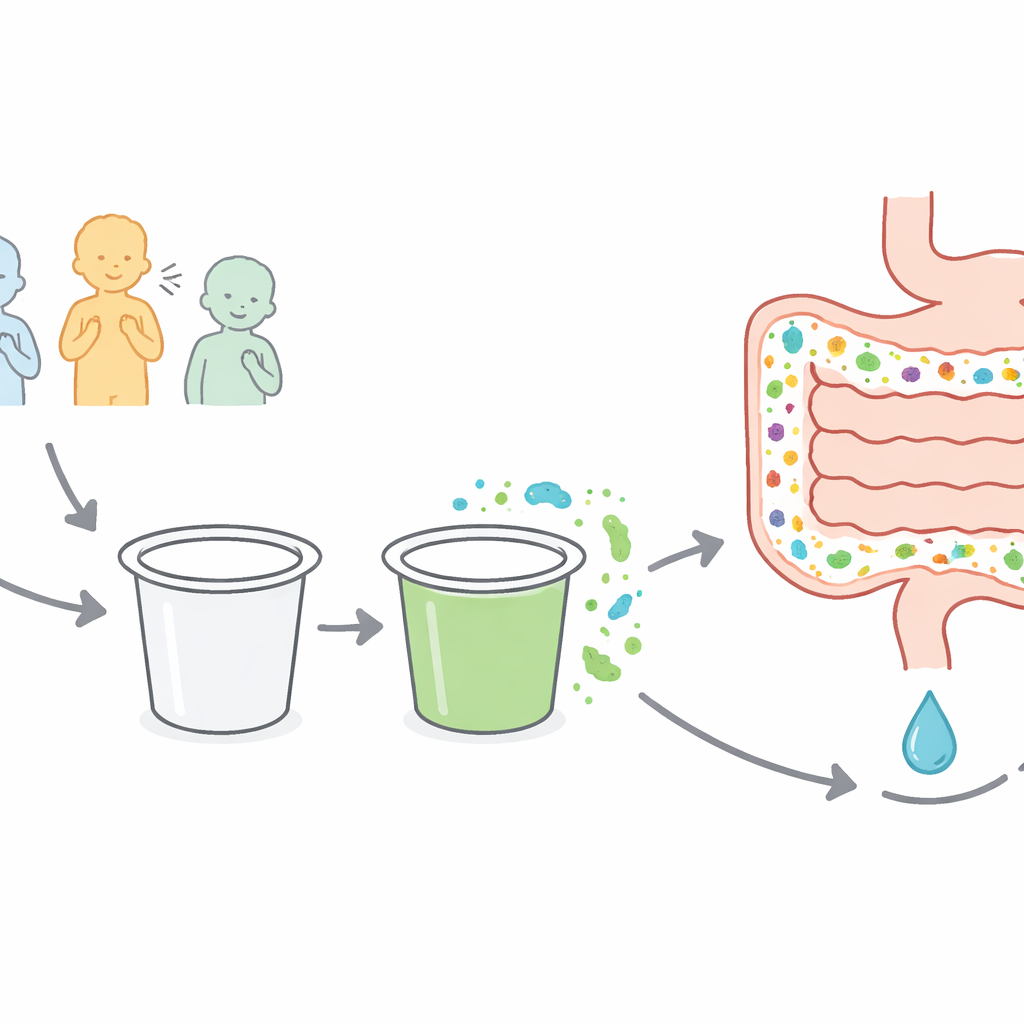
Parents are often told to give their children probiotic yogurt or supplements whenever antibiotics are prescribed, in hopes of preventing uncomfortable diarrhea. This large community study in school-aged children asks a simple but important question: do probiotics actually help in this situation, especially when the antibiotic itself is fairly gentle on the gut? The answer has real implications for what families buy, what doctors recommend, and how we think about protecting children’s “good bacteria.”
The everyday problem of antibiotic side effects
Antibiotics can save lives, but they can also upset the balance of microbes living in our intestines, sometimes leading to loose stools or full-blown diarrhea. Earlier research and popular advice have suggested that certain probiotic strains can lower the risk of this “antibiotic-associated diarrhea.” The strain tested here, called BB-12, is one of the most widely used in yogurts and supplements around the world. The PLAY-ON study set out to test, under real-world conditions, whether giving children BB-12–enriched yogurt alongside their prescribed antibiotic would actually prevent diarrhea and noticeably protect the gut community of microbes.
How the study was set up in real clinics
The researchers enrolled 255 healthy children aged 3 to 12 who visited community clinics with common upper respiratory infections such as sinusitis or strep throat. Their own clinicians chose the antibiotic, usually a short course of amoxicillin or another penicillin-type drug, along with dose and duration. The children were randomly assigned, in a double-blind fashion, to receive either a daily 4-ounce serving of regular yogurt or yogurt containing a high dose of the BB-12 probiotic. Families kept daily diaries about stool consistency and any symptoms, while stool samples were collected over a month to track changes in the gut microbes and the presence of antibiotic resistance genes.
What happened: very little diarrhea, little room for benefit
Contrary to expectations from earlier reports that 20–35% of children on antibiotics develop diarrhea, only about 2% of children in this study did so, and rates were virtually identical in the probiotic and control yogurt groups. Even when the researchers used looser definitions, such as any loose stool, there was still no meaningful difference between groups. Adverse events such as constipation, rash, or cough were also similar. A key clue came from looking at which antibiotics were used: nearly three-quarters of the children received narrow-spectrum drugs like amoxicillin, and these children had extremely low diarrhea rates. Those given broader-spectrum drugs such as amoxicillin–clavulanate had a higher diarrhea rate, but they were a small minority of the participants.
Peeking inside the gut microbe community
Using two kinds of DNA sequencing, the team followed how the children’s gut microbes changed over time. Both yogurt groups showed a modest drop in microbial diversity about a week into antibiotic treatment, followed by a return to baseline by day 14 and stability through day 30. The overall mix of major microbial groups shifted only slightly and similarly in both groups, with no large or lasting disturbances. The children who consumed BB-12 did show a temporary rise in that specific species, confirming that the probiotic bacteria reached the gut, but this did not translate into clear advantages in diversity or composition. The researchers also tracked genes that can give bacteria resistance to antibiotics and found that their levels fluctuated during treatment but did not differ between probiotic and control groups.
What this means for choosing antibiotics and probiotics
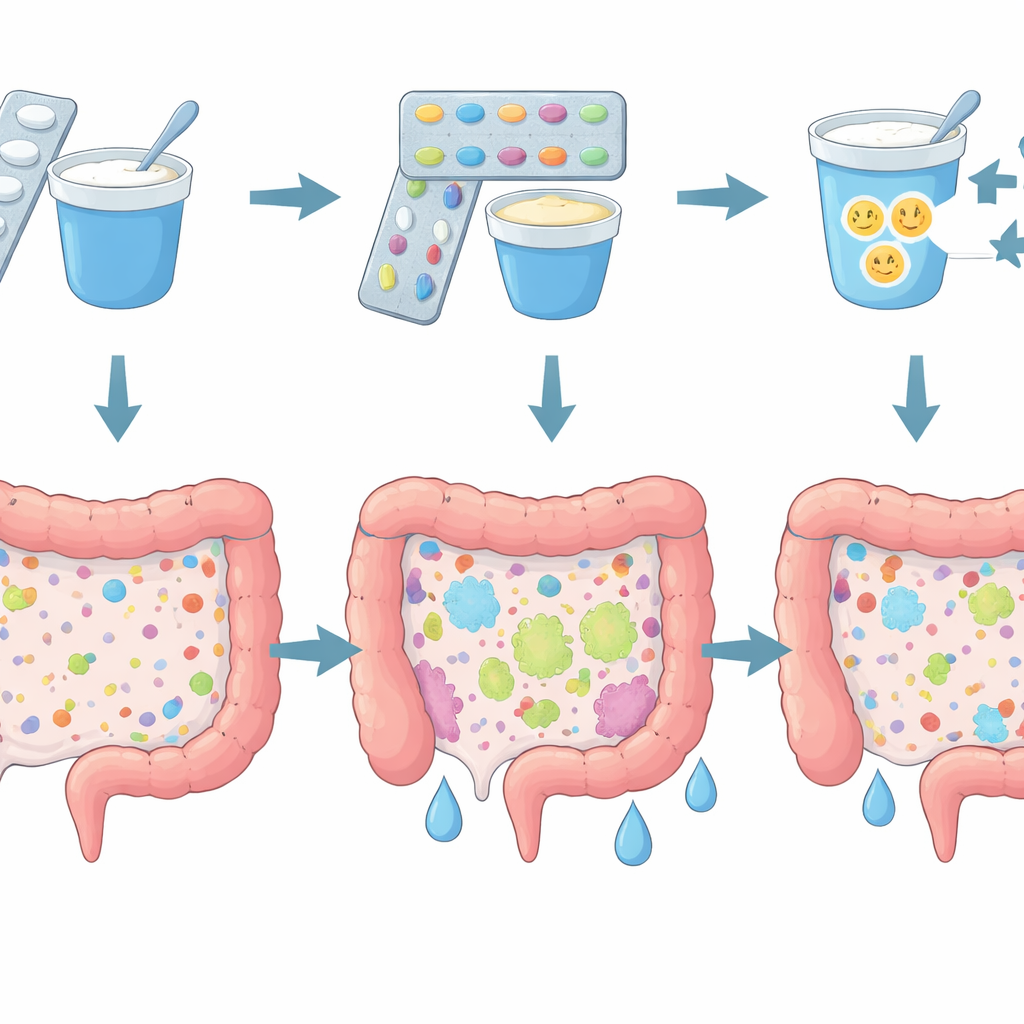
The study’s bottom line is that when a short course of a narrow-spectrum antibiotic causes little disruption to a child’s gut microbes, adding a probiotic yogurt with BB-12 does not measurably reduce diarrhea or change the microbiome in a helpful way. In other words, if the antibiotic itself is gentle, there may be no real problem for the probiotic to solve. The findings highlight a different lever for protecting children’s gut health: thoughtful antibiotic prescribing. Opting for the least disruptive effective antibiotic, and limiting treatment to the shortest reasonable duration, can keep the gut community stable and make extra probiotic interventions largely unnecessary in many routine cases.
Citation: Merenstein, D., Grant-Beurmann, S., Sanders, M.E. et al. Probiotic intervention not beneficial to prevent antibiotic-associated diarrhea in absence of antibiotic-induced microbiome disruption. Sci Rep 16, 9301 (2026). https://doi.org/10.1038/s41598-026-39826-4
Keywords: pediatric antibiotics, probiotics, gut microbiome, antibiotic-associated diarrhea, narrow-spectrum antibiotics