Clear Sky Science · en
Sex specific ocular parameter trajectories during low intensity red light exposure in myopic adolescents in Liaoning China
Why shining red light in the eyes matters
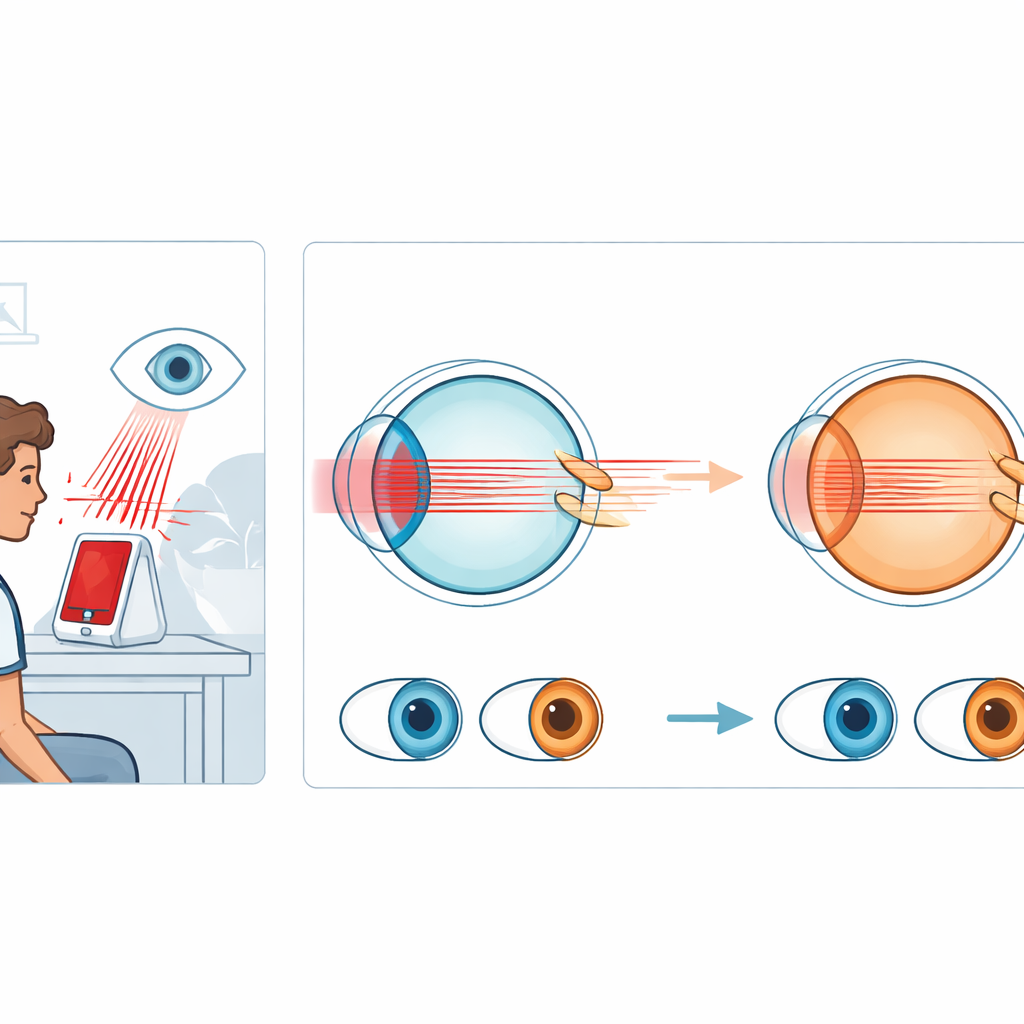
More and more children around the world are becoming nearsighted, meaning they see nearby objects clearly but distant ones are blurry. Families and doctors are searching for safe ways to slow this trend. One newer idea is to regularly expose the eyes to a gentle beam of red light using a small device at home. This study followed boys and girls in northeastern China for a year while they used such a device, to see how their eyes changed over time and whether those changes looked different between the sexes.
Following young eyes over a full year
Researchers in Liaoning Province enrolled 180 school‑age children and teenagers, half boys and half girls, all of whom already had nearsightedness. Instead of comparing them to a separate untreated group, the team simply watched what happened as everyone used a low‑intensity red light device twice a day for one year. Each session lasted three minutes, both eyes were treated at once, and the children also wore regular glasses to correct their vision. Eye exams at the start and at four follow‑up visits measured how long each eye was from front to back, how strong the glasses prescription needed to be, and how clearly the children could see the eye chart without their glasses.
What changed in vision and eye size
Over twelve months, the children’s eyes continued to grow, as would be expected during these ages. The length of the eyeball—the key feature linked to worsening nearsightedness—increased in both boys and girls. At the same time, the strength of their nearsighted prescriptions shifted slightly in the direction of less blur, and their ability to read letters without glasses improved. These shifts may sound encouraging, but because there was no comparison group of similar children who did not use the red light, the study cannot say whether the device helped, hurt, or simply made no difference compared with normal growth.
Boys and girls: more alike than different
From the outset, boys tended to have slightly longer eyes and somewhat stronger nearsightedness than girls, which matches patterns seen in other research. As the year went on, however, the amount of extra growth in eye length was almost the same between the sexes—the difference was only a hundredth of a millimeter, too small to matter in everyday life. The main contrast was in how quickly unaided vision seemed to improve: girls showed gains as early as the first month, while boys improved a bit later. Some internal eye measurements, like the thickness of the lens and the clear gel filling the eye, also shifted modestly, but these changes were small and followed similar paths in boys and girls.
Safety notes and unanswered questions
No serious safety problems were reported during the year of twice‑daily red light exposure. Eye pressure and the shape of the front of the eye stayed broadly stable, and any sex‑related differences were minor. Even so, the study design leaves many questions open. All participants chose this therapy instead of being randomly assigned, and everyone who stayed in the study used the device very regularly, which may not reflect everyday use. Other possible influences—like how much time each child spent outdoors, how closely they held their books or screens, and how often their glasses were updated—were not controlled.
What this means for families and future studies
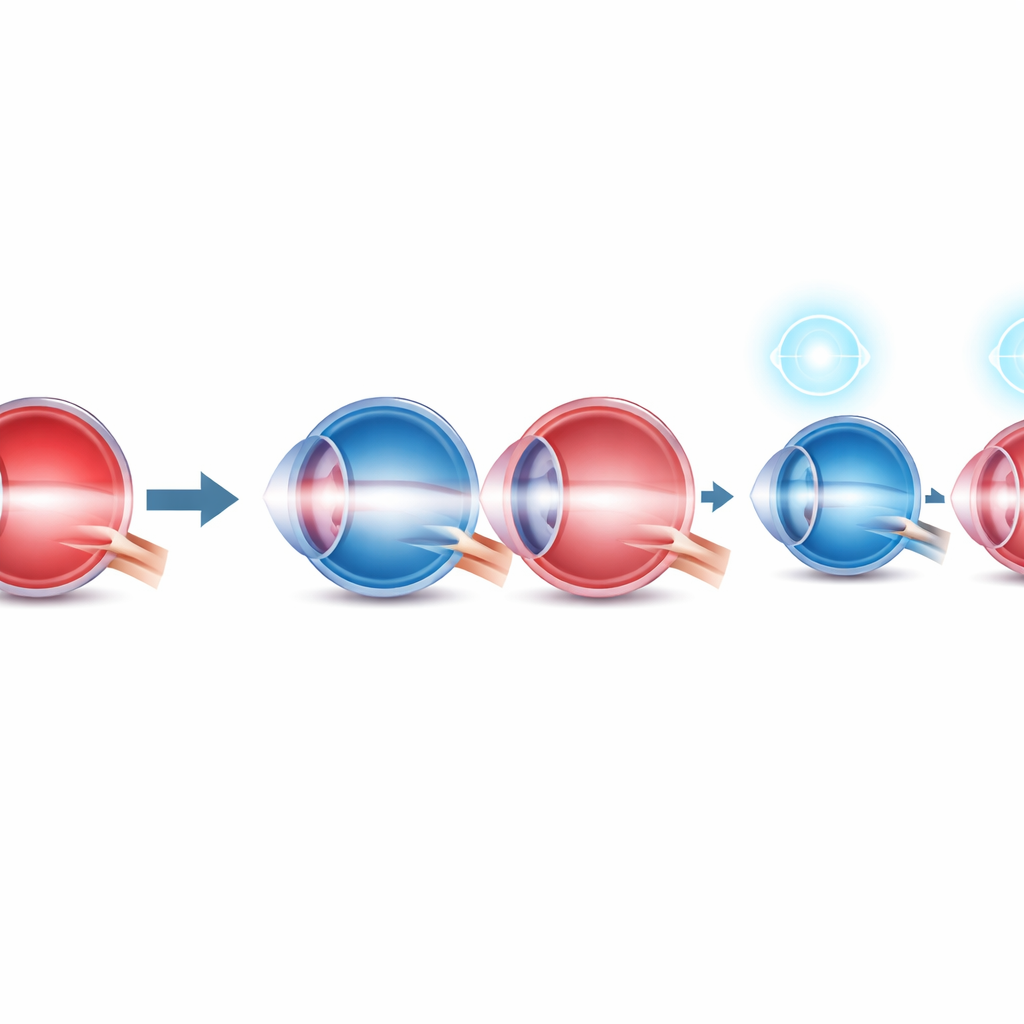
For parents weighing new treatments, the main lesson is one of caution. This work offers a careful description of how boys’ and girls’ eyes changed during a year in which they used low‑intensity red light, but it does not prove that the light itself improved or slowed their nearsightedness. The similarities in eye growth between the sexes suggest that, at least in this group, red light exposure did not create large male–female differences. The authors emphasize that their results are meant to generate ideas, not to guide clinical decisions. They call for future studies that randomly compare children using red light with those receiving other standard care, and that track additional features inside the eye. Only with such well‑controlled research can families and doctors know whether this promising‑sounding approach truly helps protect children’s sight.
Citation: Ren, K., Liu, Y., Li, X. et al. Sex specific ocular parameter trajectories during low intensity red light exposure in myopic adolescents in Liaoning China. Sci Rep 16, 9248 (2026). https://doi.org/10.1038/s41598-026-39824-6
Keywords: myopia, red light therapy, adolescent eye health, sex differences, photobiomodulation