Clear Sky Science · en
Age-related cerebello-thalamo-cortical white matter degradation and executive function performance across the lifespan
Why this matters for everyday thinking
As we grow older, many of us notice changes in planning, multitasking, or staying focused—abilities often grouped under “executive functions.” This study asks a simple but important question: are age-related changes in how different brain regions are wired together partly to blame? In particular, the researchers zoom in on a communication highway that links a movement-related structure at the back of the brain, the cerebellum, with thinking areas in the front of the brain. Their findings suggest that wear and tear in this hidden pathway may help explain why some thinking skills slip with age.
A quiet partner in the thinking brain
The cerebellum is best known for fine-tuning movement and balance, but over the last few decades scientists have realized it also helps with higher-level thinking and emotion. Brain imaging studies show that parts of the cerebellum light up when people plan complex actions, solve puzzles, switch between rules, or hold information in mind. These areas talk to the prefrontal cortex—the brain’s command center—through a relay station deep in the brain called the thalamus. Together they form a looped network called the cerebello–thalamo–cortical pathway. Because both the cerebellum and prefrontal cortex are especially sensitive to aging, the authors suspected that the white matter fibers linking them might be a weak point for maintaining sharp thinking later in life.
Measuring the brain’s wiring across adulthood
To test this idea, the team studied 190 healthy adults aged 20 to 94. Each person completed a detailed set of thinking tests that measured executive function—such as switching between tasks, inhibiting automatic responses, and rapidly connecting numbers and letters—and working memory, the short-term holding and manipulation of information. Participants also underwent diffusion MRI scans, which track how water moves through brain tissue. In long, well-organized nerve fibers, water tends to move along the length of the fibers; when the tissue is damaged or less orderly, water movement becomes more random. By reconstructing the specific white matter bundle linking the cerebellum, thalamus, and frontal lobes, the researchers computed several measures of how freely water diffused within this tract, using higher diffusivity as a signal of reduced tissue integrity.
Accelerated wear and tear with advancing age
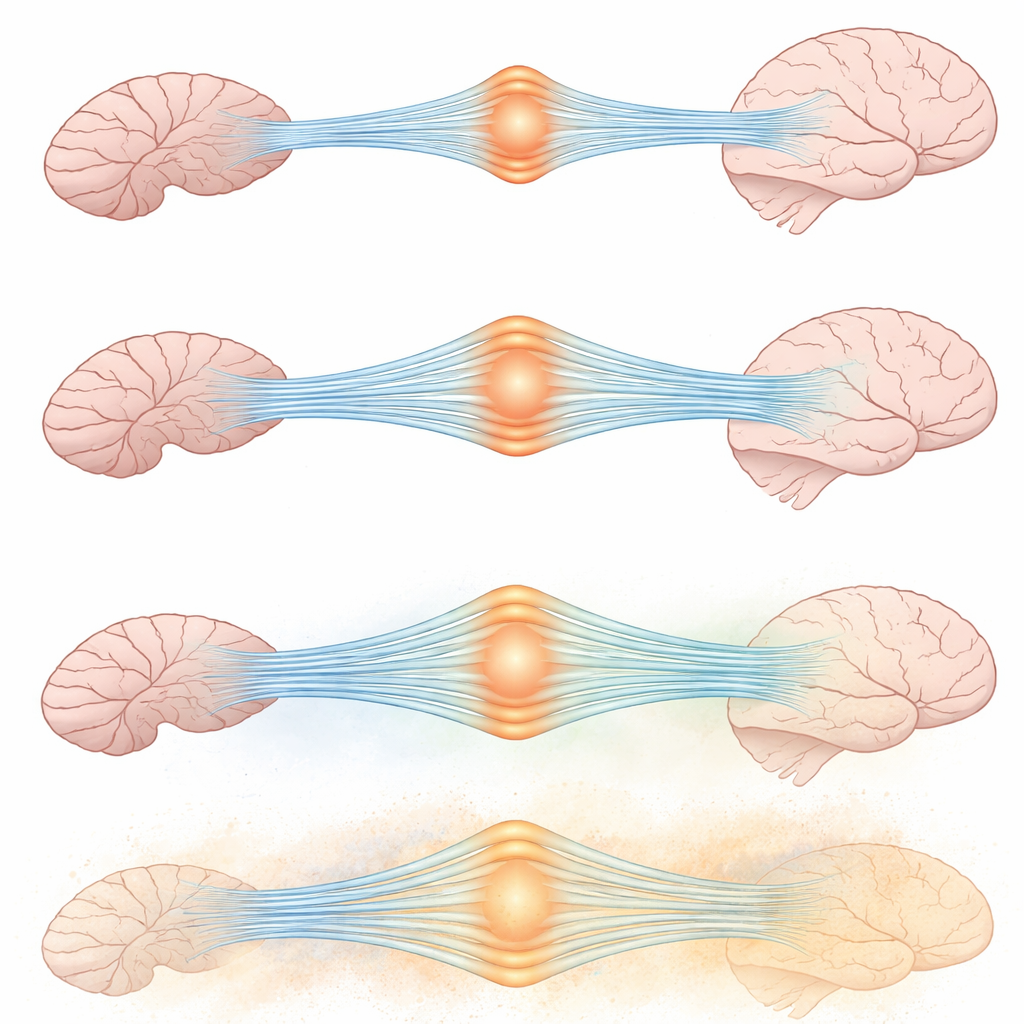
The analyses revealed that this cerebello–frontal pathway does not age in a straight, gradual line. Instead, measures of tissue degradation in the tract accelerated in later adulthood. Across three different diffusion measures, the rate of change became steeper beginning in the late 50s to early 60s. In other words, the wiring between the cerebellum and prefrontal cortex appears to hold up relatively well through early and mid-adulthood, but then shows faster decline as people move into older age. This pattern mirrors earlier work showing that the cerebellum and prefrontal cortex themselves are among the brain’s most age-sensitive regions, and extends that vulnerability to the communication channel that links them.
Brain wiring and everyday mental control
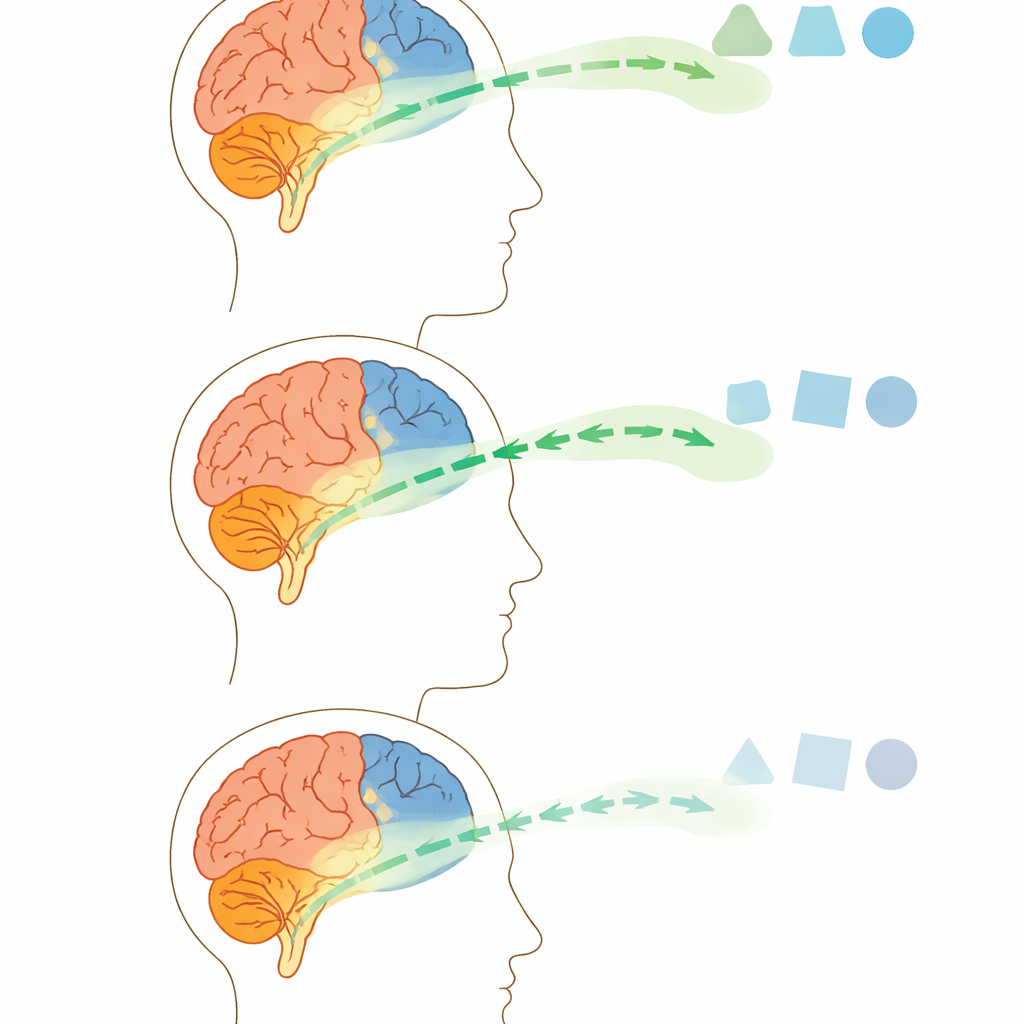
The key question was whether this physical decline in wiring actually mattered for thinking. When the researchers related tract measures to performance on the executive function tests, age turned out to be a crucial piece of the puzzle. In younger adults, differences in the quality of this pathway were not strongly tied to how well they performed. But in older adults, higher diffusivity—indicating more degraded fibers—was clearly linked to poorer executive function. Statistical models showed that this relationship became reliably detectable around the late 50s to early 60s, similar to the age when tract decline sped up. By contrast, the integrity of this pathway did not show a meaningful connection to working memory performance in this sample, suggesting that not all cognitive abilities depend on this particular route in the same way.
What this means for aging and thinking skills
Taken together, the findings support the view that the cerebellum is not just a movement specialist but also a key partner in higher-level thinking, especially for mental skills involving planning, flexibility, and self-control. The study shows that the white matter bridge linking the cerebellum to the brain’s frontal control centers deteriorates more rapidly from late midlife onward, and that this deterioration is tied specifically to declines in executive function in older adults. While the work is cross-sectional and cannot track individual change over time, it highlights a concrete biological pathway that may underlie some everyday mental slowing with age. Understanding and protecting this communication route could be an important target for future strategies aiming to preserve decision-making and self-management abilities across the lifespan.
Citation: Kraft, J.N., Ortega, A., Hoagey, D.A. et al. Age-related cerebello-thalamo-cortical white matter degradation and executive function performance across the lifespan. Sci Rep 16, 9712 (2026). https://doi.org/10.1038/s41598-026-39822-8
Keywords: cognitive aging, cerebellum, executive function, white matter, brain connectivity