Clear Sky Science · en
Modifying role of physical activity in associations between air pollutants and blood pressure among cancer survivors
Why this matters to everyday life
More people are surviving cancer than ever before, but many face new health challenges long after treatment ends. One quiet threat is high blood pressure, which can lead to heart attacks and strokes. This study asks a very practical question: how do dirty air and everyday movement habits together shape blood pressure in cancer survivors? The answers point to both personal steps and policy changes that could help this growing group stay healthier.
What the researchers wanted to find out
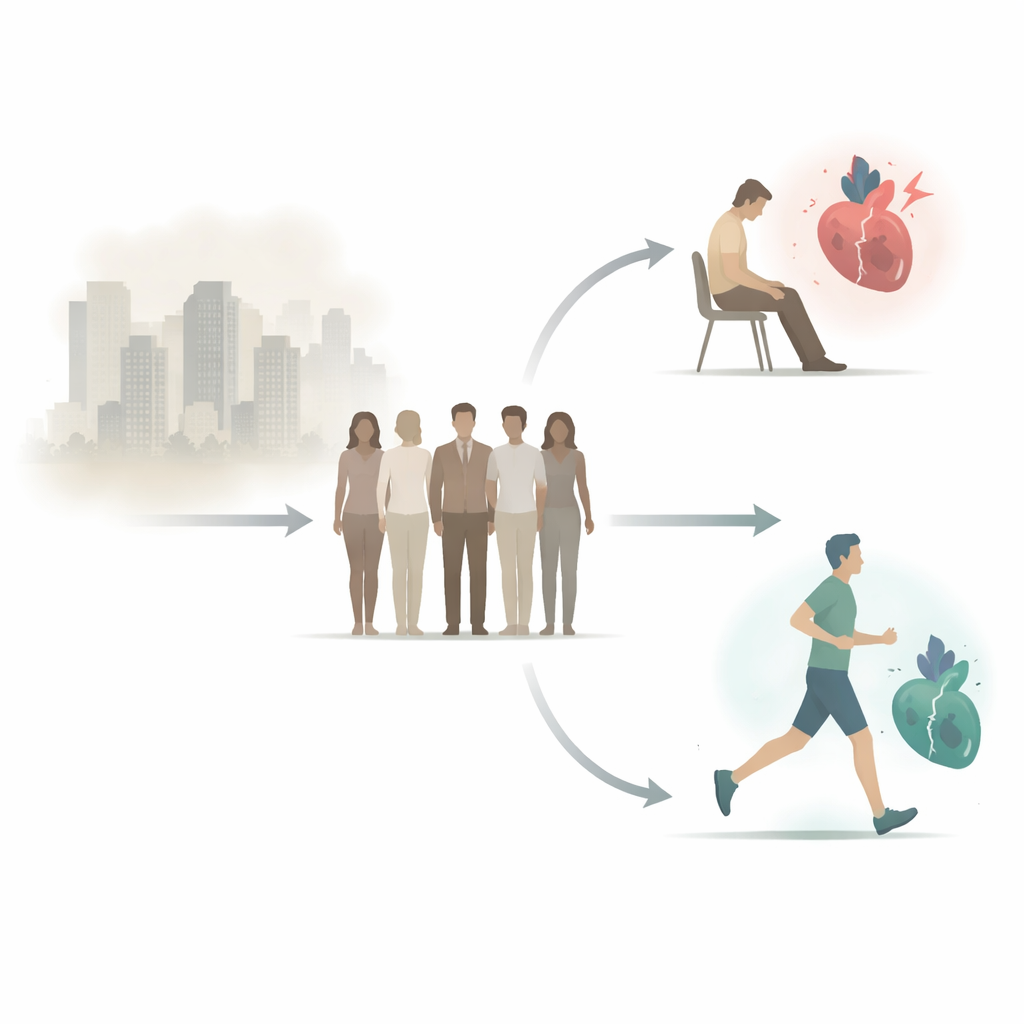
The team focused on outdoor air pollution, especially tiny particles and traffic-related gases that are common in cities. Past research has linked these pollutants to high blood pressure in the general population, but almost no one had looked closely at cancer survivors, whose blood vessels and immune systems may already be stressed by tumors and treatments. The researchers also suspected that physical activity could change how strongly pollution affects blood pressure, either by making people more vulnerable or by offering some protection.
Who was studied and how
Using data from a large national health survey in South Korea, the scientists examined 2,487 adults who reported having had cancer. For each person, they estimated average exposure over three years to five major air pollutants: fine and coarse particles (PM2.5 and PM10), carbon monoxide, nitrogen dioxide, and sulfur dioxide. Blood pressure was carefully measured using standard procedures, and participants were classified as having low or high physical activity based on World Health Organization guidelines. The team used several types of statistical models, including a method that looks at the combined effect of pollutant “mixtures” rather than each pollutant in isolation.
What they discovered about air and blood pressure
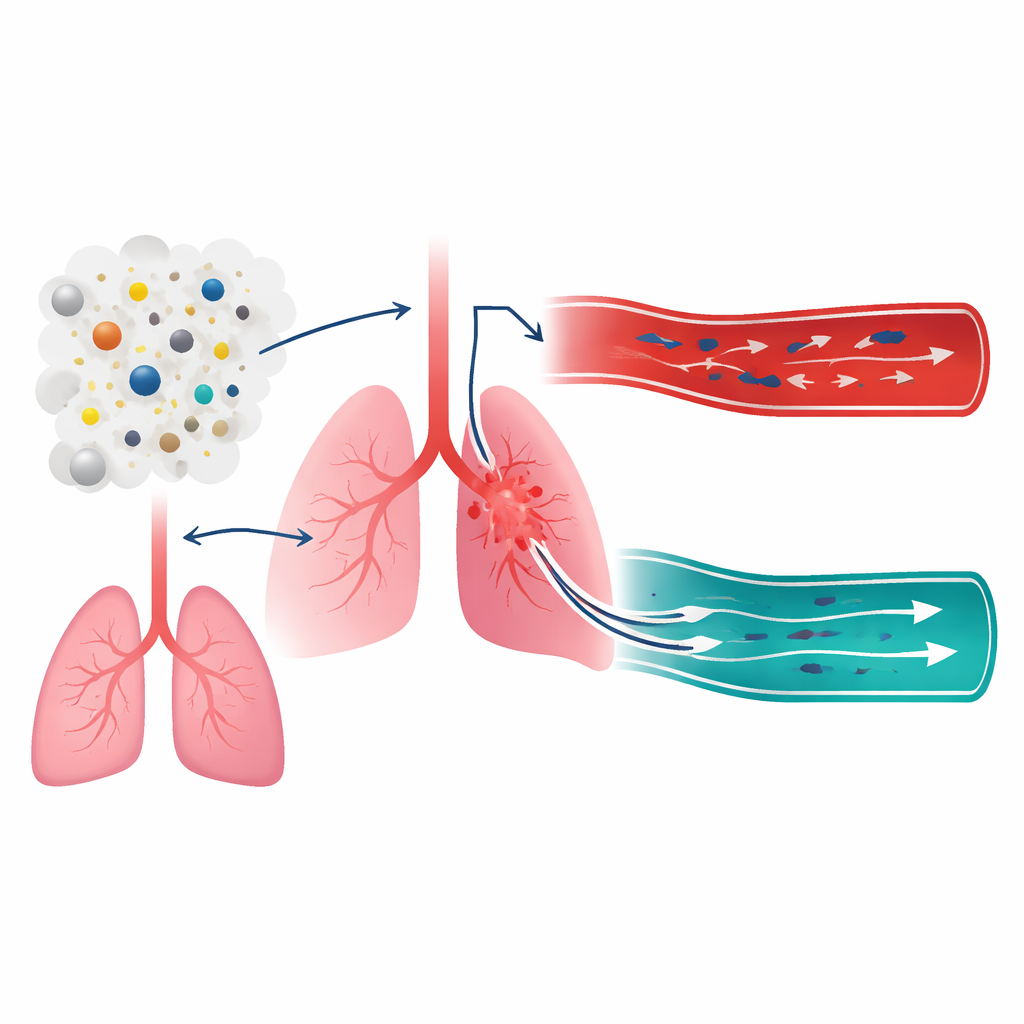
The clearest signal emerged for diastolic blood pressure—the lower number in a reading, which reflects how tightly the small blood vessels are constricted between heartbeats. Across all cancer survivors, higher long-term exposure to fine particles, coarse particles, and carbon monoxide was linked to slightly higher diastolic pressure. When the researchers treated the pollutants as a mixture, they again found that more overall pollution was tied to higher diastolic pressure. In these mixtures, particle pollution consistently played the largest role, contributing the majority of the risk, while the gaseous pollutants had smaller or inconsistent effects.
How movement changed the picture
Physical activity made an important difference. Among cancer survivors who did not reach recommended exercise levels, higher levels of particle pollution and carbon monoxide were strongly tied to higher diastolic pressure, and in some cases to higher systolic pressure as well. When the pollutant mixture was analyzed in this low-activity group, the association with higher diastolic pressure was clear, again driven mostly by particles. In contrast, among those who met or exceeded the guidelines—doing at least 150 minutes of moderate or 75 minutes of vigorous activity per week—the links between air pollution and blood pressure largely disappeared. More detailed analyses suggested that people who did no exercise or only moderate-intensity activity were most affected, while those engaging in vigorous movement, alone or combined with moderate exercise, showed little sign of pollution-related increases in blood pressure.
What this means for cancer survivors and society
To a layperson, the conclusion is straightforward: for cancer survivors, long-term exposure to polluted air, especially particle pollution, is linked to tighter, more pressurized blood vessels, and regular physical activity seems to blunt this effect. While the increases in blood pressure are modest for any one person, they matter because even small shifts can raise the risk of heart disease and stroke across a large population. The study suggests that helping cancer survivors stay active and supporting cleaner air—particularly by cutting particle pollution—could work together to lower the hidden burden of high blood pressure in this vulnerable group.
Citation: Lee, De., Hwang, J., Kim, K. et al. Modifying role of physical activity in associations between air pollutants and blood pressure among cancer survivors. Sci Rep 16, 8794 (2026). https://doi.org/10.1038/s41598-026-39815-7
Keywords: air pollution, cancer survivors, blood pressure, particulate matter, physical activity