Clear Sky Science · en
Mood trajectories showing resilience and recovery in young people during and after the COVID-19 pandemic
Why this matters for young people and families
The COVID-19 pandemic turned daily life upside down for children, teens, and young adults. Many parents, teachers, and policymakers worried about a “generation in crisis,” but real lives are rarely captured by a single storyline. This study followed hundreds of young people in the Netherlands for four years to find out how their moods actually changed during and after the pandemic, and which everyday factors—like school stress or feeling that you belong—made it easier or harder to bounce back.
Following young people through a long storm
Researchers tracked 363 young people aged 10 to 29 from the Rotterdam area, starting in May 2020, just after the first lockdown began. Every six months, participants filled in online questionnaires about how tense, down, and energetic they felt at that moment. From these answers, the team built measures of “negative mood” (tension plus depression) and “vigor” (a feeling of energy and liveliness). They also collected information on school pressure, problems with concentration and planning, and how strongly each person felt they belonged at school or in their studies.
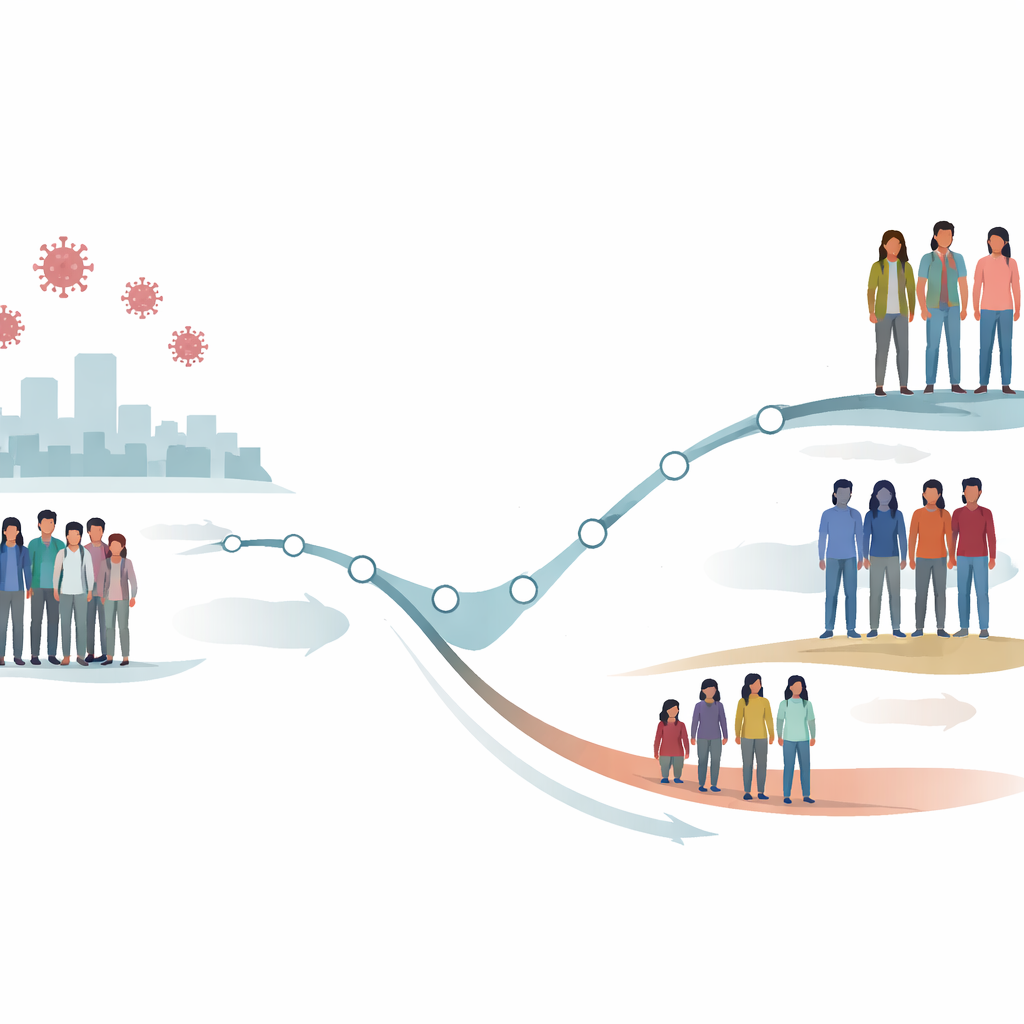
Four different mood paths, not one single story
When the researchers looked at the whole group together, they saw what many earlier studies reported: negative mood rose during the pandemic, peaking in 2021, and then eased once restrictions lifted. Positive energy slowly climbed over time. But those averages hid striking differences. Using statistical methods that uncover hidden subgroups, the team found four distinct patterns of negative mood. About one third of the young people stayed at a low, fairly stable level of negative mood. Another quarter stayed at a moderate, steady level. A further 27 percent were moderately shaken by the pandemic but later returned to their earlier mood levels. The final group—about 16 percent—were hit hardest: their negative mood climbed during the pandemic and only slowly improved, remaining high even after society reopened.
Energy levels tell a separate story
The researchers repeated this analysis for vigor and again saw four paths, which did not simply mirror the negative-mood groups. A small group kept high energy throughout. The largest group had low vigor but improved somewhat after the pandemic. Another group started with lower energy but gradually rose to match the high-vigor group after restrictions ended—these young people look especially resilient. A final group began fairly energetic but lost steam over time, ending up with low vigor. The limited overlap between the “negative mood” and “vigor” groups suggests that feeling bad less often and feeling energetic more often are related but partly independent processes.
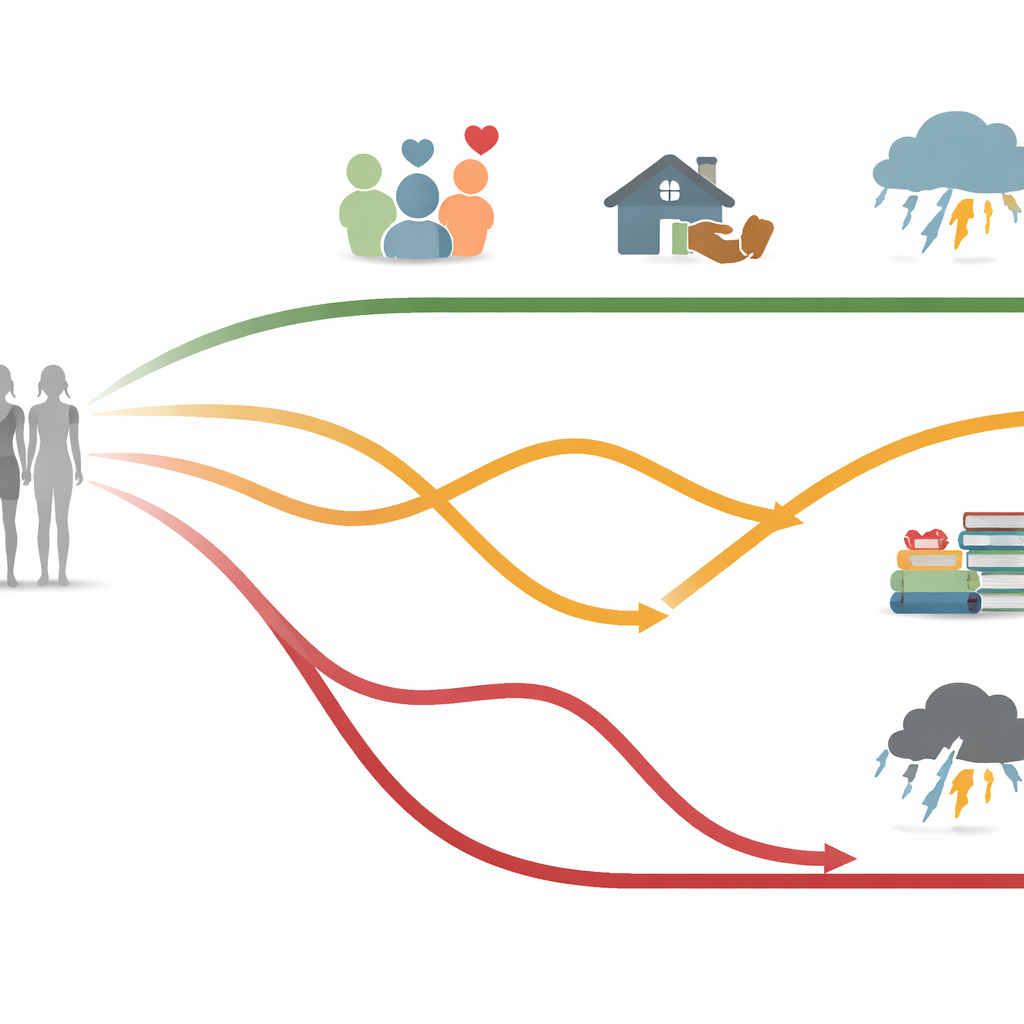
School stress, focus, and belonging as key ingredients
What distinguished the most affected young people from their more resilient peers was not age, gender, or type of school, but daily pressures and connections. Those in the high negative-mood group reported more academic exhaustion, more problems with executive skills such as staying focused or organizing tasks, and a weaker sense of belonging at school or in their studies. In contrast, the groups with stable or recovering vigor tended to feel less burned out by school, had fewer concentration and planning difficulties, and reported a stronger sense of fitting in. These patterns held even when the researchers used stricter or more lenient rules about how many survey waves someone needed to complete, suggesting the results are robust.
What this means for supporting the next generation
Overall, the study paints a nuanced picture. Many young people weathered the pandemic reasonably well, and some even regained their energy after a rough start. Yet a sizeable minority remained stuck in heightened negative mood, even after lockdowns ended. The findings suggest that helping young people manage school stress, strengthening everyday skills like planning and attention, and fostering a genuine sense of belonging in classrooms and colleges may all boost resilience when life is disrupted—whether by a global pandemic or a more local crisis. Rather than assuming that all adolescents respond the same way, the authors argue, support systems should be ready for multiple mood paths and tailored help.
Citation: Toenders, Y.J., Green, K.H., te Brinke, L.W. et al. Mood trajectories showing resilience and recovery in young people during and after the COVID-19 pandemic. Sci Rep 16, 9108 (2026). https://doi.org/10.1038/s41598-026-39808-6
Keywords: adolescent mental health, COVID-19 pandemic, resilience, mood trajectories, school stress