Clear Sky Science · en
Identification of core cytotoxic T lymphocyte-related subtypes, establishment of a prognostic model, and analysis tumor microenvironment infiltration in HNSC
Why this matters for people with head and neck cancer
Head and neck cancers are often discovered late and can be difficult to treat, even with modern surgery, radiation, and immunotherapy. This study asks a practical question with life-or-death consequences: can patterns in a tumor’s immune-related genes tell us which patients are likely to do poorly, and who might benefit most from certain drugs or immune treatments? By decoding how tumors hide from killer T cells, the authors aim to build a simple bloodless “scorecard” that could guide more personalized care.
Sorting tumors by their immune escape tricks
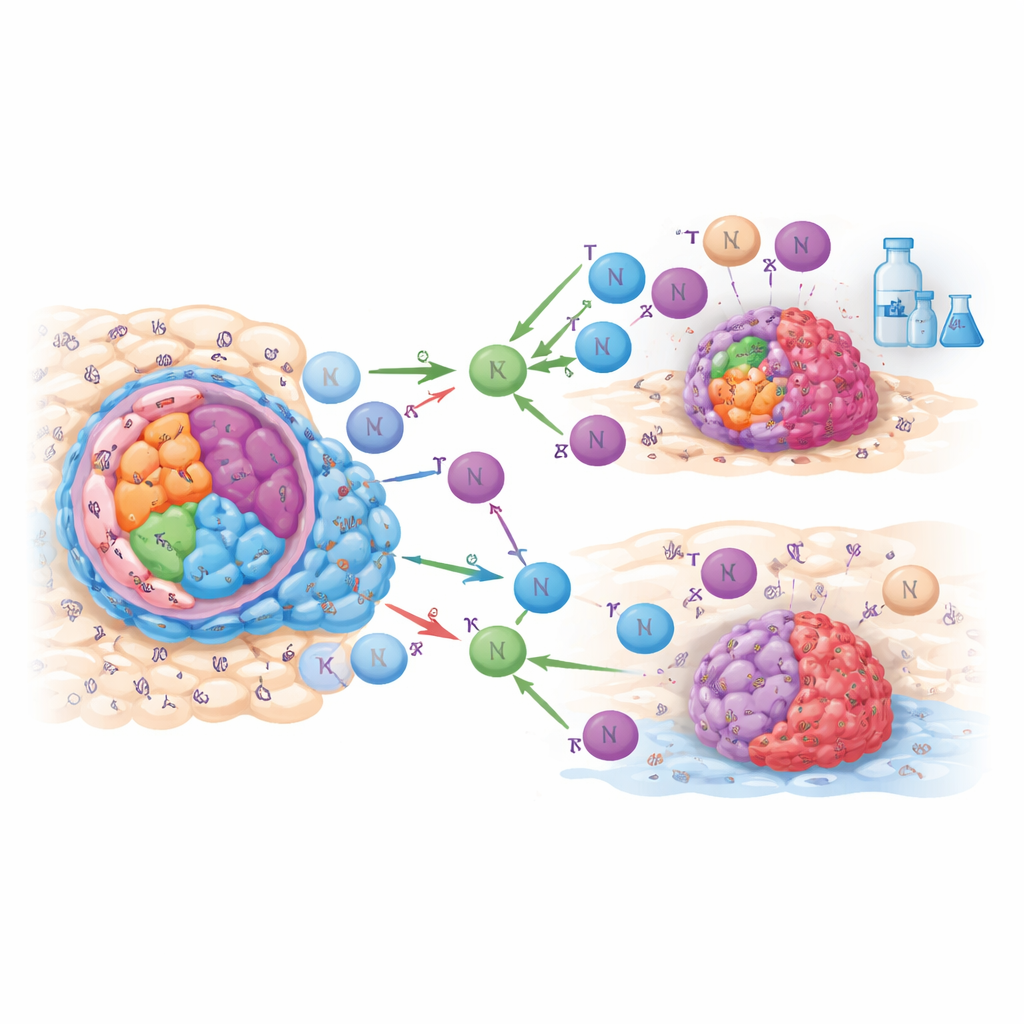
The researchers focused on a group of 31 genes that help cancer cells dodge attack from cytotoxic T cells, the immune system’s main tumor-killing soldiers. Using data from over 770 people with head and neck squamous cell carcinoma in large public databases, they examined how strongly each of these genes was switched on or off in individual tumors. When they grouped patients based on these immune-escape gene patterns, three distinct tumor types emerged. These types differed not only in how active the genes were, but also in how long patients survived and how many immune cells had managed to enter the tumor area.

Building a three-gene risk score
To turn these complex patterns into something doctors could actually use, the team next looked for a smaller set of genes that best predicted survival. They tracked which genes varied between the three tumor types and then used several layers of statistical modeling to avoid false leads. This process narrowed the list down to three key genes: SERPINE1, MMP1, and SPINK6. High activity of SERPINE1 and MMP1 signaled greater danger, while higher SPINK6 leaned toward better outcomes. Combining these three readings into a single risk score allowed the scientists to sort patients into “high-risk” and “low-risk” groups whose survival curves were strikingly different.
Linking gene patterns to the tumor’s neighborhood
Because cancer does not grow in isolation, the authors examined how the risk score related to the tumor’s surrounding “neighborhood” of immune and support cells. They found that different immune cell types clustered with high or low scores, and that tumors with higher scores showed clearly altered immune landscapes. These high-risk tumors had very frequent genetic mutations but, interestingly, slightly lower signs of stem-like features. They also tended to display stronger signals from immune checkpoint molecules—surface proteins that can be blocked with approved immunotherapy drugs to reawaken T cells. This suggests that, although patients in the high-risk group fare worse overall, their tumors may be particularly vulnerable to modern immunotherapies and some chemotherapy drugs.
Putting numbers into a bedside tool
To move from statistics to the clinic, the team combined the three-gene risk score with basic patient information such as age and cancer stage to build a visual “nomogram”—a chart that estimates the chance of being alive at one, three, and five years. Testing this tool in separate patient sets showed that it tracked real outcomes well. The authors then confirmed in a small group of surgical patients that the three genes were indeed expressed differently in tumor tissue compared with nearby normal tissue. Finally, they directly reduced SERPINE1 levels in two head and neck cancer cell lines in the lab. When this gene was silenced, cells grew more slowly and formed fewer colonies, supporting the idea that SERPINE1 actively pushes these cancers to grow.
What this means for future treatment decisions
In simple terms, this study shows that a short three-gene panel can separate patients with head and neck cancer into groups with very different risks and treatment prospects. Tumors with “high-risk” gene patterns are more aggressive but also seem more exposed to attack when the right drugs are used, including immune checkpoint blockers and certain chemotherapies. While larger, forward-looking studies are still needed before this score can guide routine care, the work offers a promising roadmap toward tailoring treatment based on how each tumor evades the immune system, rather than treating all patients the same.
Citation: Jiang, W., Liu, Q., Chu, H. et al. Identification of core cytotoxic T lymphocyte-related subtypes, establishment of a prognostic model, and analysis tumor microenvironment infiltration in HNSC. Sci Rep 16, 9776 (2026). https://doi.org/10.1038/s41598-026-39801-z
Keywords: head and neck cancer, tumor microenvironment, immunotherapy, prognostic gene signature, SERPINE1