Clear Sky Science · en
Association between eating speed, body composition, and physical activity: a cross-sectional study in Gujarat, India
Why How Fast You Eat Matters
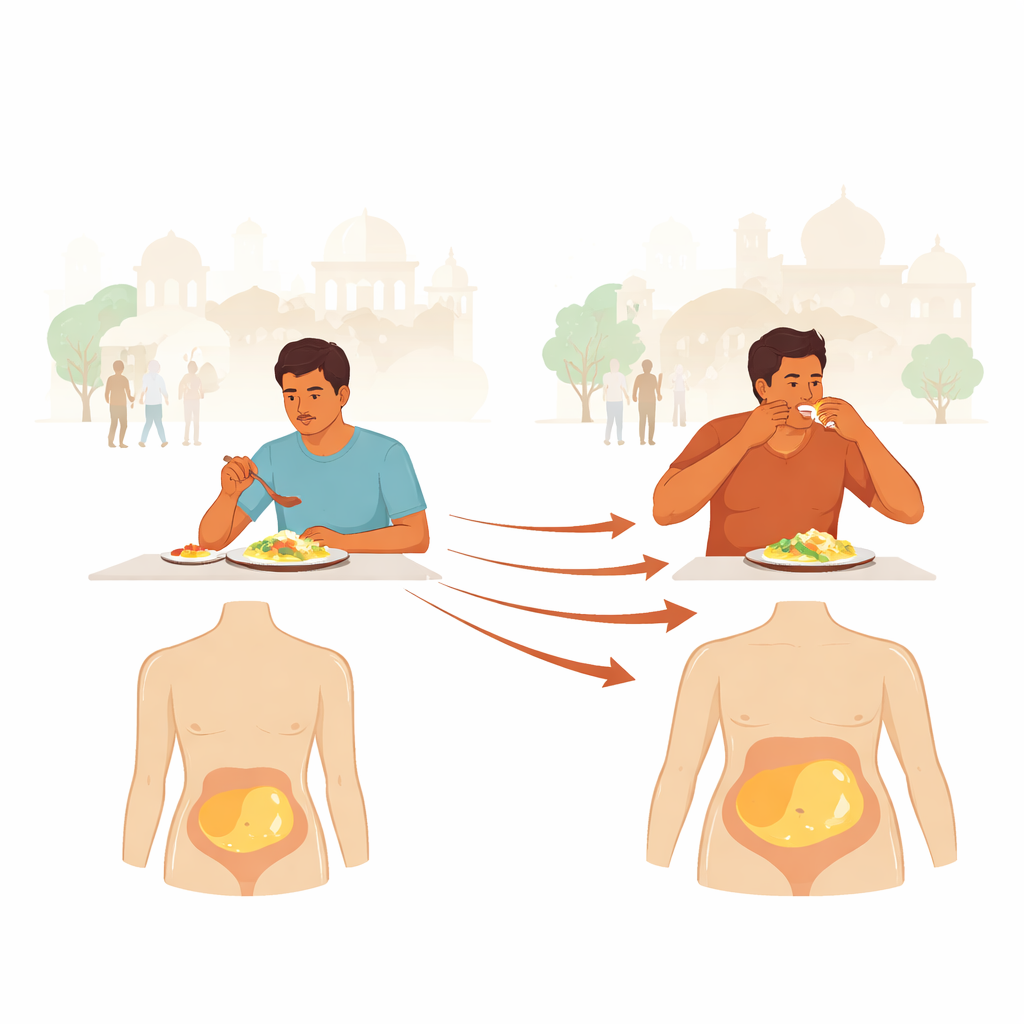
Most of us think about what we eat, but not how quickly we eat it. This study from Gujarat, India, asks a simple question with big health implications: does gobbling down meals raise the chances of gaining unhealthy body fat, especially around the waist, even if people are otherwise active? By looking at eating pace, body measurements, and daily activity in hundreds of adults, the researchers explore whether slowing down at the table could be a practical tool in the fight against obesity.
What the Researchers Wanted to Find Out
The team set out to examine links between eating speed, body build, and physical activity among 465 adults aged 18 to 65 years in Gujarat. They were especially interested in visceral fat—the deep belly fat that wraps around internal organs and is strongly tied to diabetes and heart disease. Participants were grouped as slow, moderate, or fast eaters based on how many times they chewed each bite, and their activity levels were classified as mild, moderate, or vigorous using a standard questionnaire. By comparing these groups, the researchers tested whether fast eating is simply a harmless habit or a behavior with measurable effects on the body.
How the Study Was Done
Volunteers were recruited from a hospital, a college campus, and nearby communities. After giving consent, each person answered questions about their age, occupation, diet type, fried and junk food intake, sleep duration, and usual eating speed. The researchers then measured height, weight, and waist size, and used a handheld electrical device to estimate body fat, visceral fat, and resting metabolism. This method sends a tiny harmless current through the body; the way the current moves helps estimate how much fat and muscle someone has. Although it does not match the accuracy of advanced scans, it is practical for examining many people at once.
What They Found in People Who Eat Quickly
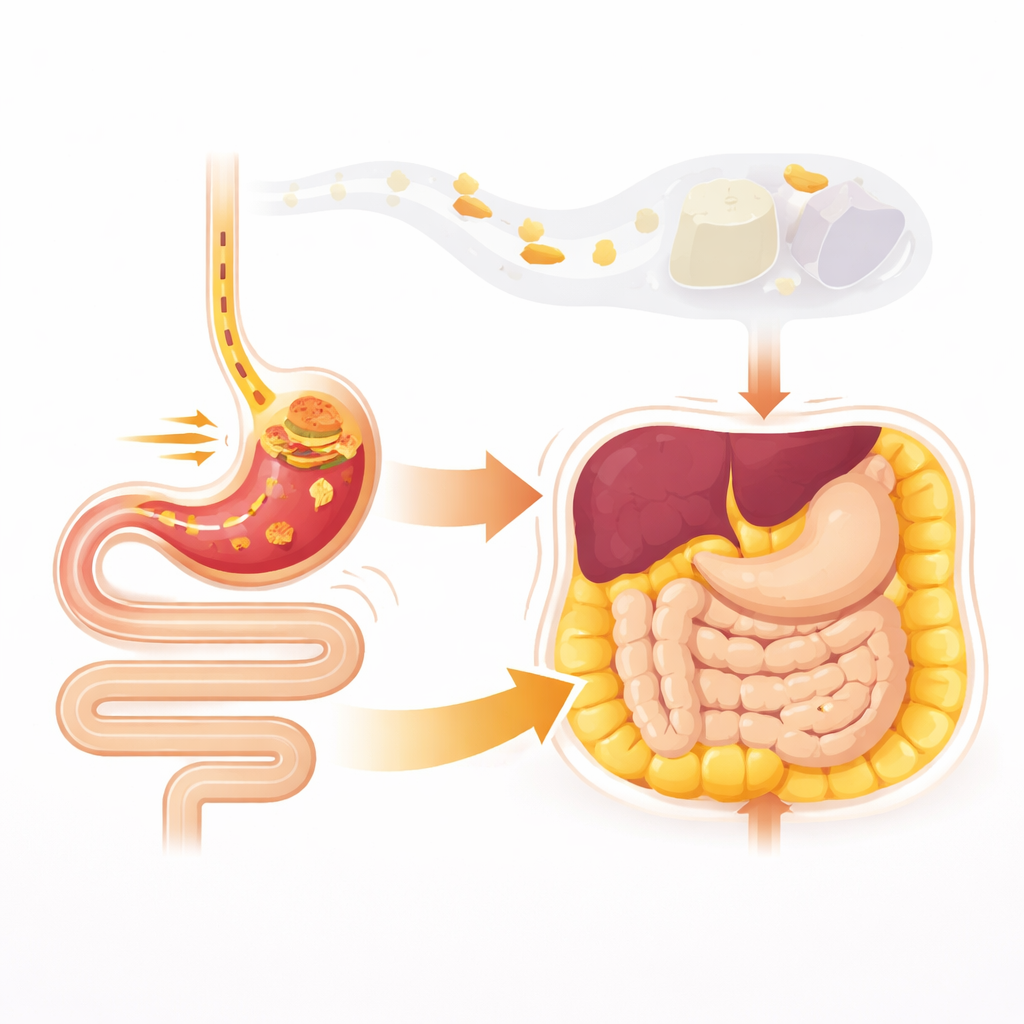
Fast eaters stood out in several important ways. Those who reported fewer than 10 chews per bite had higher body mass index (BMI) and higher visceral fat than moderate eaters, even after accounting for age, sex, physical activity, sleep, and overall body fat percentage. Statistical models showed that fast eaters were about twice as likely to have high visceral fat and roughly 75% more likely to be overweight or obese than moderate eaters. Interestingly, total body fat percentage and resting metabolism did not differ meaningfully by eating speed, suggesting that where fat is stored—deep in the abdomen versus elsewhere—may change more than the overall amount.
The Role of Daily Movement and Food Choices
The researchers expected physical activity to interact with eating speed, but activity levels were similar across slow, moderate, and fast eaters. Being more active did not erase the link between rapid eating and central fat. People who frequently ate fried foods also tended to have higher BMI and visceral fat, reinforcing the idea that energy-dense foods and quick eating can be a double hit. Still, the strongest and most consistent pattern was tied to how quickly people ate, not how much they moved or how many calories they burned at rest.
Limits and Strengths of the Evidence
Like all research, this study has caveats. It was cross-sectional, meaning it captured a single snapshot in time, so it cannot prove that fast eating causes weight gain—only that they travel together. Eating speed was self-reported, and people may misjudge how often they chew. The body fat measurements were estimates rather than gold-standard scans. The volunteers also came from relatively health-aware settings, which may not perfectly reflect the broader Indian population. Even so, the use of standardized tools, careful measurements, and detailed statistical checks lend weight to the patterns observed.
What This Means for Everyday Life
For a layperson, the message is straightforward: eating quickly is not just a quirky habit—it is linked to higher body weight and more harmful belly fat, independent of how active you are. While exercise and healthy food choices remain crucial, simply slowing down at meals, chewing more, and paying attention to fullness may be an easy, low-cost way to support a healthier body shape. Public health efforts that encourage mindful, unhurried eating, alongside regular physical activity, could help reduce obesity and its complications in communities like those studied in Gujarat and beyond.
Citation: Gupta, A., Raithatha, A., Kshtriya, P. et al. Association between eating speed, body composition, and physical activity: a cross-sectional study in Gujarat, India. Sci Rep 16, 8061 (2026). https://doi.org/10.1038/s41598-026-39798-5
Keywords: eating speed, visceral fat, obesity, mindful eating, physical activity