Clear Sky Science · en
Energy transition, digitalization, financial development, and human capital shape pathways to carbon neutrality in South Asia
Why this matters for everyday life
Countries in South Asia are on the front lines of climate change, facing floods, heatwaves, and rising energy needs at the same time. This study asks a simple but crucial question: which kinds of progress actually help cut climate‑warming pollution while still allowing these societies to grow? By looking at cleaner energy, digital technology, money flows, and education together, the authors show how these forces can either work in harmony to lower carbon emissions or pull in the opposite direction.
The region at a crossroads
South Asia has seen fast economic growth since 2000, along with a surge in energy use and carbon emissions. The study focuses on four major countries—Bangladesh, India, Pakistan, and Sri Lanka—over the period 2000 to 2023. Using international data, the authors track how much carbon each person emits, how quickly countries are shifting toward renewable energy, how deeply digital tools penetrate daily life, how developed their financial systems are, and how much human capital they have, measured through education and health. They then use modern statistical methods designed for interconnected economies to untangle how these factors move together over time. 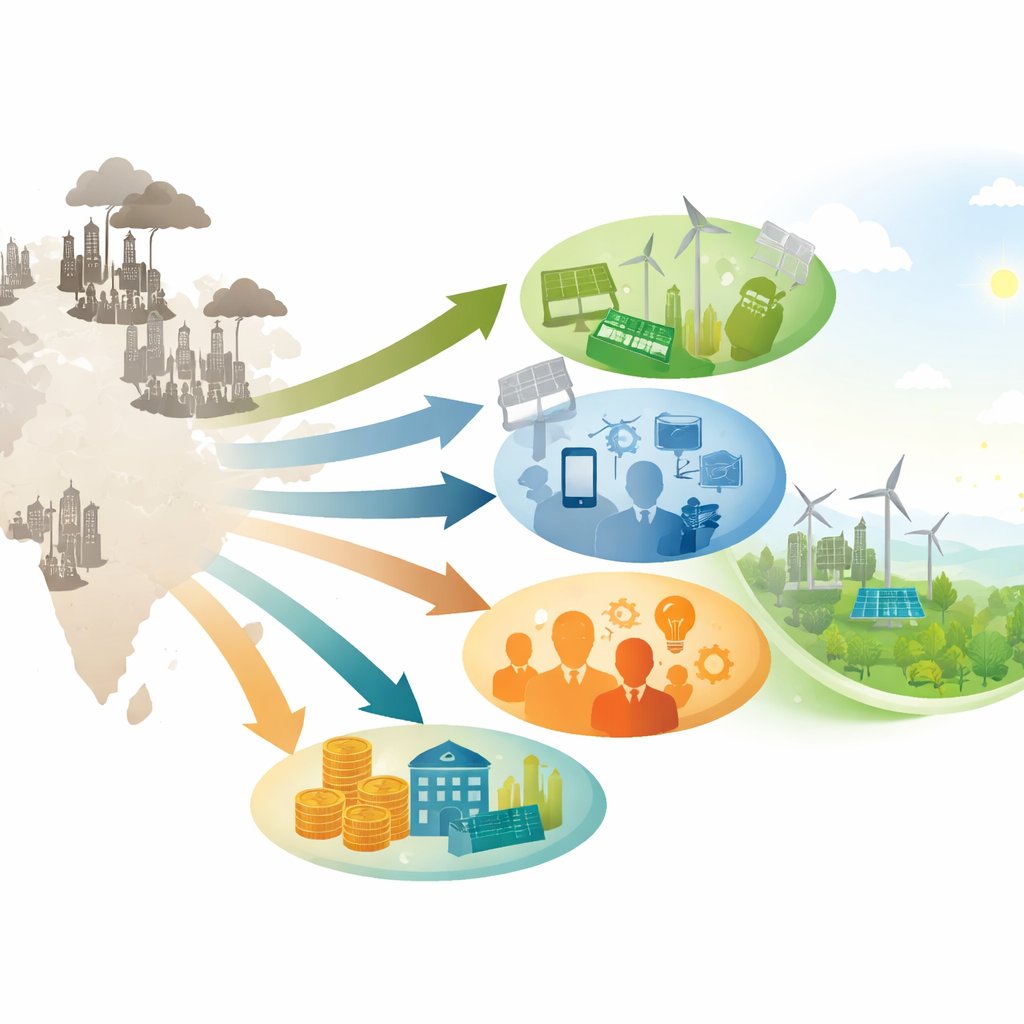
Clean power, smart tech, and skilled people
The study finds that three types of progress clearly help bring emissions down. First, growing the share of renewable energy—such as solar, wind, and hydropower—has the strongest impact. A modest increase in clean power is linked to a nearly one‑for‑one drop in carbon emissions, underscoring how powerful the shift away from fossil fuels can be. Second, expanding digital technologies, from mobile networks to internet access and data tools, trims emissions by making energy use more efficient and production less wasteful. Although the effect is smaller than that of renewables, it is consistent across time: smarter systems mean less wasted fuel. Third, higher human capital—healthier, better‑educated populations—also lowers emissions. People with more skills are more likely to back environmental policies, adopt cleaner technologies, and run businesses in less polluting ways.
When finance helps—and when it harms
Money, however, is a double‑edged sword. The study shows that financial development on its own currently pushes emissions up in South Asia. As banks, markets, and credit access expand, a large share of this new finance still flows into conventional industries and construction that burn fossil fuels. Yet the same financial system can become a powerful ally of the climate transition. When the authors examine how finance interacts with clean energy and digitalization, they find that deeper, better‑functioning financial sectors actually strengthen the ability of renewables and digital tools to cut emissions. In other words, if loans and investments are steered toward solar farms, grid upgrades, smart meters, and efficient data centers, finance flips from climate problem to climate solution. 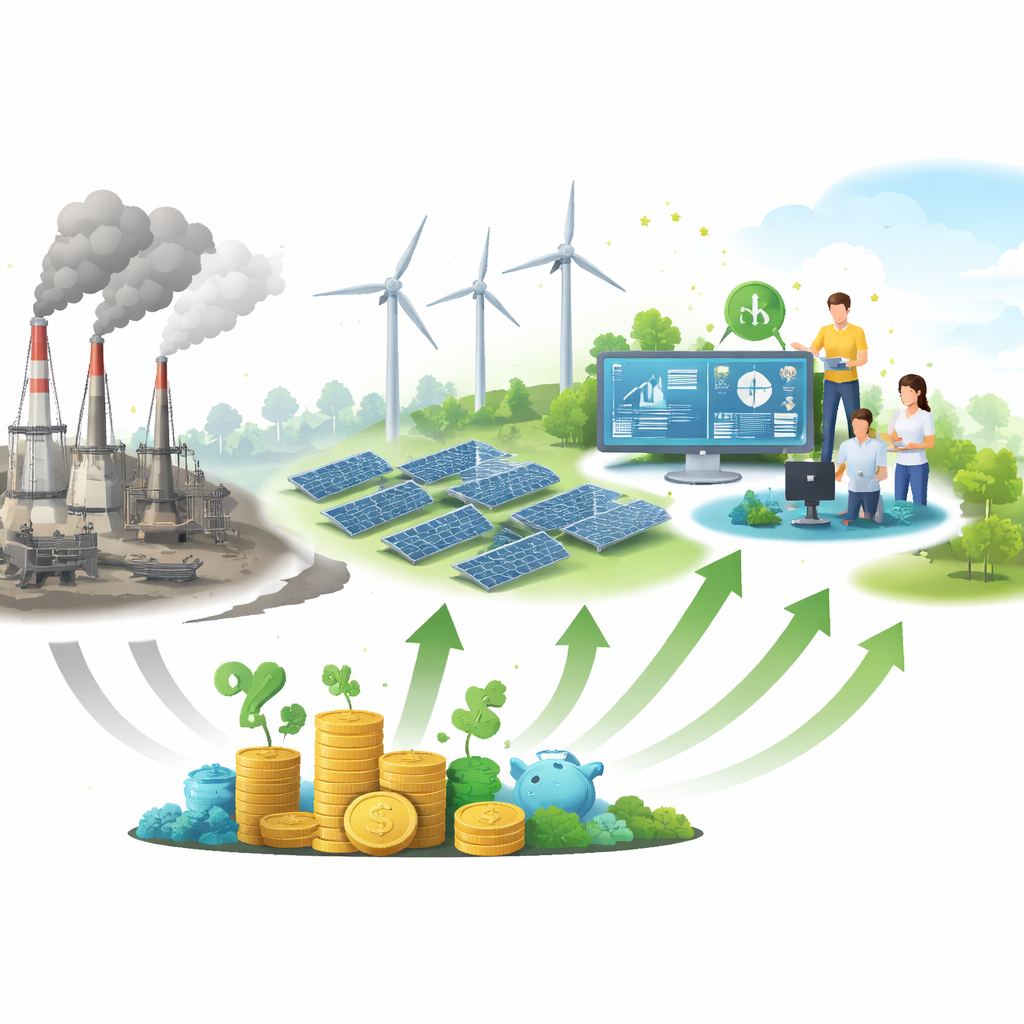
Different speeds in the short and long run
The timing of these effects also matters. In the short term, expanding credit tends to boost energy‑hungry activity faster than clean technologies can spread, so emissions rise. The benefits of renewable projects, digital systems, and education show up more slowly as power plants are built, networks roll out, and skills deepen. Over the longer run, however, the positive forces grow stronger: the share of renewables in the energy mix climbs, digital tools are woven into industry and public services, and more educated workers drive innovation. The study’s checks using several types of models confirm that these patterns hold across countries and across low‑ and high‑emitting situations within the region.
What this means for policy and daily choices
For policymakers, the message is that climate progress in South Asia will not come from any single lever. Renewable energy needs to be expanded quickly, but its impact depends on smart rules, reliable grids, and access to green finance. Digital transformation can reduce waste, yet it must be powered by cleaner electricity and backed by strong data systems and public platforms. Education and training are essential to make these technologies work in practice and to build support for tougher environmental standards. Perhaps most importantly, financial systems must be redirected: instead of mainly funding fossil‑fuel‑heavy growth, they need incentives and safeguards that channel savings into clean energy, low‑carbon infrastructure, and green innovation.
A simple takeaway for non‑experts
In plain terms, the study concludes that South Asia’s path to carbon neutrality is shaped by how four kinds of progress line up: cleaner power, smarter technology, stronger education, and greener finance. The first three reliably push emissions down; the last one can either increase or decrease pollution depending on where the money goes. If governments, businesses, and citizens manage to align these forces—using finance to back renewables and digital upgrades, and investing in people’s skills—the region can grow its economies while cutting the pollution that drives climate change.
Citation: Zhang, R., Habiba, U., Sarwar, M.A. et al. Energy transition, digitalization, financial development, and human capital shape pathways to carbon neutrality in South Asia. Sci Rep 16, 9420 (2026). https://doi.org/10.1038/s41598-026-39792-x
Keywords: energy transition, digitalization, green finance, human capital, South Asia carbon emissions