Clear Sky Science · en
Reverse vaccinology-based design of a universal multiepitope vaccine against chikungunya virus: Phylogenetic and immunoinformatics approaches
Why a New Vaccine Idea Matters
Chikungunya is a mosquito-borne virus that can turn a short fever into months or even years of joint pain, keeping people out of work and straining health systems in tropical and subtropical regions. Existing vaccines are promising but have raised safety concerns in some groups and may not fully cover all versions of the virus circulating worldwide. This study explores a next-generation, computer-designed vaccine that aims to be safer, more broadly protective, and easier to produce, offering a glimpse of how digital tools may reshape our defenses against fast-evolving viruses.
Understanding the Mosquito-Borne Threat
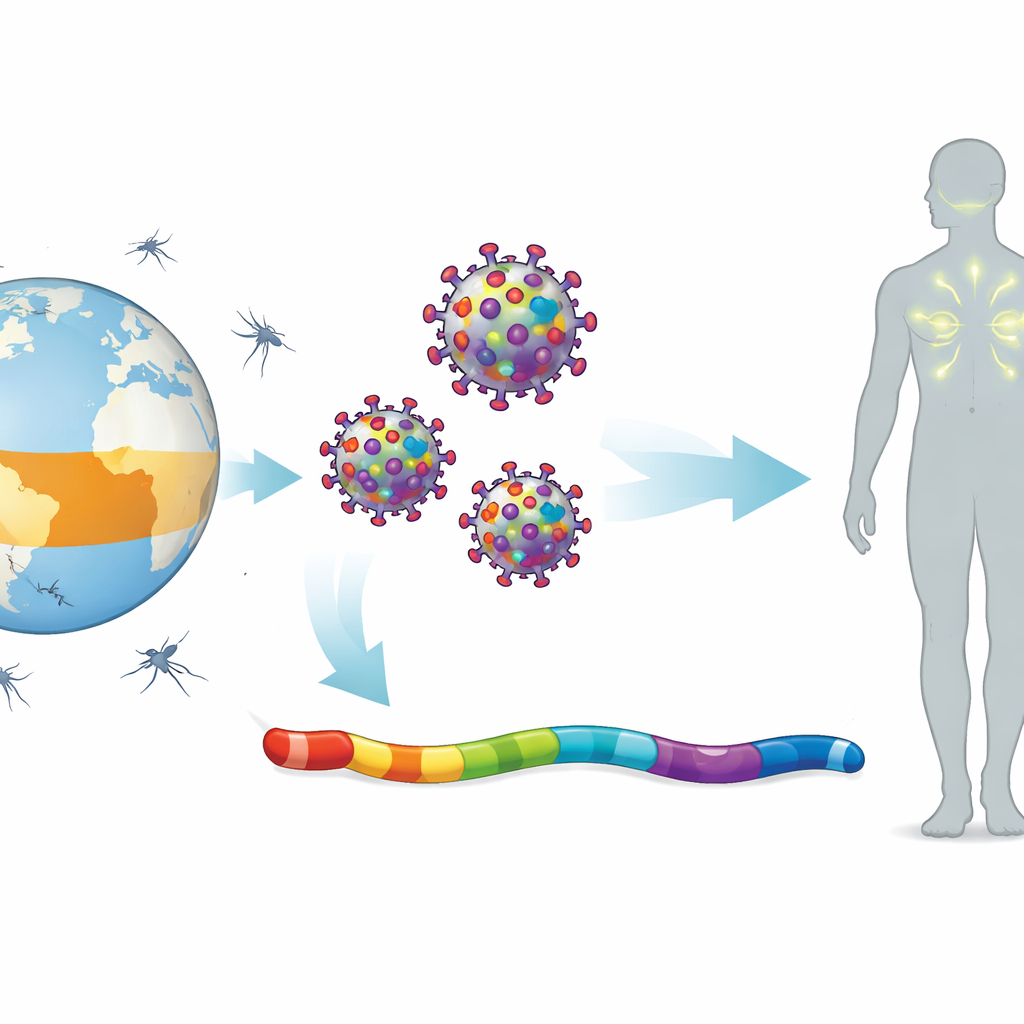
Chikungunya virus has spread widely across the Americas, Africa, and Asia, causing hundreds of thousands of cases and deaths, particularly during outbreaks. Beyond the initial fever and rash, many patients endure long-lasting joint problems that reduce quality of life and add to economic costs. The virus comes in three major genetic lineages found in different regions of the world. Because it mutates over time, a vaccine that protects against only one local strain may not work well everywhere. At the same time, one of the newly licensed live vaccines has been suspended in some countries after safety issues in older adults, underscoring the need for alternative approaches.
Building a Universal Target Map
Instead of growing the whole virus in the lab, the researcher turned to global viral sequence databases and powerful bioinformatics tools. From nearly 2,800 chikungunya genomes, the team filtered more than 1,400 high-quality sequences and built a detailed family tree showing how the three major lineages relate to each other. They then created a "consensus" version of the virus’s structural proteins—the parts that sit on the virus surface and are most visible to the immune system. By comparing thousands of sequences, they pinpointed stretches of protein that stay highly similar across lineages, even as other parts mutate. These conserved regions are ideal targets because a vaccine built on them should still work as the virus changes.
Designing a Multi-Piece Vaccine
From the conserved proteins, the study used specialized online tools to predict tiny segments—called epitopes—that the human immune system is most likely to recognize. Some of these segments are expected to trigger antibody-producing B cells, while others activate killer and helper T cells. After screening candidates for strength of response, lack of toxicity, and low risk of allergies, the final design included 10 key epitopes drawn from several viral proteins. These short segments were stitched together in a single chain using flexible linkers and paired with a human peptide called beta-defensin as an immune-boosting adjuvant. Computer models suggested that this combined molecule would fold into a stable shape and would be recognized by a wide range of human immune types across many populations.
Probing the Immune Response on Screen
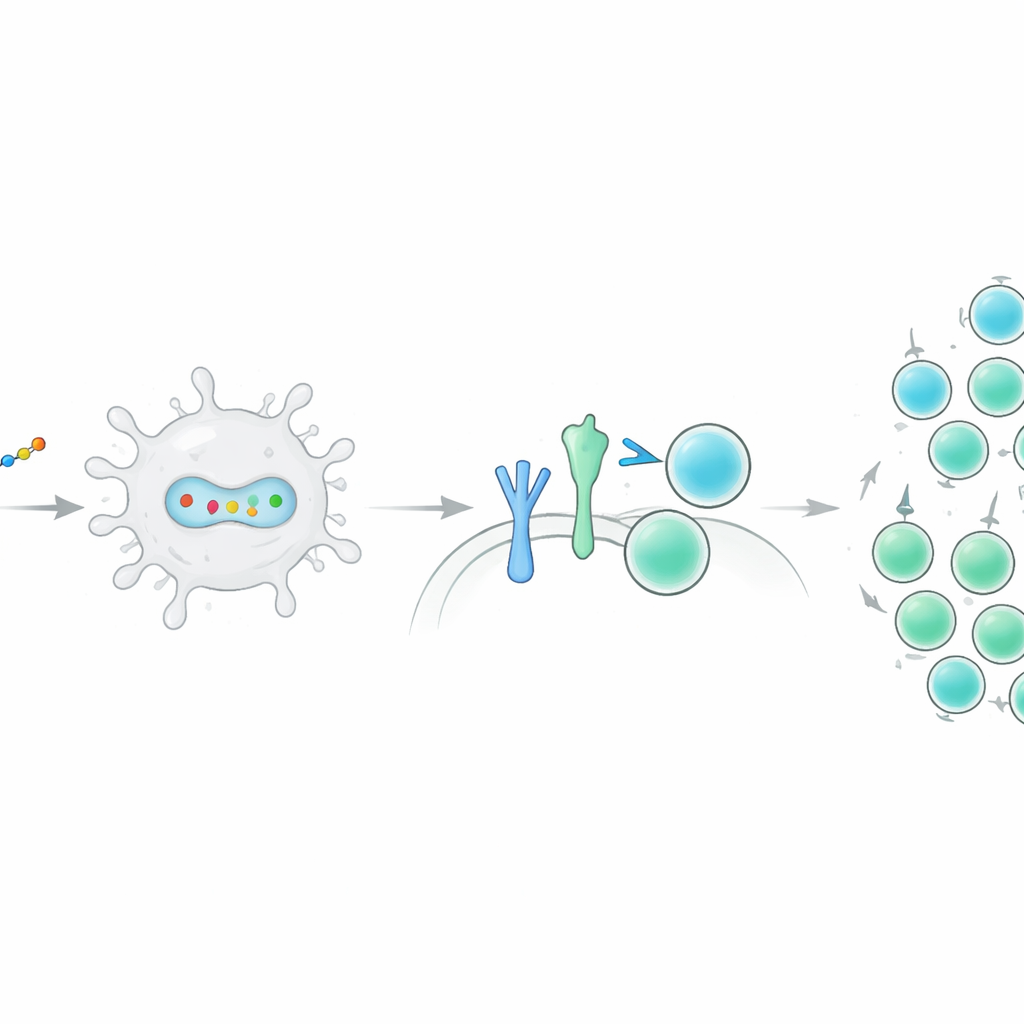
The team then asked whether this virtual vaccine would actually "talk" to the immune system. Using molecular docking simulations, they modeled how the designed protein might latch onto a key sensor called Toll-like receptor 3, which helps immune cells detect viral material. The results indicated tight and stable binding at the receptor’s active site, a good sign that the construct could kick-start early defenses. Additional computer simulations of the immune system over a year, with three simulated doses, showed strong bursts of antibodies and robust expansions of both B cells and T cells, including memory cells that persist long after vaccination. Codon optimization analysis suggested that the vaccine could be efficiently produced in common bacterial systems, an advantage for manufacturing.
From Computer Blueprint to Real-World Protection
Altogether, the study presents a carefully engineered vaccine blueprint that targets conserved, high-value pieces of the chikungunya virus, ties them into a single compact molecule, and appears—on screen—to provoke strong, balanced immune responses in diverse populations. For non-specialists, the key message is that instead of relying only on traditional trial-and-error methods, scientists can now mine global viral data and simulate whole branches of the immune response before ever entering the lab. While this chikungunya vaccine exists only in silico so far and still needs rigorous testing in cells and animal models, it showcases a powerful route toward universal vaccines that remain effective even as viruses continue to evolve.
Citation: Hakim, M.S. Reverse vaccinology-based design of a universal multiepitope vaccine against chikungunya virus: Phylogenetic and immunoinformatics approaches. Sci Rep 16, 9284 (2026). https://doi.org/10.1038/s41598-026-39790-z
Keywords: chikungunya virus, universal vaccine, multiepitope design, reverse vaccinology, immunoinformatics