Clear Sky Science · en
Exploring interactions of thermal, acoustic, and aesthetic environments on thermal experience in parks
Why park comfort matters on hot days
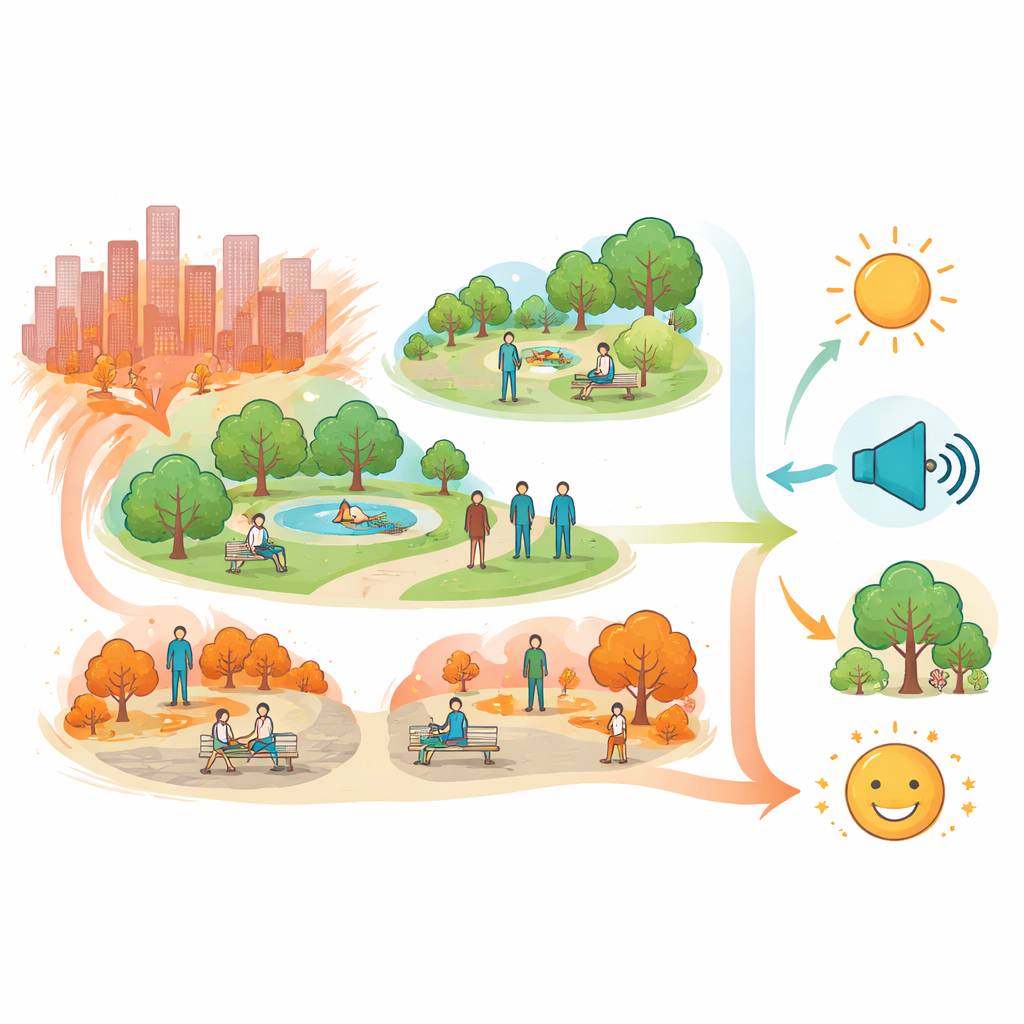
On a sweltering afternoon, a shady bench in the park can feel like a lifesaver. But our comfort outdoors depends on more than just temperature. This study looks at how heat, sounds, and scenery work together to shape how people actually feel in city parks. By watching real visitors in two Japanese cities over different kinds of summer weather, the researchers show which parts of the environment matter most—and how better design can make parks more inviting as the climate warms.
Heat as the main player
The researchers measured air temperature, sunlight, humidity, wind, and a combined heat index while hundreds of park visitors answered short surveys about how hot they felt, how comfortable they were, and whether the conditions were acceptable. They found that heat was the dominant force: as the heat index climbed, people felt hotter, reported lower comfort, and were less willing to accept the conditions. Shaded areas under tree canopies had lower temperatures and more stable conditions than open, paved spaces, clearly showing how even small patches of shade can ease heat stress.
Sound that helps—or hurts—your sense of heat
To understand the acoustic side, the team recorded overall sound levels and asked people how they felt about the sound around them and what kinds of sounds they noticed most. Surprisingly, the raw loudness of the environment was not closely tied to how hot people felt. Instead, what mattered was how pleasant people found the soundscape. When visitors rated the acoustic environment as comfortable—for example, when natural sounds were present—their reported thermal comfort improved slightly. However, this helpful effect faded under strong heat stress: when it was extremely hot, even pleasant sounds could not compensate for physical discomfort. Areas dominated by mechanical noise, such as traffic, were linked to lower acceptance of the thermal conditions.
Seeing green, feeling cooler
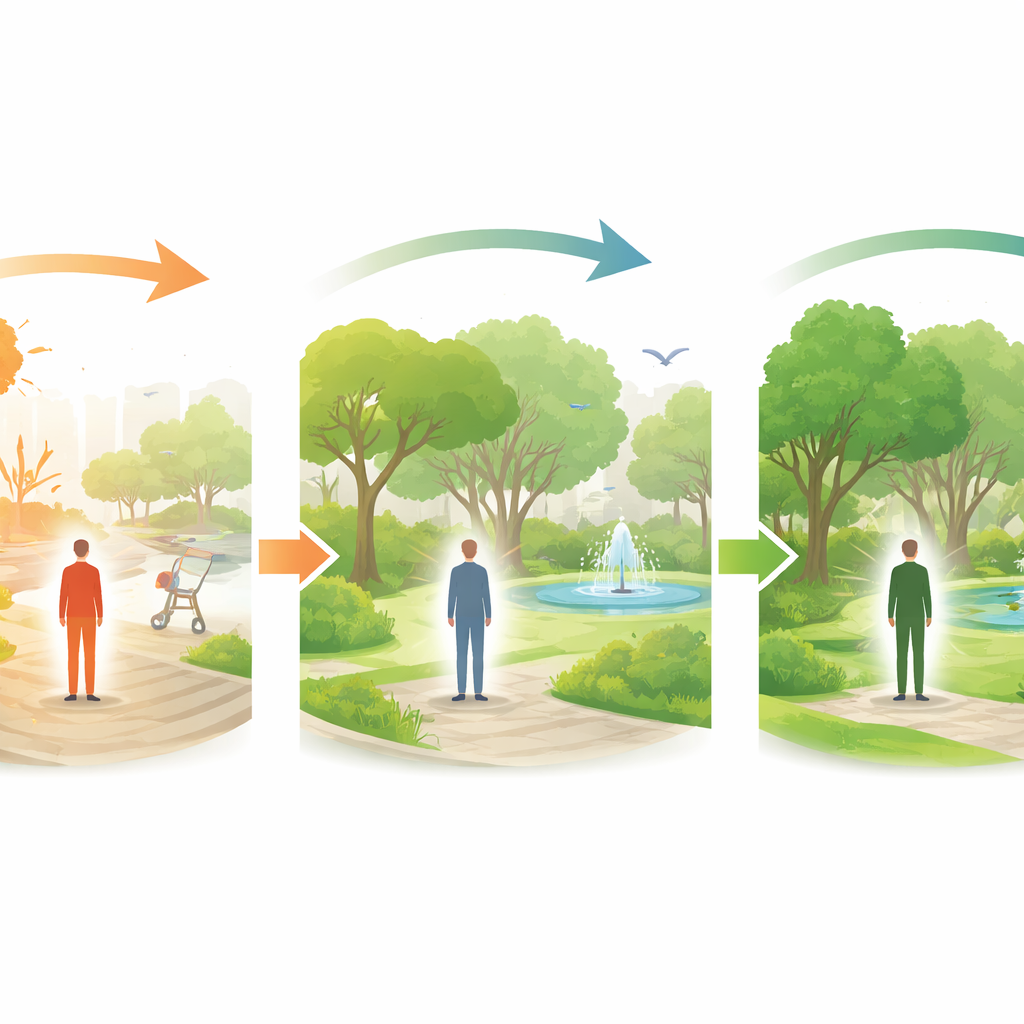
The visual character of the parks also played a role. Visitors rated how satisfied they were with the scenery overall, and specifically with green spaces (trees and vegetation) and blue spaces (water). Higher aesthetic satisfaction went hand in hand with feeling less hot, more comfortable, and more willing to accept the heat. The effect was modest compared with the direct impact of temperature, but it was consistent. A key finding was that satisfaction with green areas had a steadier, more reliable positive influence on thermal experience than satisfaction with water features alone. While water can suggest coolness, its real cooling effect depends on details such as shade, movement of the water, and local wind. Trees, by contrast, regularly lowered radiation and air temperature and also seemed to support positive emotions, making people more tolerant of warm weather.
Many senses, one overall experience
When the researchers combined all three dimensions—thermal, acoustic, and aesthetic—they found that temperature still set the basic boundary of comfort, but sounds and scenery strongly influenced overall satisfaction with the park visit. In fact, positive impressions of the visual environment and the soundscape had a larger impact on people’s overall rating of the place than their specific thermal comfort score did. People who heard more natural sounds and enjoyed the greenery were more satisfied with the park, even when it was quite hot, whereas visitors exposed to harsh sun, hard paving, and mechanical noise reported the poorest experiences.
What this means for better city parks
For city planners and park managers, the message is clear. Keeping people comfortable outdoors in a warming climate starts with controlling heat—especially by increasing tree cover and shaded understory areas and reducing large, sun-baked paved surfaces. But comfort does not stop there. Encouraging natural soundscapes, for example by buffering traffic noise and supporting bird habitat or water features under shade, can gently improve how heat is perceived. Designing attractive, leafy landscapes that people enjoy looking at makes them more willing to spend time outside, even on hot days. In short, parks that are cool, quiet in a pleasant way, and visually appealing offer the greatest boost to urban livability and well-being.
Citation: Zhang, Y., Uchiyama, Y. & Sato, M. Exploring interactions of thermal, acoustic, and aesthetic environments on thermal experience in parks. Sci Rep 16, 8564 (2026). https://doi.org/10.1038/s41598-026-39787-8
Keywords: urban parks, thermal comfort, soundscape, green spaces, heat stress