Clear Sky Science · en
Cytotoxic activity of marine derived bioactive compounds from red sea sponges supported by LC-MS/MS profiling and molecular docking
Sea Creatures as Unexpected Cancer Hunters
Hidden in the warm, salty waters of Egypt’s Red Sea, humble sponges quietly build chemical arsenals to survive in a crowded reef. This study explores whether those natural defenses can be turned into new weapons against liver cancer, a disease that kills hundreds of thousands of people each year. By combining fieldwork, cell tests, and computer simulations, the researchers show that one common sponge species, Stylissa carteri, produces molecules that strongly slow the growth and spread of human liver cancer cells in the lab and may act on a key protein that helps damaged cancer cells stay alive.
From Reef to Test Tube
The team collected three sponge species—Stylissa carteri, Hemimycale arabica, and Negombata magnifica—from three Red Sea sites with different conditions: El Gouna, Abu Galawa, and Umm Gamar. Back in the lab, they used mixtures of organic solvents to pull out the chemical cocktails each sponge makes, then split these crude extracts into fractions based on how well their ingredients dissolve in different liquids. These extracts and fractions were then tested on a human liver cancer cell line (HepG2) to see which combinations were most effective at killing cancer cells, preventing them from forming new colonies, and stopping them from crawling into a “wound” space on a culture dish—three hallmarks of aggressive tumors. 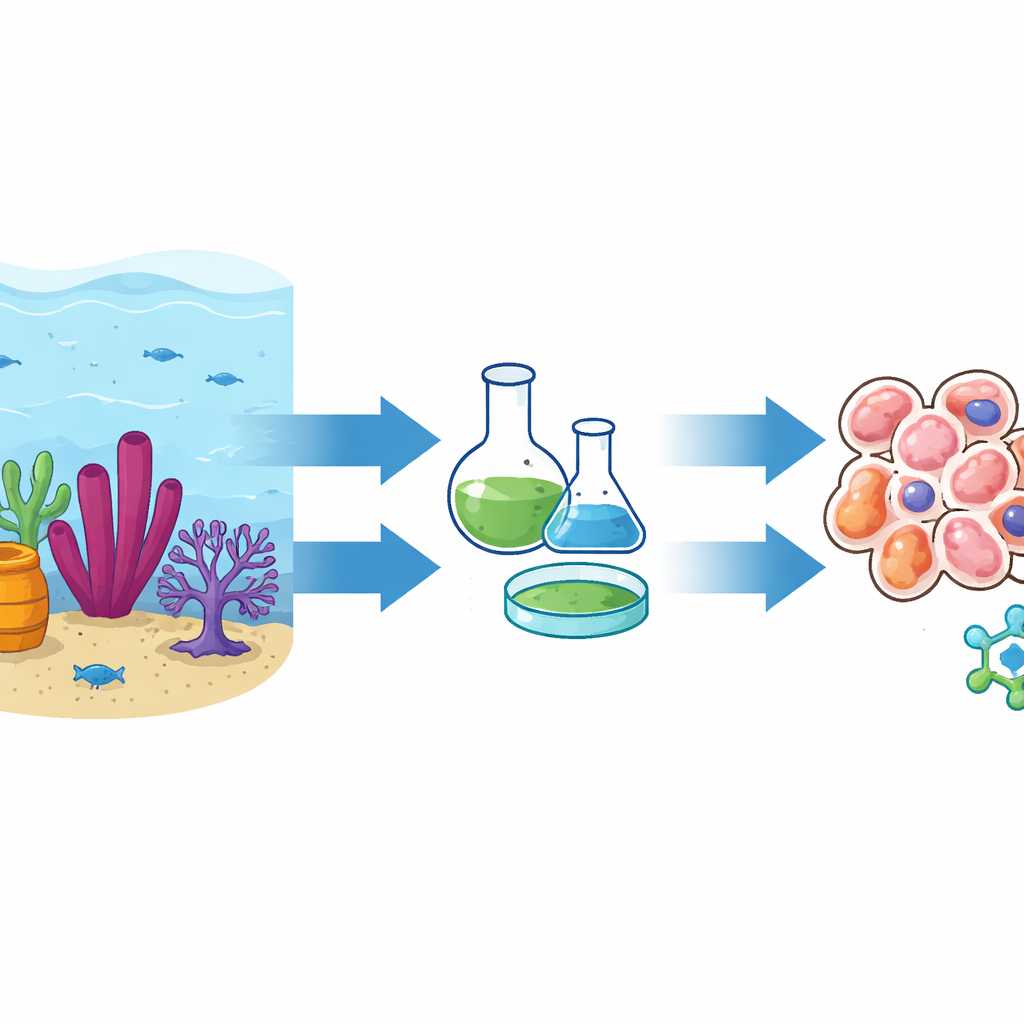
One Sponge Stands Out
Across all the comparisons, Stylissa carteri collected at El Gouna emerged as the clear star. The total extract from this population killed about 80 percent of liver cancer cells at a standard test dose and had a relatively low IC50 value (the concentration needed to halve cell survival), showing strong potency. The same extract nearly matched a common chemotherapy drug in its ability to stop cells from forming colonies over two weeks and to slow their migration into a scratch wound on the dish. Interestingly, when this powerful extract was split into separate solvent fractions, none of the pieces worked nearly as well. That suggests the sponge’s full effect depends on several compounds acting together, rather than on a single “magic bullet.”
Peeking Inside the Chemical Toolbox
To find out what was inside this potent extract, the scientists used high-resolution liquid chromatography and mass spectrometry to profile its ingredients. They identified a group of rare, bromine-rich molecules known as pyrrole–imidazole alkaloids, including hymenialdisine, spongiacidin D, oroidin, and related compounds, along with a phenazine-like pigment. Different collection sites produced different mixes and abundances of these molecules, underlining how temperature, salinity, and local conditions can reshape a sponge’s chemistry. The El Gouna samples of Stylissa carteri were especially rich in several of these alkaloids, which have been linked in earlier work to cancer cell death, disruption of cell division, and interference with cell movement—exactly the behaviors seen in the liver cancer assays here.
How the Molecules May Work
Because it is difficult to test every possible mechanism in the lab, the team turned to computer models to generate a plausible target. Using pharmacophore mapping and docking simulations, they found that hymenialdisine and spongiacidin D fit snugly into the active pocket of checkpoint kinase 2 (Chk2), a protein that helps cells respond to DNA damage. If this protein is blocked in cancer cells, it can tip the balance toward cell death instead of repair and survival. Detailed molecular dynamics simulations showed that the complex between hymenialdisine and Chk2 remained especially stable over time, with the protein becoming more compact and less flexible when the molecule was bound. Energy calculations suggested that tight packing between the molecule and key hydrophobic spots in the protein drives this interaction, and basic “virtual pharmacology” tests indicated that hymenialdisine, in particular, has properties compatible with oral drugs and lacks obvious toxicity flags. 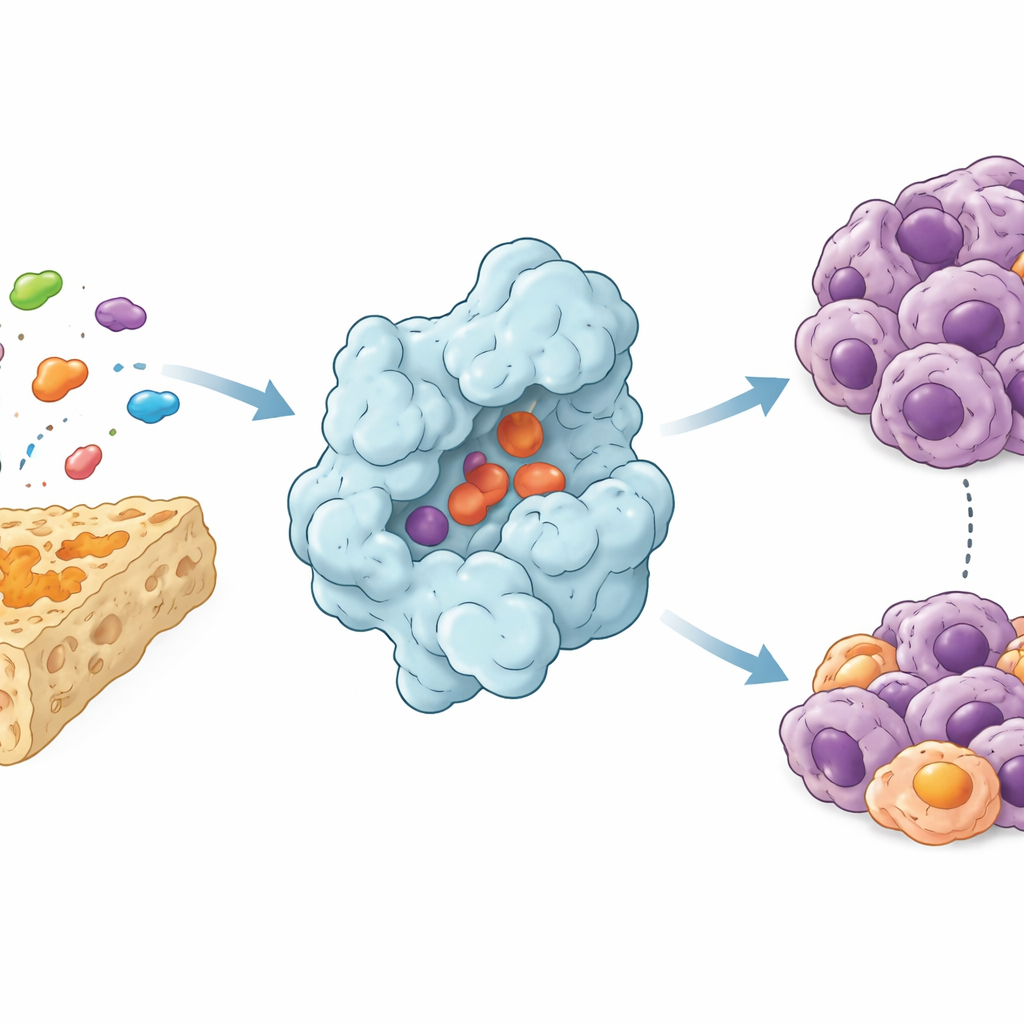
What This Means for Future Treatments
In simple terms, the study shows that a common Red Sea sponge is a rich source of small molecules that, together, can strongly slow liver cancer cells in the lab and that at least two of these molecules may latch onto a critical control protein inside those cells. This does not mean a new medicine is ready—these results are early-stage and entirely in vitro or in silico. The next steps will require isolating the individual compounds, confirming that they truly hit Chk2 and related pathways in real cells, and rigorously testing their safety and selectivity in healthy tissues. Still, the work demonstrates how exploring extreme marine habitats, and pairing classic cell biology with modern computation, can uncover promising starting points for future anticancer drugs.
Citation: Ibrahim, N.E., El-Feky, A.M., Aboelmagd, M. et al. Cytotoxic activity of marine derived bioactive compounds from red sea sponges supported by LC-MS/MS profiling and molecular docking. Sci Rep 16, 8949 (2026). https://doi.org/10.1038/s41598-026-39782-z
Keywords: marine sponges, liver cancer, natural products, Chk2 kinase, pyrrole imidazole alkaloids