Clear Sky Science · en
A cross-sectional comparison of nursing knowledge attitudes and practices in adverse event management based on simulation training experience
Why this study matters for patients and families
When people are hospitalized, they trust nurses to keep them safe from preventable harm such as medication mix‑ups, falls, or equipment problems. This study from five hospitals in China asks a simple but important question: are nurses better prepared to handle these mishaps if they regularly practice realistic emergency scenarios in a safe, simulated setting? Understanding the answer can help hospitals decide how to train staff and reassure patients that systems are in place to catch and respond to mistakes before they cause serious damage. 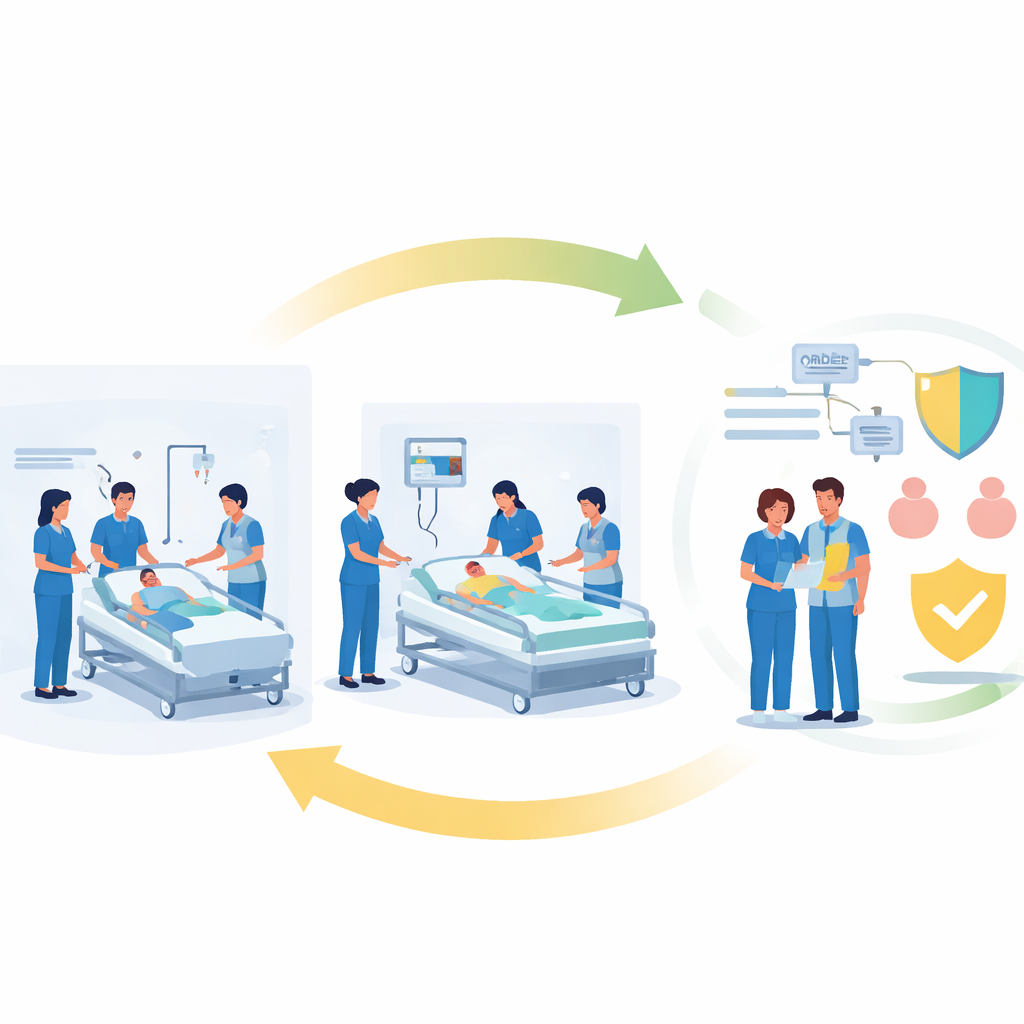
Everyday mishaps that can hurt patients
Adverse nursing events are unintended problems linked to nursing care that harm patients. They can include giving the wrong drug, missing a change in a patient’s condition, or failing to follow safety steps during procedures. Earlier work suggests that up to four in ten patients in Chinese hospitals may experience at least one preventable harmful event. Because nurses are at the bedside around the clock, they are often the first to spot trouble, take emergency action, report what happened, and help the team learn from mistakes. To do this well, they need solid knowledge of hospital rules, a positive attitude toward open reporting, and safe day‑to‑day habits. Researchers describe these three pillars as knowledge, attitude, and practice.
Learning by doing in a safe space
Traditional classes usually involve lectures, slides, or written policies. In contrast, clinical scenario simulation courses place nurses in lifelike practice situations, using mannequins or mock equipment to replay crises without putting real patients at risk. In this study, the simulation courses followed a standard pattern: a short briefing about goals and roles, an acted‑out scenario covering things like patient falls, needle injuries, or medication errors, and then a guided debriefing to talk through what went well and what should change. Across the five hospitals, nurses typically received five to six hours of this training each year, and the researchers recorded whether nurses had ever taken such a course and for how long.
What the researchers measured
The team surveyed 931 nurses who met the study criteria, almost all of the eligible staff from the participating hospitals. They created a questionnaire to measure three things: how well nurses understood key ideas about adverse events, how they felt about reporting and discussing them, and how they said they behaved in real clinical work. Most nurses were relatively young, with around ten years of experience on average, and just over half had taken part in simulation training. The survey showed generally good levels of knowledge and very positive self‑reported behavior, with many nurses saying they carefully followed procedures, reported problems, and spoke openly with patients when something went wrong. However, there were blind spots: for example, most nurses did not correctly recognize that event reporting is supposed to be voluntary, confidential, and non‑punitive, hinting at gaps between formal policy and everyday understanding.
How simulation training was linked to performance
When the researchers compared nurses who had taken simulation courses with those who had not, they found consistent differences. Nurses with simulation experience scored higher on knowledge questions about how adverse events are defined, classified, and managed. They also expressed stronger support for thorough reporting and analysis, and more confidence in their ability to use hospital reporting systems. On practice questions, they were more likely to say they followed prevention steps, handled incidents systematically, reflected on what happened afterward, and attended to the emotional side of errors for both patients and staff. The three pillars—knowledge, attitude, and practice—were strongly connected; nurses who knew more tended to feel more positively about safety efforts and to report better day‑to‑day behavior. 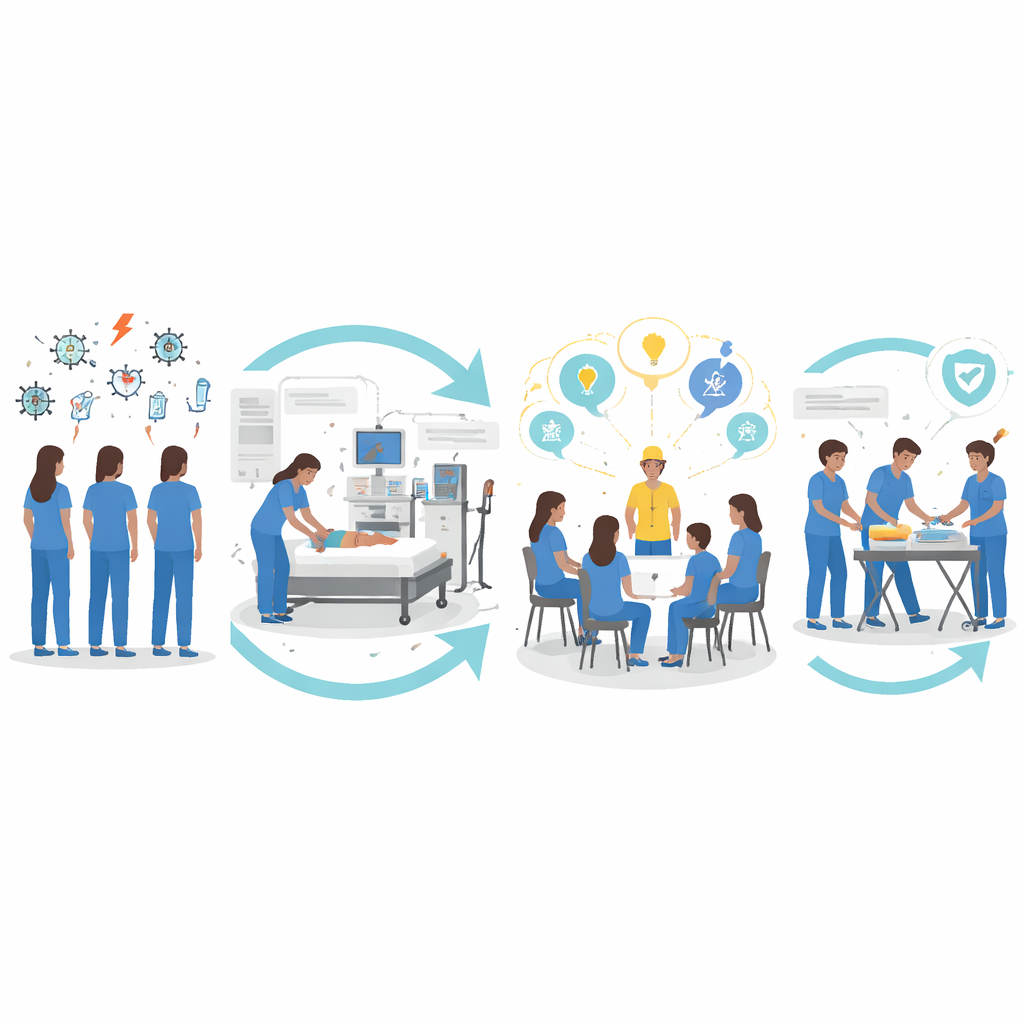
Important cautions and next steps
Despite these encouraging links, the study design has limits. All results came from a one‑time questionnaire, not from observing nurses on the ward or tracking patient outcomes. The hospitals were selected by convenience, all had simulation programs, and only female nurses were included, so the findings may not apply everywhere. Because many factors—such as age, education, or hospital level—also differed between groups and were not fully adjusted for, the researchers cannot prove that simulation training alone caused the higher scores. In addition, the practice scores were so high overall that it was hard to distinguish between individuals, and self‑reporting may have made nurses present themselves in an overly positive light.
What this means for patients and hospitals
For lay readers, the main takeaway is that nurses in these hospitals reported being well informed and highly committed to managing adverse events, and that those who practiced in realistic simulations felt especially prepared. The study supports the idea that giving nurses safe spaces to rehearse crises, talk openly about mistakes, and review what happened may strengthen a culture where problems are caught early and discussed rather than hidden. However, the authors emphasize that more rigorous, long‑term research is needed to confirm whether these training programs truly change on‑the‑job behavior and, most importantly, reduce harm to patients.
Citation: Shen, Y., Wang, Y., Wu, S. et al. A cross-sectional comparison of nursing knowledge attitudes and practices in adverse event management based on simulation training experience. Sci Rep 16, 8401 (2026). https://doi.org/10.1038/s41598-026-39781-0
Keywords: nursing simulation training, patient safety, adverse events, nurse education, hospital quality