Clear Sky Science · en
Triglyceride-glucose index, genetic susceptibility, and trajectory of microvascular multimorbidity in type 2 diabetes
Why tiny blood vessels matter in diabetes
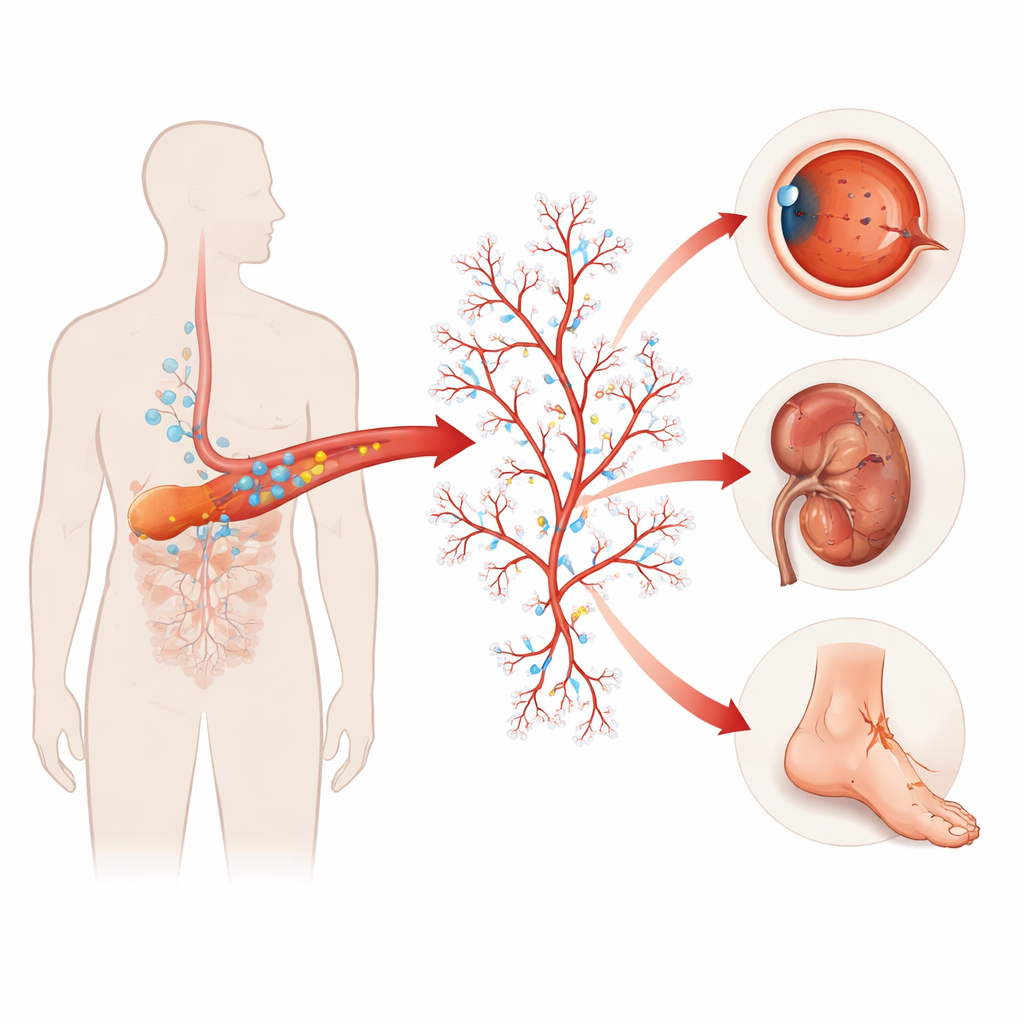
For many people with type 2 diabetes, the biggest dangers are not daily blood sugar checks but slow, silent damage to the body’s smallest blood vessels. These fragile networks supply the eyes, kidneys and nerves, and when they fail, the result can be blindness, kidney failure and painful nerve damage. This study asks a practical question with big consequences: can a simple blood test that combines routine measures of sugar and fat help predict who is most likely to develop several of these problems at once?
A simple number from everyday blood tests
The researchers focused on the triglyceride-glucose, or TyG, index, a calculation based on fasting blood sugar and triglycerides, a common blood fat. This index reflects how resistant the body is to insulin, the hormone that helps move sugar from the bloodstream into cells. Because both sugar and fat levels are already measured in standard diabetes care, TyG can be computed without any special equipment. The team also considered each person’s inherited tendency toward diabetes using a polygenic risk score, which summarizes the effect of many genetic variants across the genome.
Following thousands of people over time
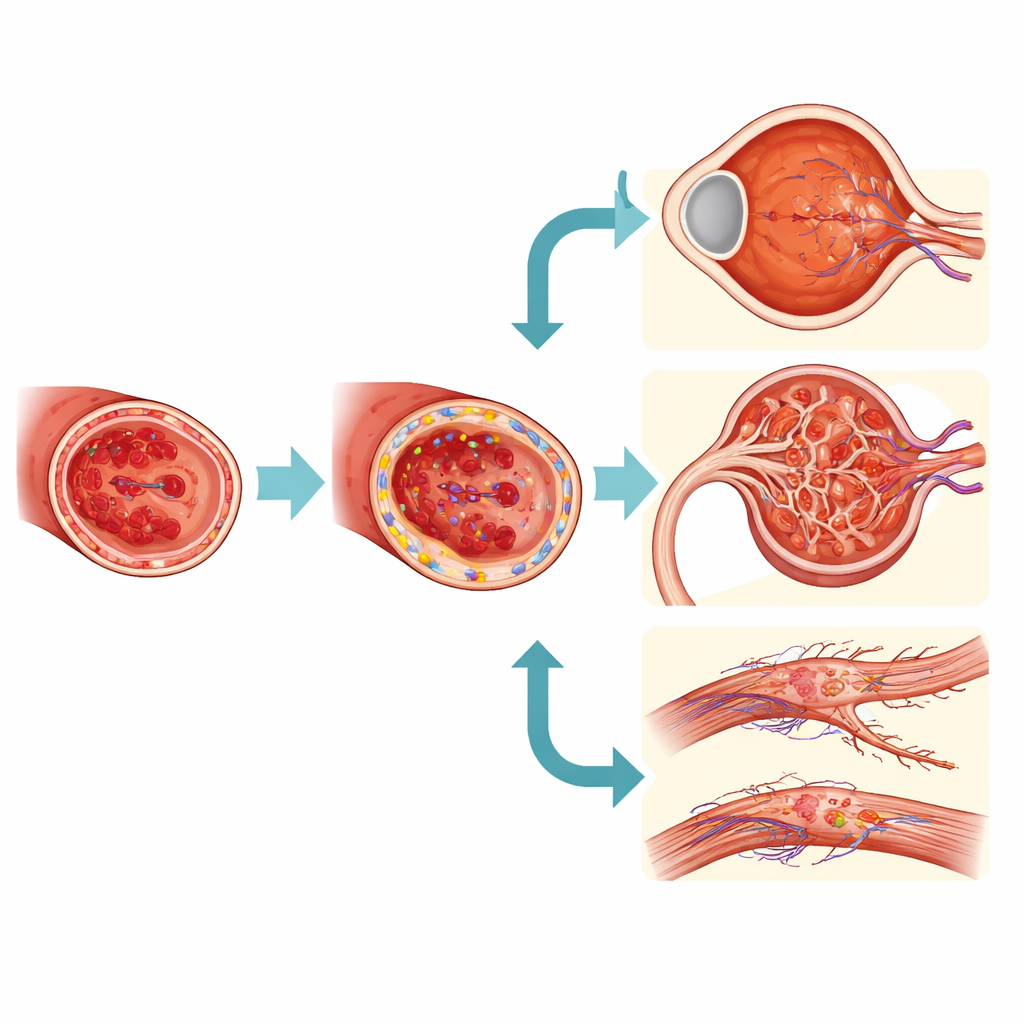
Using data from more than 19,000 adults with type 2 diabetes in the UK Biobank, the researchers tracked who went on to develop problems in the eye (retinopathy), kidney (nephropathy) or nerves (neuropathy) over nearly 13 years. They looked first at the appearance of any one of these complications, and then at the development of “multimorbidity” — when two or more occur in the same person. Sophisticated statistical models allowed them not only to see whether higher TyG was linked to new damage, but also to map how people moved from no complications, to one affected organ, to several, and ultimately to death.
Higher TyG, more organs affected
The results were striking. People with higher TyG values were more likely to develop their first microvascular complication and more likely to progress from a single problem to damage in multiple organs. For each standard-step rise in TyG, the risk of a first complication climbed by about one fifth, and the risk of multimorbidity rose by more than one third. When the progression was examined in detail, high TyG particularly sped the shift from early eye or kidney disease to combined microvascular illness. Nerve damage was also more common at higher TyG, though its role in driving multimorbidity was less certain.
Genes add weight but do not change the pattern
The study also asked whether genetic susceptibility to type 2 diabetes changed the meaning of a high TyG score. People with a stronger inherited tendency toward diabetes did have a greater overall chance of developing microvascular disease. However, the relative impact of TyG was similar across genetic risk groups. In other words, genes and metabolism acted more like partners than interactors: a person with both an unfavorable genetic profile and a high TyG score faced the greatest absolute risk, but a raised TyG was worrisome in everyone, regardless of their DNA.
What this means for people living with diabetes
For patients and clinicians, these findings suggest that a simple index derived from routine blood tests can flag those most likely to move from one complication to many. While TyG does not replace careful monitoring of blood sugar, blood pressure and lifestyle, it may help identify people who need earlier or more intensive protection of their eyes, kidneys and nerves. The study’s message is clear in everyday terms: when both blood sugar and blood fats run high over many years, the body’s smallest vessels are at greater risk in more than one organ. Keeping these levels in check may not only prevent a first complication, but also reduce the chances that problems in one organ will spread to others.
Citation: Yuan, X., Peng, M., Shi, X. et al. Triglyceride-glucose index, genetic susceptibility, and trajectory of microvascular multimorbidity in type 2 diabetes. Sci Rep 16, 8230 (2026). https://doi.org/10.1038/s41598-026-39777-w
Keywords: type 2 diabetes, insulin resistance, microvascular complications, triglyceride-glucose index, diabetic retinopathy nephropathy neuropathy