Clear Sky Science · en
The influence of algal biostimulator and nitrogen source on the phytochemical composition and biological properties of Corchorus olitorius leaves and stems
Why this leafy green matters
For millions of people in Africa and the Middle East, the leafy vegetable Corchorus olitorius—often known as mulukhiyah or jute mallow—is both comfort food and home medicine. This study asks a surprisingly modern question about this traditional plant: can smarter, more eco‑friendly fertilizing practices make these leaves even richer in health‑promoting compounds, especially when they are grown in salty soils where crops usually struggle?
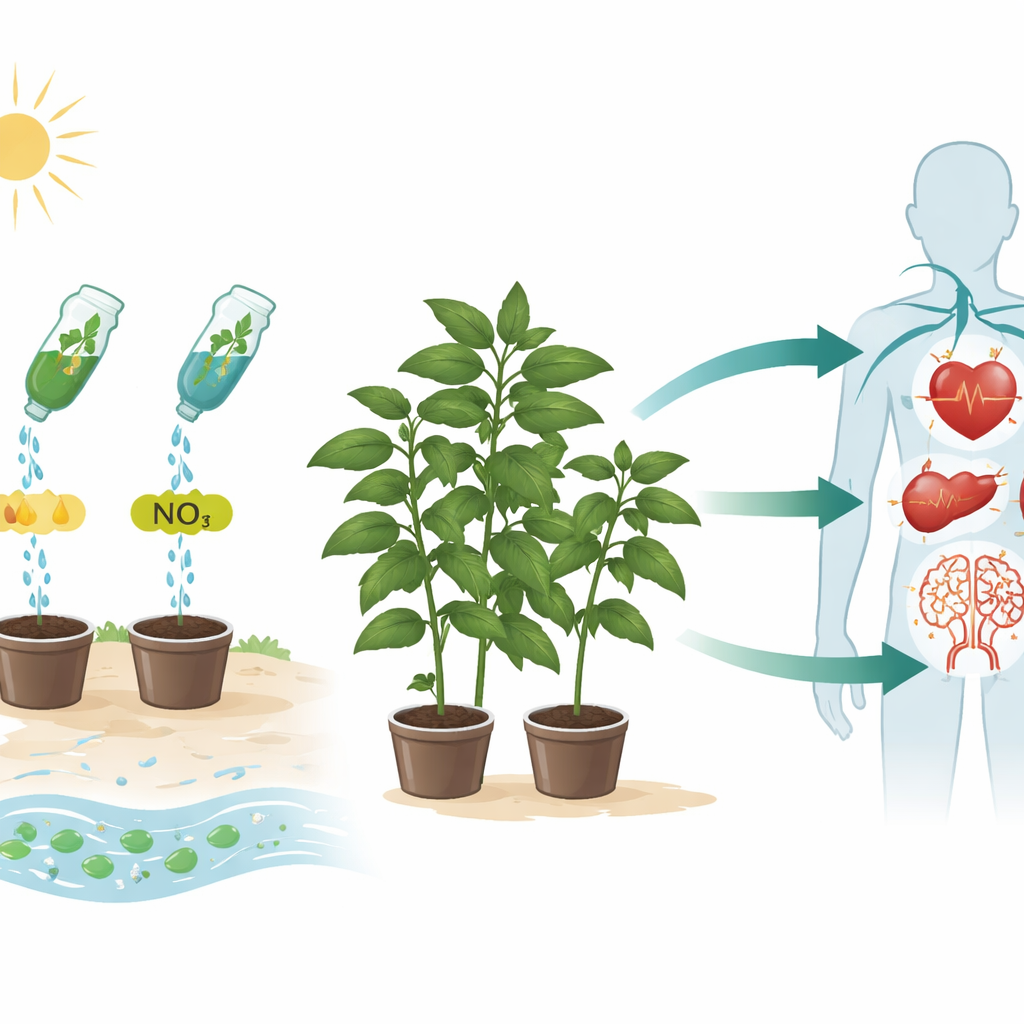
Growing healthy plants in harsh water
The researchers grew C. olitorius in pots of sandy soil under salty irrigation water, mimicking tough, real‑world farming conditions. Alongside standard nutrients, the plants received a booster made from green algae, sprayed on their leaves and supplied in the irrigation water. The team compared three different forms of nitrogen fertilizer—urea, ammonium sulfate, and ammonium nitrate—combined with this algal treatment. By carefully separating leaves and stems and extracting their chemical contents, they could see how each fertilizing strategy changed the plant’s internal chemistry.
Leaves as tiny chemical factories
Analyses showed that the leaves acted as miniature factories for useful natural chemicals, consistently storing more sterols, aromatic oils (terpenes), fatty acids, green pigments, and colorful protective compounds than the stems. Among the three nitrogen sources, ammonium nitrate, used together with the algal biostimulant, stood out. Plants receiving this combination had the darkest green leaves and the highest levels of chlorophylls, carotenoids, and a broad range of plant defense molecules such as polyphenols, tannins, and flavonoids. Detailed profiling confirmed familiar names like gallic acid, chlorogenic acid, caffeic acid, rutin, quercetin, and kaempferol—compounds often linked to antioxidant and disease‑preventing effects in many fruits and vegetables.
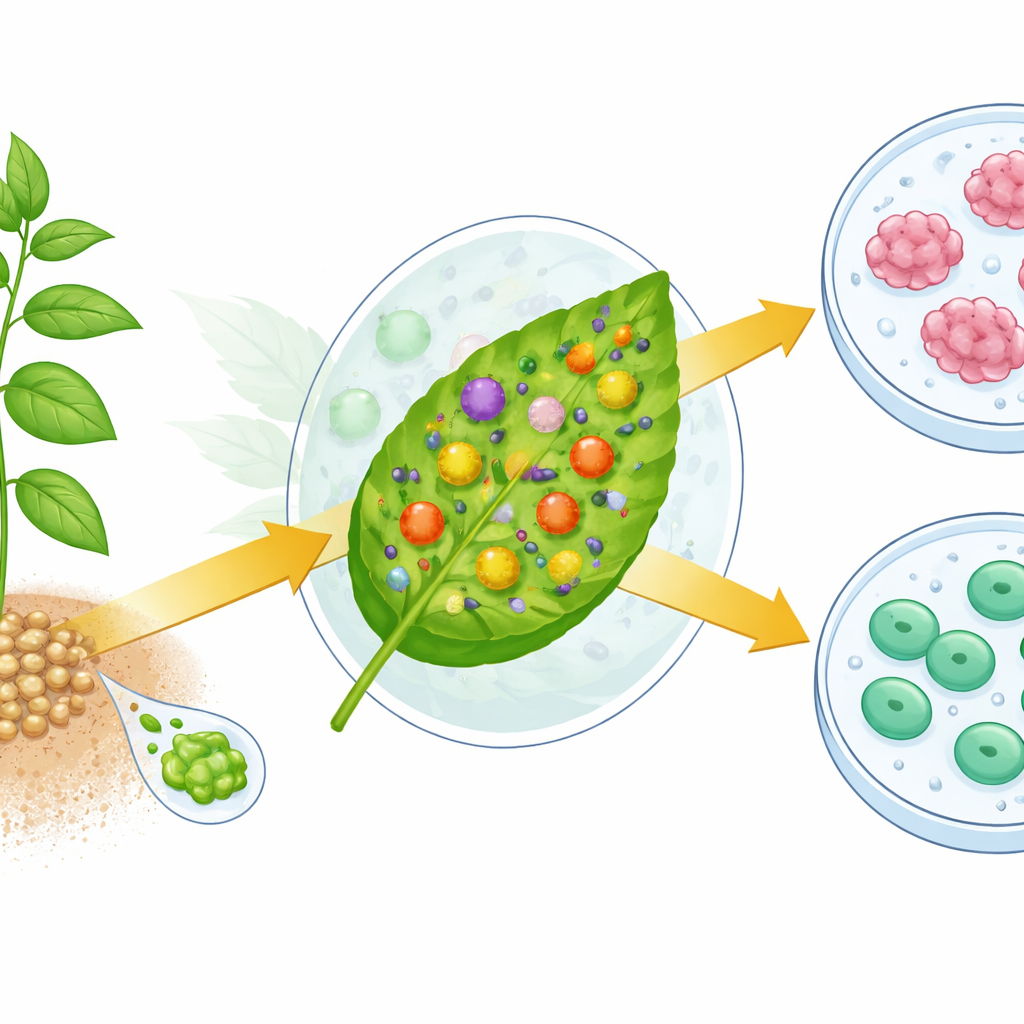
From plant chemistry to potential health benefits
To test whether this chemical richness translates into biological effects, the team examined the plant extracts in a suite of laboratory assays. Extracts from ammonium‑nitrate‑fed leaves showed the strongest ability to neutralize harmful free radicals and to reduce oxidizing agents, almost approaching the performance of pure vitamin C. The same extracts modestly slowed down an enzyme (acetylcholinesterase) linked to memory loss in Alzheimer’s disease, and they inhibited key digestive enzymes that break down starches and sugars, a common target in managing type 2 diabetes. In contrast, their direct effects on enzymes involved in inflammation and joint damage were weak, suggesting that any soothing effects on inflammation seen in folk use likely work through more indirect routes, such as overall antioxidant protection.
Hints of cancer‑fighting promise
The scientists also tested the extracts on human cancer cell lines in culture. Again, the most interesting results came from leaves grown with ammonium nitrate plus the algal booster. These extracts were selectively toxic to colon cancer cells, curbing their growth and triggering cell death, while showing little harm to normal skin cells. Measurements of two key proteins involved in cell suicide (apoptosis) supported this picture: treated cancer cells showed higher activity of the executioner enzyme caspase‑3 and lower levels of the survival protein Bcl‑2. Although the plant extracts were less potent than a standard chemotherapy drug, they appeared to act more gently on healthy cells, hinting at a safer, plant‑based complement rather than a replacement for existing treatments.
What this means for your plate
Overall, the study shows that how we feed C. olitorius can significantly change what it gives back to us. Using an algal biostimulant together with ammonium nitrate fertilizer under salty conditions made the leaves notably richer in natural protective compounds and gave them stronger antioxidant, blood‑sugar‑modulating, brain‑enzyme‑blocking, and colon‑cancer‑cell‑killing activities in the lab. While these findings are based on test‑tube and cell experiments rather than clinical trials, they support the idea that carefully managed fertilization can boost the “nutraceutical” value of a humble leafy green, reinforcing its role as both food and potential medicine in regions where it is already a dietary staple.
Citation: Aboulthana, W.M., El-Feky, A.M., Omar, N.I. et al. The influence of algal biostimulator and nitrogen source on the phytochemical composition and biological properties of Corchorus olitorius leaves and stems. Sci Rep 16, 8948 (2026). https://doi.org/10.1038/s41598-026-39774-z
Keywords: Corchorus olitorius, algal biostimulant, antioxidant activity, antidiabetic potential, colon cancer cells