Clear Sky Science · en
Incidence of proximal tibia fractures in adults in Sweden show higher rates in women and a marked increase among young women
Why knee-shin fractures matter to everyday life
Most of us don’t think much about the upper part of our shinbone—the section just below the knee—until something goes wrong. Yet fractures in this area, called proximal tibia fractures, can rob people of mobility for months, increase the risk of later disability, and even signal broader health problems like fragile bones and frailty. This nationwide Swedish study used more than a decade of health data to reveal who is breaking this part of the leg, how often it happens, and how doctors are treating these injuries—with some surprising trends, especially for women.
Who is breaking the upper shinbone?
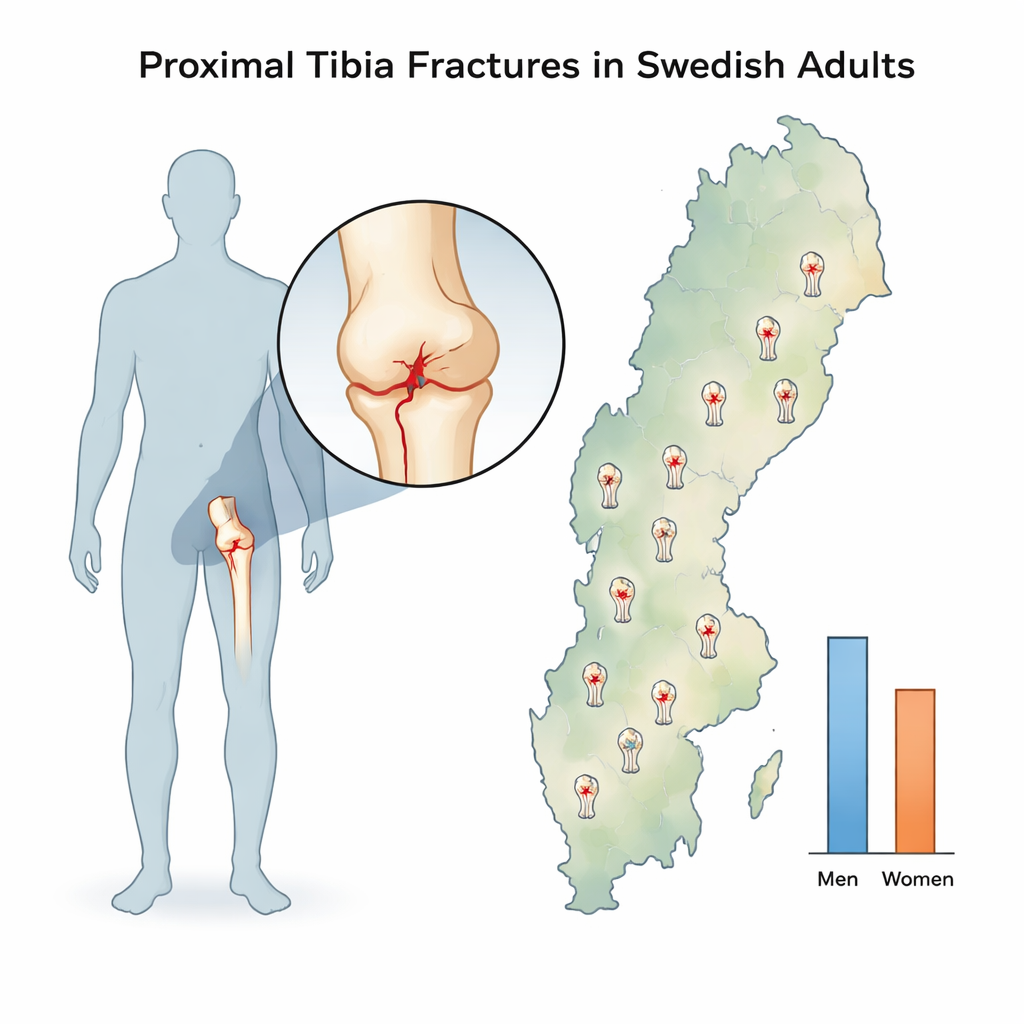
The researchers analyzed every adult in Sweden diagnosed with a proximal tibia fracture between 2011 and 2023, drawing on a national patient register that captures virtually all hospital and specialist visits. They identified 38,053 people: about 60 percent were women, and the average age was 57 years—roughly 50 for men and 61 for women. In younger adults, these fractures typically occur after high-speed events such as traffic crashes or sports injuries. In older adults, a simple fall from standing height can be enough, because age-related bone loss turns the upper shinbone into a weak point that can crack under relatively minor impact.
More fractures overall, driven by women
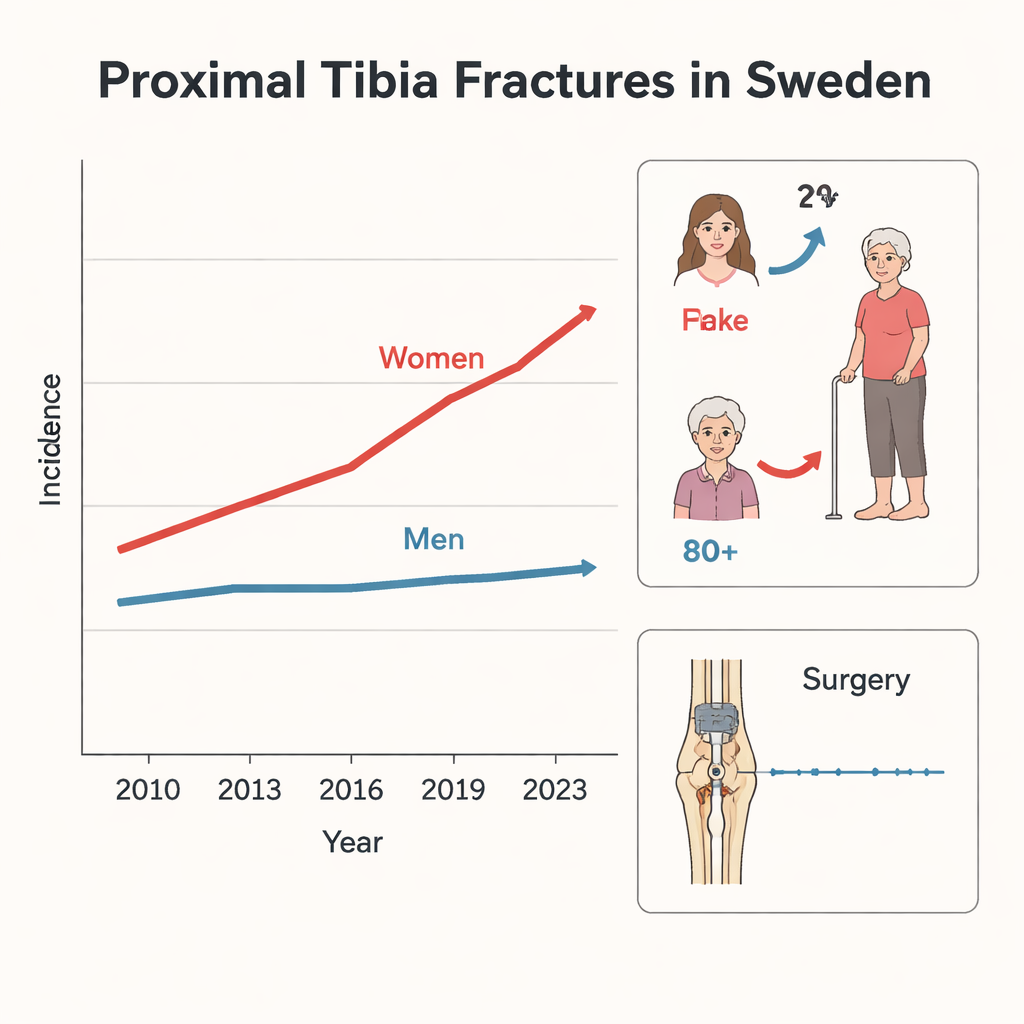
Over the 13-year period, the overall rate of these fractures rose modestly—from about 37 to 40 cases per 100,000 adults each year. For men, the rate was essentially flat. For women, however, it climbed by nearly one fifth, from about 42 to 50 cases per 100,000. The highest rates throughout the study were seen in women aged 80 and older, who remained the most vulnerable group even though their risk actually decreased somewhat over time. Up to age 50, men made up most of the cases; past age 50, women dominated, reflecting how bone loss after menopause shifts fracture risk toward older women.
A worrying spike in young women
One of the most striking findings was a doubling of fracture rates among women in their twenties: from about 13 to 25 cases per 100,000 people between 2011 and 2023. This relative jump was larger than in any other group. Because the national register does not record exactly how each injury happened, the authors can only speculate about causes. Possible explanations include more participation in high-speed sports, increased traffic exposure, or other lifestyle changes among young women. Whatever the reasons, the pattern suggests that these leg fractures are no longer only a concern for the very old.
How often surgery is used—and which kind
Despite changes in who is getting injured, how doctors manage these fractures in Sweden has been remarkably stable. Only about three in ten patients underwent surgery at all. Among those who did, the dominant method—used in nearly three quarters of operations—involved metal plates and screws to hold the upper shinbone in place while it heals. Alternatives such as rods inside the bone or screw-only repairs were much less common. A more radical option, replacing the knee joint with an artificial one right after the fracture, has actually become rarer over time, shrinking from around 6 percent to just over 1 percent of surgical cases. This suggests ongoing caution about using full joint replacement as a first-line solution for these injuries.
What these patterns mean for health
Because this study covers the entire adult population of a country, it offers a clear big-picture view: proximal tibia fractures are becoming slightly more common overall, especially among women, with an alarming rise in young women, while the main surgical approach has stayed constant. For the general public, the message is twofold. First, for older adults—especially older women—these fractures act as warning signs of fragile bones and heightened health risks, underscoring the value of fall prevention, bone-strengthening treatments, and early screening for osteoporosis. Second, for younger people, particularly active young women, the findings highlight the importance of safe training, protective gear, and attention to injury risk. Protecting the upper shinbone today may help preserve mobility and independence for years to come.
Citation: Olerud, F., Garland, A., Hailer, N.P. et al. Incidence of proximal tibia fractures in adults in Sweden show higher rates in women and a marked increase among young women. Sci Rep 16, 6364 (2026). https://doi.org/10.1038/s41598-026-39751-6
Keywords: tibia fractures, knee injuries, bone fragility, women’s bone health, Sweden epidemiology