Clear Sky Science · en
Identification of molecular diagnostic markers and potential therapeutic drugs for Sjögren’s syndrome
Why this matters for people with dry eyes and mouth
Sjögren’s syndrome is a common but often overlooked autoimmune disease that can leave people struggling with constant dry eyes, dry mouth, fatigue, and pain. Yet doctors still lack precise blood tests to catch it early or to guide treatment. This study digs deep into patients’ blood and salivary tissues to uncover new molecular “fingerprints” of the disease and to explore whether a plant-derived compound might one day help calm the overactive immune response. 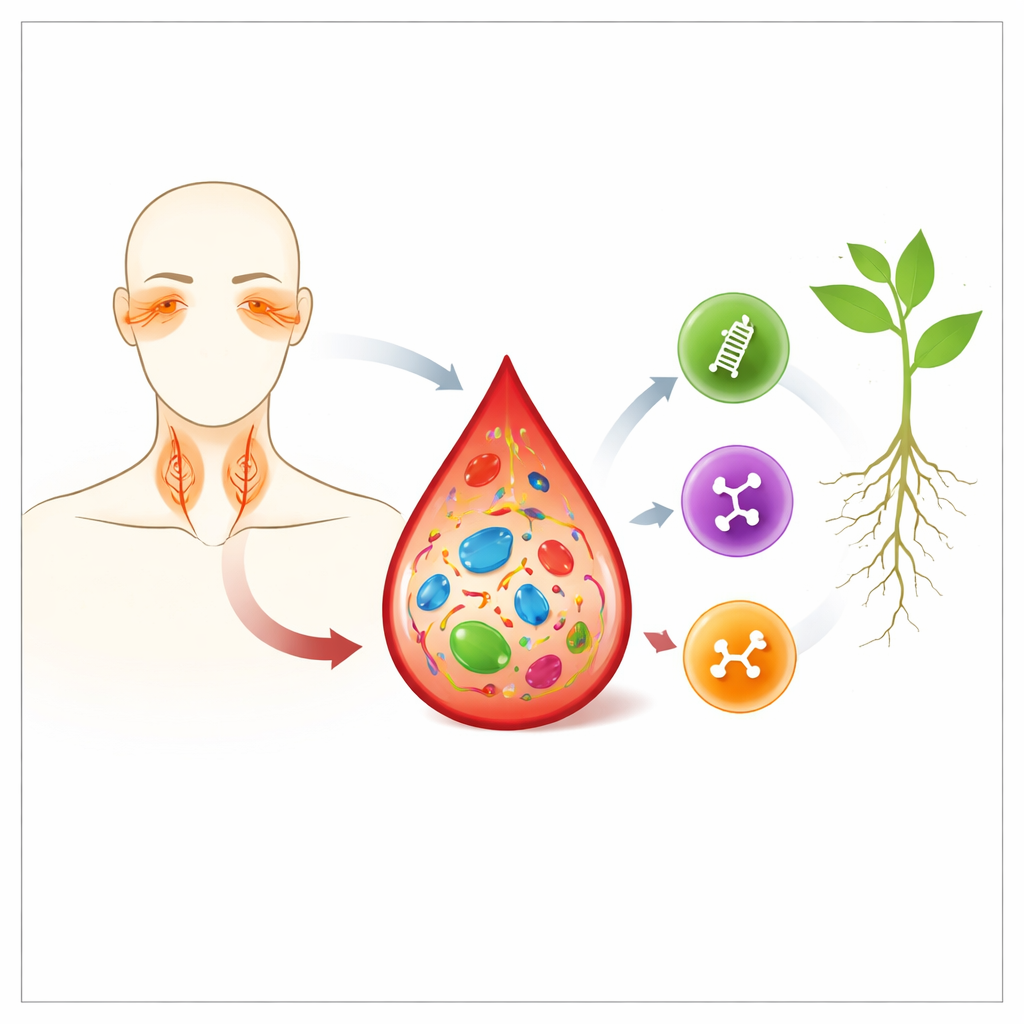
Looking inside blood and glands for hidden signals
The researchers gathered and re-analyzed large public datasets containing gene activity from several sources: salivary glands, saliva, salivary ducts, and blood from people with Sjögren’s syndrome and from healthy volunteers. They also collected fresh blood and salivary gland samples from a small group of female patients and matched controls. By comparing which genes were turned up or down in each tissue, they searched for changes that appeared consistently across the body, not just in a single gland. This broad view helps distinguish changes that truly belong to Sjögren’s syndrome from those that might reflect local irritation or random noise.
Three standout genes that mark the disease
From thousands of genes, eight showed consistent abnormal activity in salivary tissues and in blood. To pinpoint which of these were most useful for diagnosis, the team turned to several machine-learning methods—computer algorithms that learn patterns distinguishing patients from healthy people. Across five different algorithms, the same three genes kept rising to the top: EPSTI1, IFI44, and IFIT1. In blood samples, all three were markedly more active in patients and, taken individually, could separate Sjögren’s cases from healthy controls with high accuracy. When the researchers checked these genes in newly collected patient material, they again found higher levels in immune cells from blood and stronger staining in diseased salivary glands, supporting their role as robust diagnostic markers.
How these genes link to a misfiring immune system
To understand what these three genes are doing, the team examined which biological pathways they are tied to. All were connected to type I interferon signaling, a powerful alarm system the body normally uses to fight viruses but which is often overactive in autoimmune diseases. Blood from patients showed more memory B cells and activated dendritic cells—immune cells that can fuel chronic autoimmunity—and fewer naïve T cells and certain regulatory cell types that usually help keep the immune system in check. The activity of EPSTI1, IFI44, and IFIT1 rose and fell in step with these shifts in immune cell populations, suggesting that these genes sit at key points where the body’s antiviral machinery and autoimmune responses intersect. 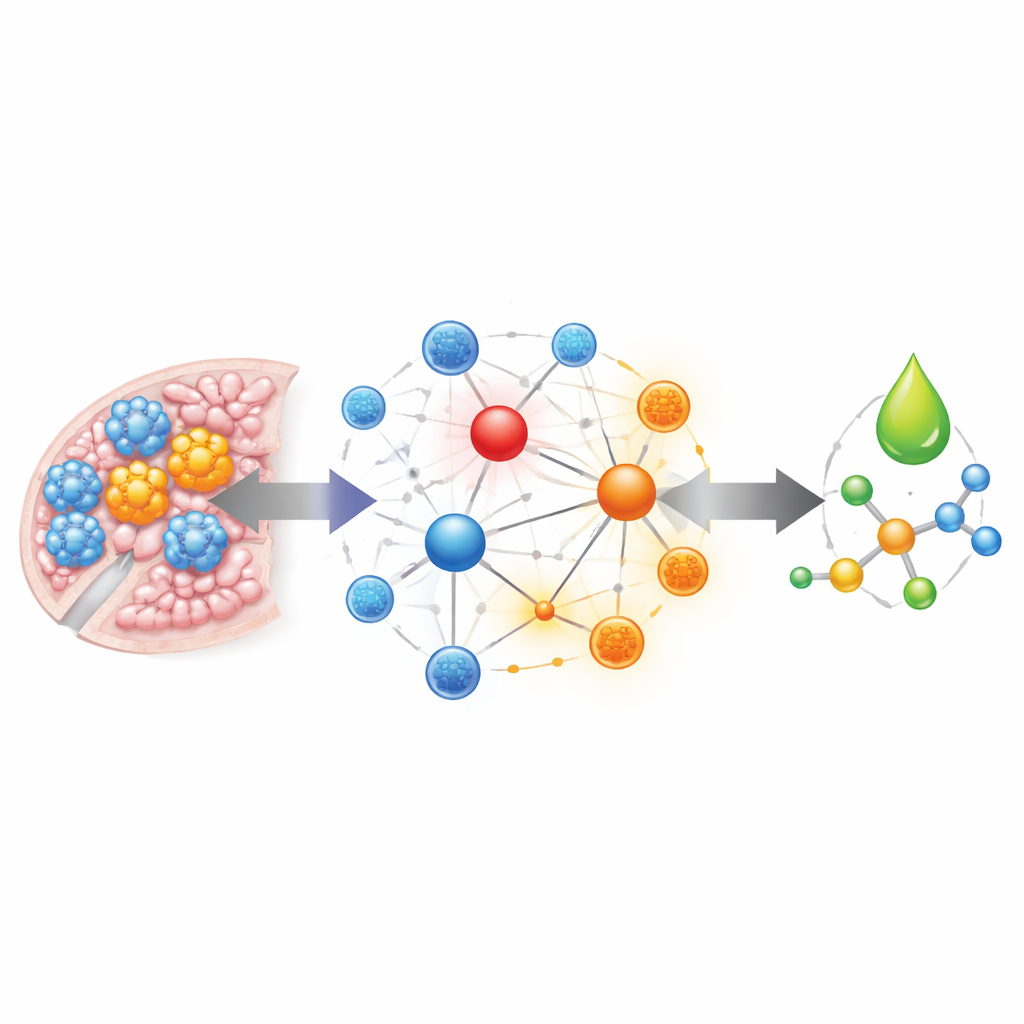
A plant compound as a potential calming influence
The study then turned to paeoniflorin, a natural compound extracted from peony roots and already known for its anti-inflammatory effects in lab models. Using “network pharmacology” databases, the authors identified more than a hundred molecular targets that paeoniflorin shares with Sjögren’s syndrome–related pathways, many involved in immune signaling and cell survival. Computer docking simulations suggested that paeoniflorin could bind stably to the three key genes’ protein products. While this does not prove a drug effect in real patients, it raises the possibility that paeoniflorin—or drugs inspired by it—might help rebalance the overactive immune circuits highlighted by the new biomarkers.
What this could mean for future care
In everyday terms, this work proposes three new blood-based flags that may signal Sjögren’s syndrome more clearly and earlier than current tests, and it points to a plant-derived compound as a potential way to nudge the misdirected immune response back toward normal. The findings are still early: the patient groups were relatively small, the drug interactions were modeled only on computers, and larger, diverse clinical trials are needed. But the study offers a roadmap toward more precise diagnosis and more targeted treatments, giving hope that people living with dry eyes, dry mouth, and systemic symptoms could one day receive care tailored to the disease’s deep molecular roots.
Citation: Yin, Y., Xu, T., Ma, H. et al. Identification of molecular diagnostic markers and potential therapeutic drugs for Sjögren’s syndrome. Sci Rep 16, 9764 (2026). https://doi.org/10.1038/s41598-026-39750-7
Keywords: Sjögren’s syndrome, autoimmune disease, biomarkers, immune dysregulation, paeoniflorin