Clear Sky Science · en
Molecular xenomonitoring for identifying Plasmodium parasites and blood meal sources of mosquitoes in malaria endemic villages adjacent to the southern Rift Valley Lakes, South Ethiopia
Why this mosquito study matters
Malaria remains one of the world’s most stubborn infectious diseases, especially in rural Africa. Yet health workers usually detect trouble only after people become sick. This study from southern Ethiopia asks a different question: can we read the “blood diaries” inside mosquitoes themselves to spot malaria parasites early, and to learn which animals and people they are biting most often? By turning mosquitoes into tiny flying sample collectors, the researchers hope to give communities more time and better guidance to stop outbreaks.
Villages, lakes, and biting insects
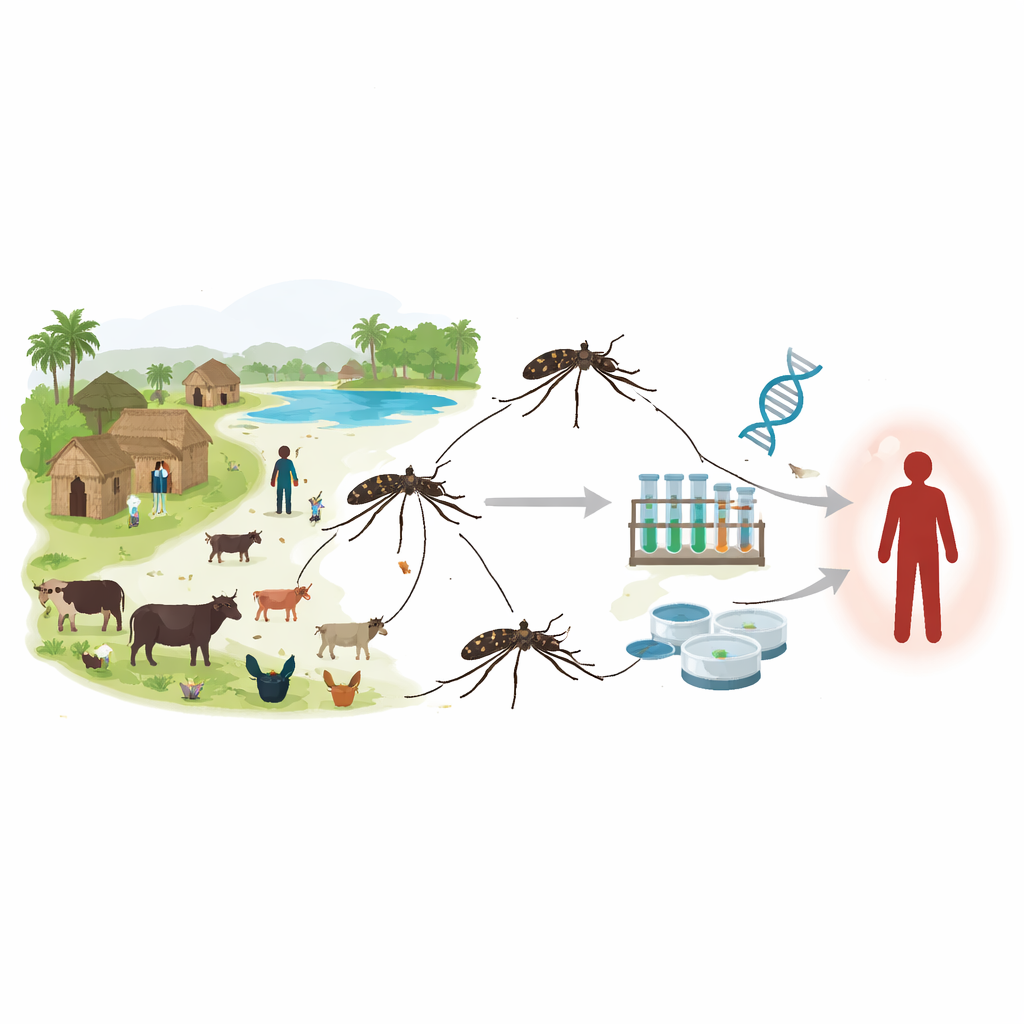
The research took place in 12 rural communities near Ethiopia’s southern Rift Valley lakes, Abaya and Chamo. These lowland villages have two rainy seasons, irrigated farms, and plenty of standing water—ideal conditions for mosquitoes. Families keep many animals, including goats, cattle, dogs, and chickens, most of them in separate shelters close to houses. Malaria transmission in the area is driven mainly by a single mosquito species, Anopheles arabiensis, which often bites outdoors and readily switches between human and animal blood. These habits make it harder for standard indoor tools, like bed nets and spraying, to fully protect residents.
Using mosquitoes as early warning messengers
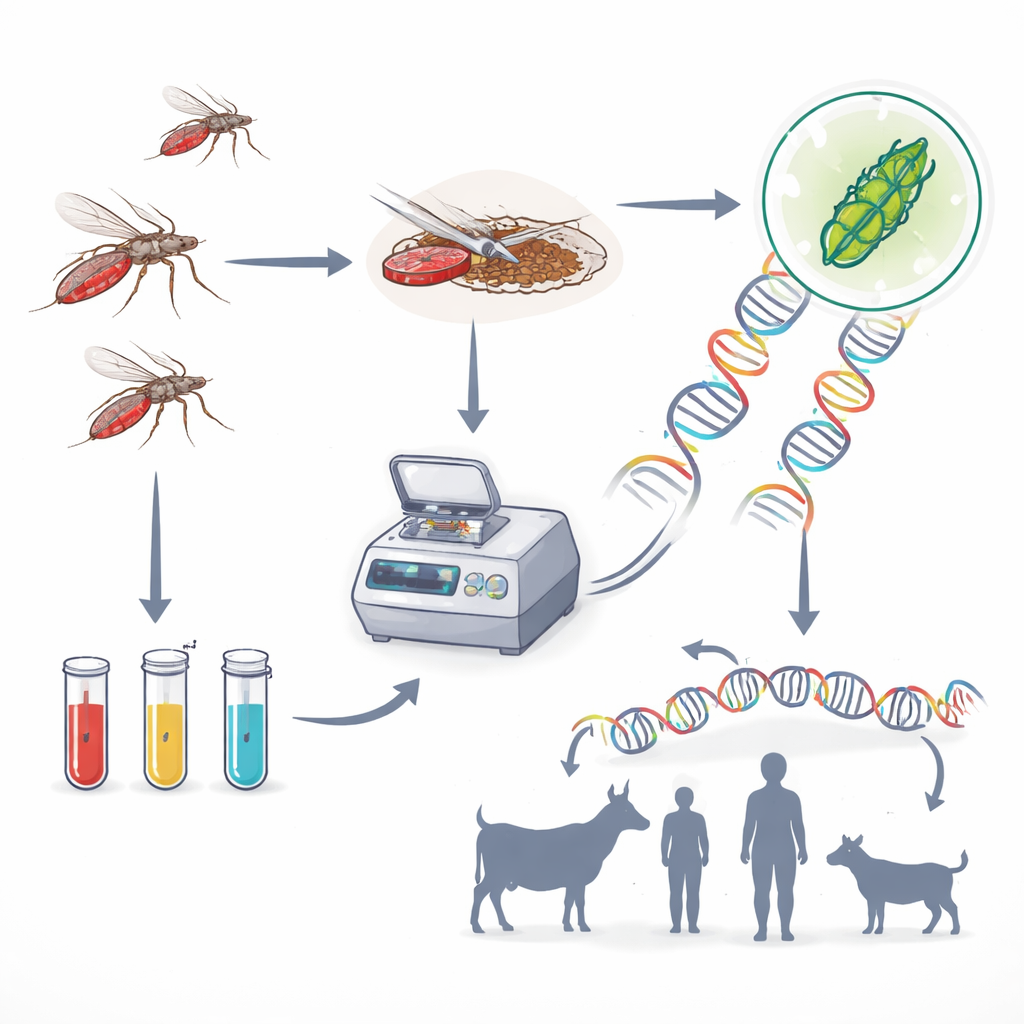
Instead of waiting for patients to show up at clinics, the team used an approach called molecular xenomonitoring—testing mosquitoes for traces of parasite genetic material. They set light traps overnight in 416 randomly selected houses, indoors and just outside. From more than two thousand malaria-carrying mosquitoes collected, they focused on 446 that had recently taken a blood meal. In the laboratory, they carefully removed the blood-filled abdomens, preserved them, and extracted DNA. One set of tests looked for the two main malaria parasites in the region, Plasmodium falciparum and P. vivax. Another set identified which animal species the blood came from, by matching mitochondrial DNA sequences to known patterns for different hosts.
Who do the mosquitoes feed on?
The results show a complex picture of mosquito dining habits. Overall, 85 percent of tested mosquitoes had blood from at least one of six vertebrate hosts; the rest were either too digested or came from species the tests did not cover. Goat blood was by far the most common, found in about two-thirds of mosquitoes. Human blood appeared in nearly one-quarter, and cow blood in about one-fifth. Dog blood was also frequent, while chicken and pig blood were rare. Many mosquitoes had mixed meals: roughly one-third had fed on more than one host, and a few had sampled as many as four different animals in a single feeding cycle. Calculations of a “forage ratio,” which compares feeding patterns to how many animals are actually present, suggested that An. arabiensis often prefers goats where they are abundant.
Silent circulation of parasites
When the researchers looked for malaria parasites, they found DNA from P. vivax in 2 percent of the fed mosquitoes and from P. falciparum in a smaller fraction. Strikingly, every infected mosquito belonged to the same species, An. arabiensis, confirming its role as the main local vector. Most infected mosquitoes had mixed blood meals, and several had blood only from animals at the time of capture. This suggests that parasite DNA can persist in mosquitoes after an earlier infectious bite on a human, or that the parasites were in mid-development inside the insect gut. Either way, detecting parasite DNA in mosquito abdomens reveals infection in the community before the insects become fully infectious to their next victim.
What this means for malaria control
To a lay observer, the study’s message is straightforward: by testing mosquitoes instead of waiting for sick people, health workers can gain an earlier warning of malaria circulation. The findings also show that local mosquitoes rely heavily on goats but still feed often on humans, keeping transmission going. Because the main vector can shift between people and animals and prefers to bite and rest outdoors, control programs that focus only on indoor spraying and bed nets may miss a large share of risky bites. The authors suggest that future strategies could include targeting mosquitoes around livestock—through animal treatments or housing changes—alongside human-focused tools, using mosquito “blood diaries” to guide where and when to act.
Citation: Eligo, N., Woldeyes, D., Tamiru, G. et al. Molecular xenomonitoring for identifying Plasmodium parasites and blood meal sources of mosquitoes in malaria endemic villages adjacent to the southern Rift Valley Lakes, South Ethiopia. Sci Rep 16, 9989 (2026). https://doi.org/10.1038/s41598-026-39744-5
Keywords: malaria, mosquito feeding, xenomonitoring, Ethiopia, zoophilic vectors