Clear Sky Science · en
Cryptic redundancy between PAR1b and PAR1a, two members of the PAR1 kinase family, in the survival of PAR1b-knockout mice
How Cells Find Backup Plans for Broken DNA
Our cells constantly face damage to their DNA, and when repair systems fail, the result can be cancer or developmental death. This study explores a surprising rescue mechanism in mice: when a key protein that helps the famous cancer‑linked gene BRCA1 do its job is missing, a close relative quietly steps in. The work reveals how early embryos can rewire their gene control systems to survive, offering fresh insight into why some genetic defects are lethal while others are unexpectedly tolerated.
A Family of Cell Organizers With a Hidden Role
Researchers focused on a family of enzymes called PAR1 kinases, which help cells maintain their internal organization. One family member, PAR1b, was previously shown to guide BRCA1 into the cell nucleus, where BRCA1 oversees accurate DNA repair and protects fragile DNA replication sites. Removing BRCA1 entirely in mice is fatal early in embryonic development, underscoring its importance. Yet, puzzlingly, mice completely lacking PAR1b survive to adulthood, even though PAR1b sits upstream of BRCA1. This mismatch suggested that another PAR1 kinase might quietly substitute for PAR1b under certain conditions.
When One Kinase Fails, Another Steps In
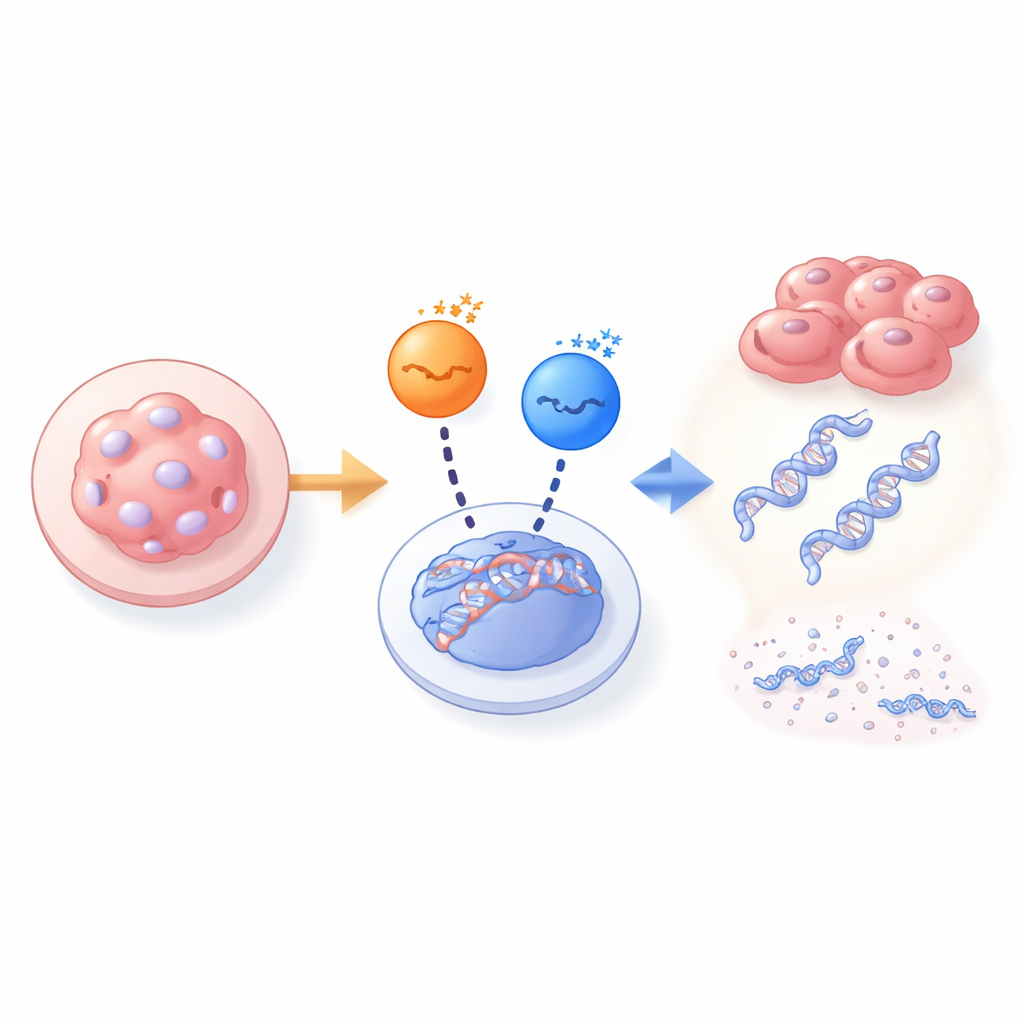
To probe this mystery, the team compared mouse embryonic fibroblasts made from normal embryos to those from embryos entirely lacking PAR1b. In normal cells, shutting down PAR1b sharply reduced BRCA1 inside the nucleus and led to a burst of DNA break markers, which in turn blocked cell growth. Knocking down other PAR1 kinases (PAR1a, PAR1c, PAR1d) had little effect. However, in cells derived from PAR1b‑knockout embryos, BRCA1 was still present in the nucleus and DNA remained relatively intact, even though PAR1b was absent. In these PAR1b‑null cells, removing PAR1a now became lethal, while removing PAR1c or PAR1d did not. This switch in dependency showed that PAR1a had taken over PAR1b’s role in guiding BRCA1, but only in embryos that had lacked PAR1b from the very beginning.
Early Epigenetic Rewiring as a Survival Strategy
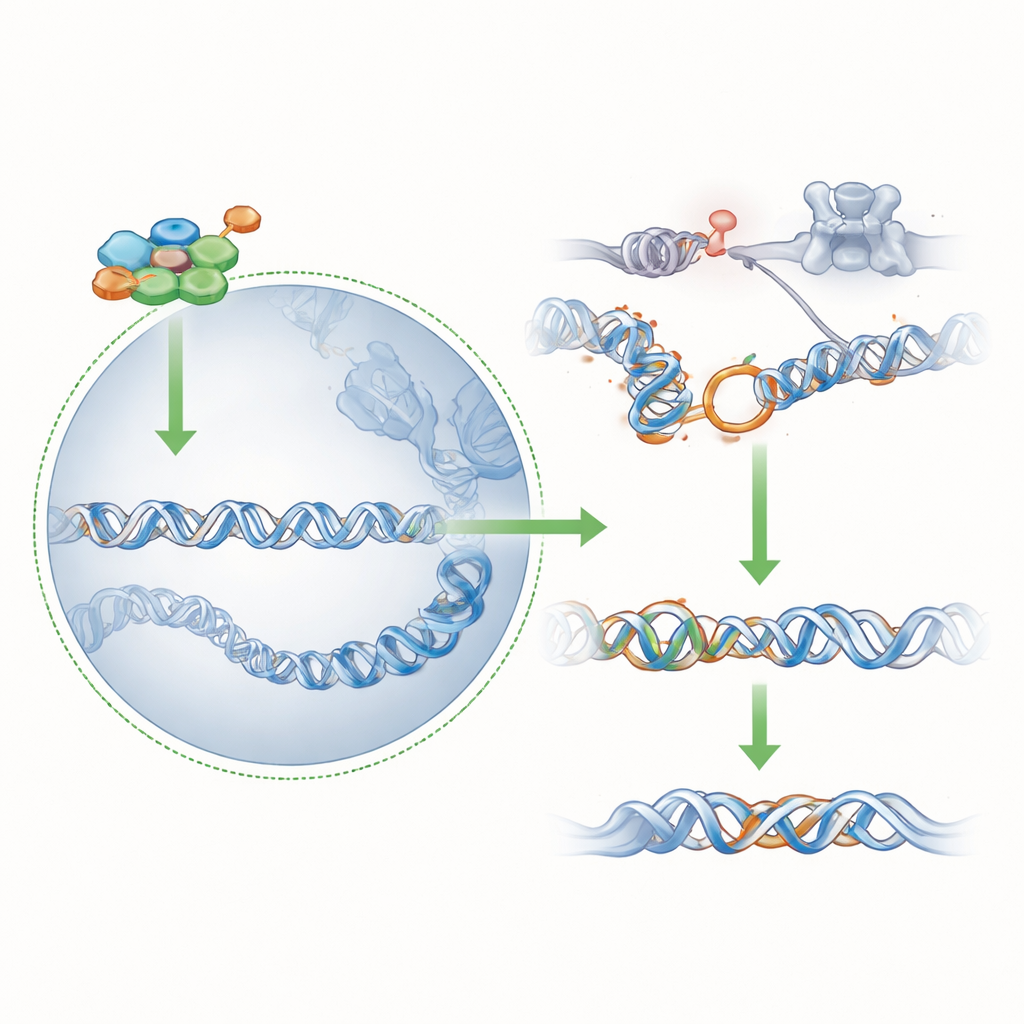
The researchers suspected that this hidden backup system was tied to epigenetics—the way DNA is packaged and chemically marked to turn genes on or off without changing the genetic code. Using a genome‑wide assay of chromatin openness, they found thousands of regions where DNA accessibility differed between normal and PAR1b‑null cells. Many changes involved genes that control how chromosomes are wrapped and modified, hinting at a broad reprogramming of the gene‑control network. One standout effect was on the gene for 53BP1, a protein that normally pushes cells toward a quick‑and‑dirty form of DNA repair that opposes BRCA1’s more accurate method. In PAR1b‑null cells, the body of the 53BP1 gene was more tightly packed and its RNA and protein levels were much lower.
Tipping the Balance Between Repair Pathways
By dialing down 53BP1, the embryo effectively reduces its reliance on BRCA1’s full strength: even a modest amount of nuclear BRCA1, delivered by PAR1a instead of PAR1b, can now support enough accurate repair to keep cells alive. Experiments using a bacterial protein that shuts off all PAR1 kinases confirmed that BRCA1’s nuclear presence in PAR1b‑null cells still depends on PAR1‑family activity, specifically PAR1a. Together, the results paint a picture in which early loss of PAR1b triggers a rapid reshaping of chromatin and DNA‑repair networks, quieting a BRCA1 opponent (53BP1) and unmasking PAR1a’s ability to stand in for PAR1b.
What This Means for Disease and Treatment
This work introduces the idea of “cryptic redundancy”: a backup function that exists but is normally dormant and becomes visible only when a key component is lost very early in development. In mice, this lets embryos survive the loss of PAR1b, unlike the loss of BRCA1 itself. The findings also hint that some people with damaging PAR1b variants may survive because similar backup mechanisms engage, though not without possible consequences for brain function, metabolism, or cancer risk. In the long run, understanding how early epigenetic adjustments silence 53BP1 and shift BRCA1 control from PAR1b to PAR1a could inspire strategies to deliberately mimic these changes—either to protect cells that have lost PAR1b or to fine‑tune DNA repair pathways in cancer therapy.
Citation: Murata-Kamiya, N., Del Valle Lazarte, A.A., Kikuchi, I. et al. Cryptic redundancy between PAR1b and PAR1a, two members of the PAR1 kinase family, in the survival of PAR1b-knockout mice. Sci Rep 16, 5971 (2026). https://doi.org/10.1038/s41598-026-39737-4
Keywords: BRCA1, DNA repair, kinase redundancy, epigenetic regulation, embryonic development