Clear Sky Science · en
Sustainable assessment of renewable energy microgrid architectures using a probabilistic hesitant fuzzy MCDM approach
Powering Remote Communities Wisely
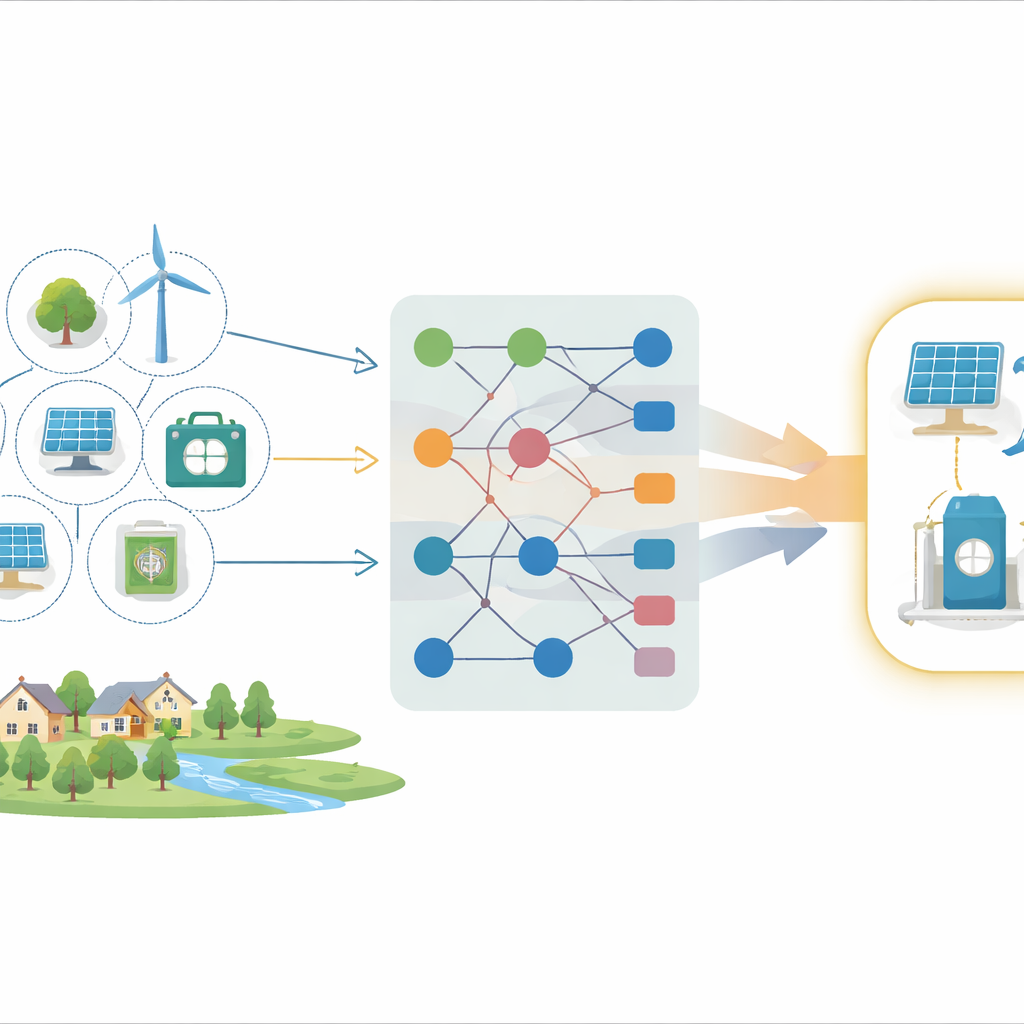
Billions of people live in places where extending a traditional power grid is difficult or too expensive. For these communities, small local energy systems called microgrids—built from solar panels, wind turbines, batteries, and even green hydrogen—offer a path to reliable, low‑carbon electricity. But deciding which mix of technologies is best for a specific village or region is far from simple. This study presents a structured way to compare different microgrid designs so planners can choose options that are affordable, dependable, and kind to the environment.
Why Choosing the Right Microgrid Is Hard
Microgrids can combine many ingredients: sunshine, wind, water, biomass, hydrogen, batteries, and sometimes diesel backup. Each recipe has strengths and weaknesses. Some are cheap to build but dirty to run; others are very clean but costly up front or tricky to maintain. On top of that, experts rarely agree perfectly, and they often have to express opinions using vague terms like “high reliability” or “medium cost.” Traditional scoring systems expect precise numbers and single answers, which can gloss over disagreement and uncertainty. The authors argue that to plan microgrids responsibly—especially in rural and remote areas—we need decision tools that handle mixed goals and fuzzy human judgment.
A Smarter Way to Capture Expert Opinions
The research team uses an advanced approach to represent expert views more faithfully. Instead of forcing a single score for each option, their method allows several possible scores, each with a likelihood attached, and also keeps track of how unsure the experts feel. This is done through a mathematical idea called a probabilistic hesitant fuzzy set, which lets membership, non‑membership, and hesitation all coexist in a disciplined way. In plain terms, the method accepts that experts may say “this microgrid is somewhere between good and very good on reliability, and I’m more confident about one of those ratings than the other,” and it preserves that nuance all the way through the calculations.
Weighing Priorities and Comparing Designs
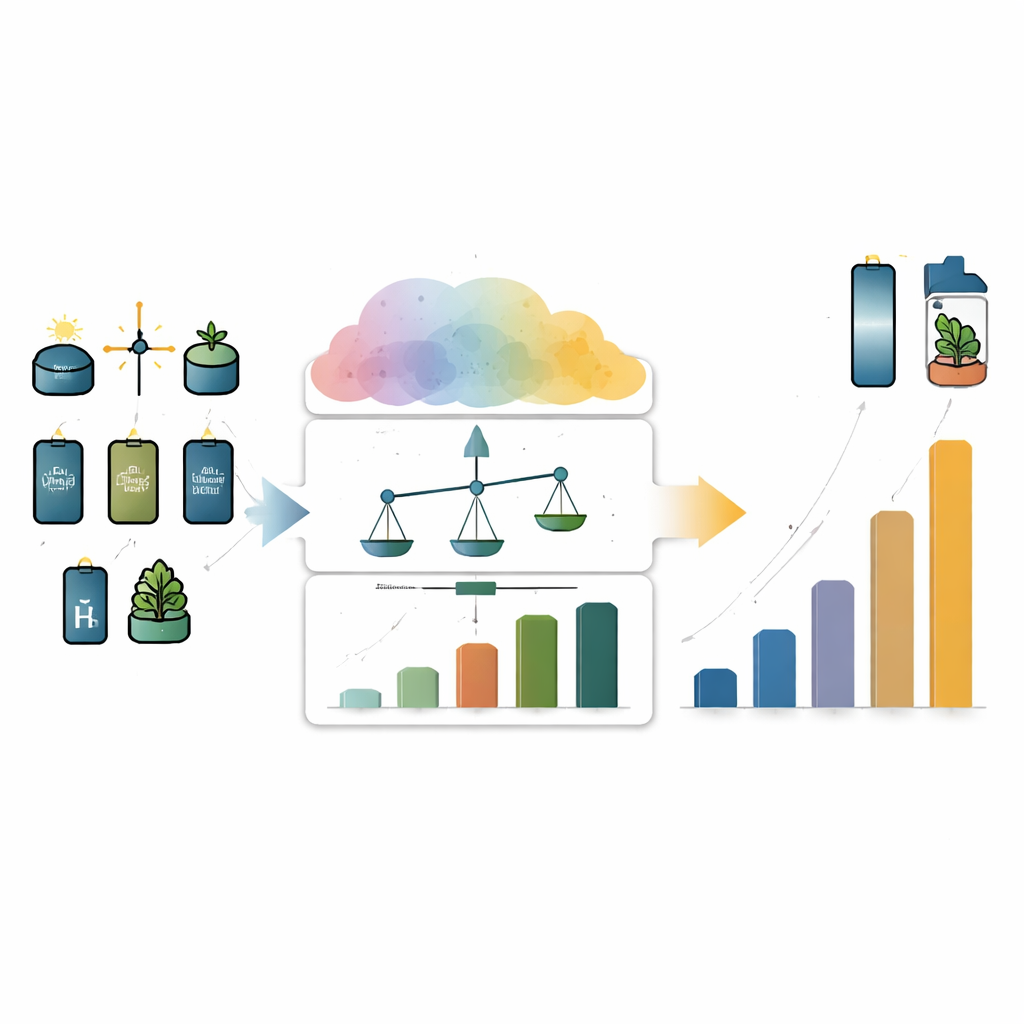
To turn these nuanced opinions into a clear choice, the study combines two well‑known decision tools. First, a structured comparison process asks experts how important each factor is—for example, reliable power, community acceptance, upfront cost, running cost, local resource availability, energy independence, and carbon reductions. This yields importance weights that reflect what matters most in the setting studied, a semi‑rural region typical of developing countries. Second, an evaluation step scores each microgrid design against these criteria, comparing them to an ideal case. Because the method keeps the probabilistic, hesitant nature of the original judgments, it is better able to distinguish between closely matched designs and remains stable even when assumptions are nudged.
What the Model Says About Real Options
The authors test their framework on seven realistic microgrid configurations, including solar‑biogas, wind‑solar, solar‑battery, biomass gasifier systems, and a design that stores surplus renewable electricity as green hydrogen. They find that the hydrogen‑based microgrid comes out on top, thanks largely to its strong environmental performance and ability to provide long‑duration energy storage, which smooths out the ups and downs of solar and wind. Wind‑solar and solar‑biogas hybrids follow closely, reflecting their growing practicality and maturity. Systems relying heavily on biomass or diesel rank lower, mainly because of emissions, fuel supply concerns, and more complex operation and maintenance.
What This Means for Energy Planning
For a non‑specialist, the key takeaway is that there is now a more honest and robust way to sift through messy, uncertain expert opinions when planning local clean‑energy systems. Rather than pretending that all numbers are precise and all experts agree, this framework embraces doubt and disagreement while still delivering a clear ranking of choices. Its results suggest that microgrids centered on renewables with strong storage—especially those using green hydrogen—are promising front‑runners for rural electrification. At the same time, the method can be adapted to other regions, values, and technology mixes, giving planners a flexible tool to design microgrids that balance cost, reliability, and environmental impact in a transparent way.
Citation: Vijay, M., Suvitha, K., Almakayeel, N. et al. Sustainable assessment of renewable energy microgrid architectures using a probabilistic hesitant fuzzy MCDM approach. Sci Rep 16, 8421 (2026). https://doi.org/10.1038/s41598-026-39733-8
Keywords: microgrid planning, renewable energy, green hydrogen, decision support, rural electrification