Clear Sky Science · en
Serum immunoglobulin A in pediatric appendicitis
Why this matters for worried parents
Appendicitis is one of the most common reasons children need emergency surgery, yet doctors still cannot always tell quickly who truly needs an operation and who does not. This study asked whether a blood antibody called immunoglobulin A (IgA), part of the body’s immune defense, could help explain why some children develop appendicitis and why some cases become severe, and whether a simple blood test might aid diagnosis.
The body’s guards in the gut
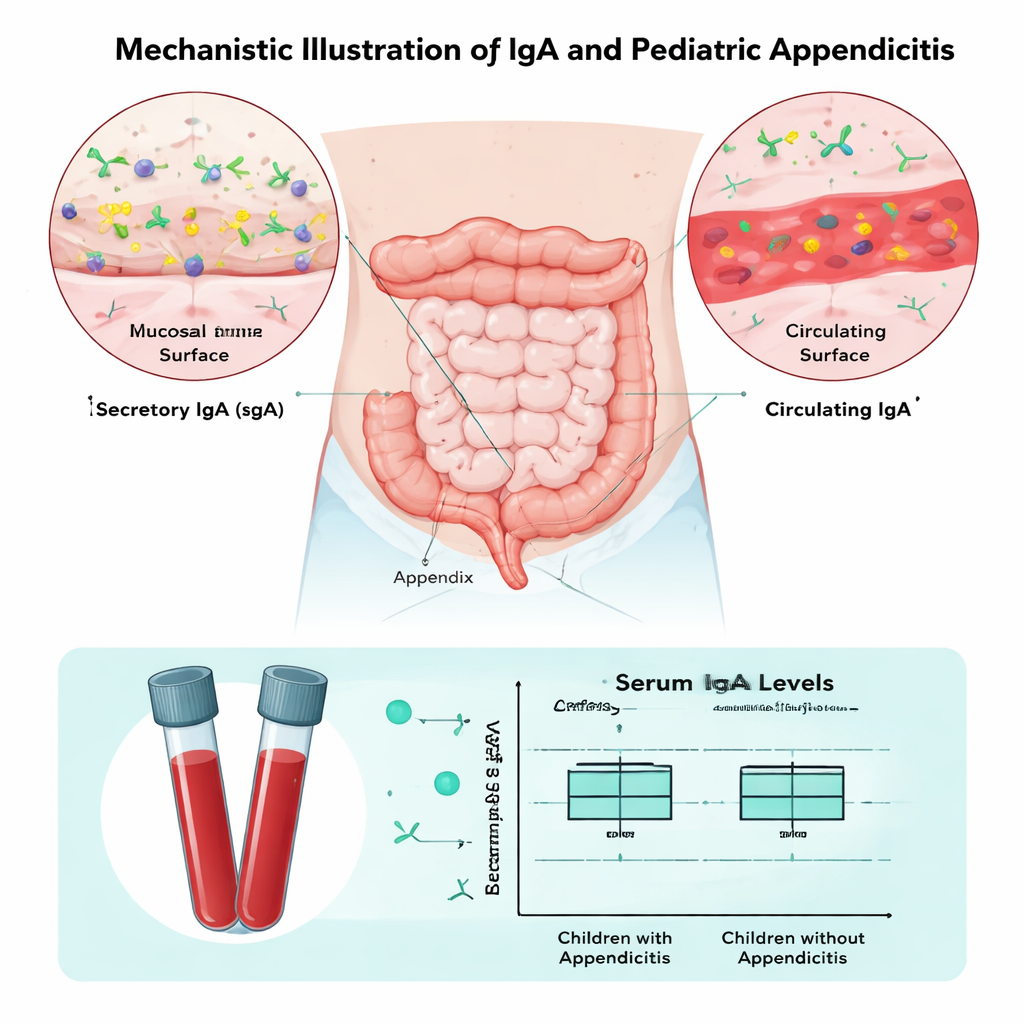
The appendix sits at the junction of the small and large intestines, surrounded by immune cells that constantly interact with our gut bacteria. One of their main tools is IgA, a Y‑shaped protein that latches onto germs and helps keep them from invading the gut wall. Most IgA is released directly into the gut as “secretory IgA,” coating the lining like a protective film. A smaller amount circulates in the bloodstream as “serum IgA,” which has related but not identical functions. Earlier work showed extra IgA deposits inside inflamed appendixes, and other immune signals that boost IgA production are known to rise in appendicitis. This led researchers to wonder whether levels of IgA in the blood might mirror what is happening in the appendix during disease.
Following children from emergency room to lab
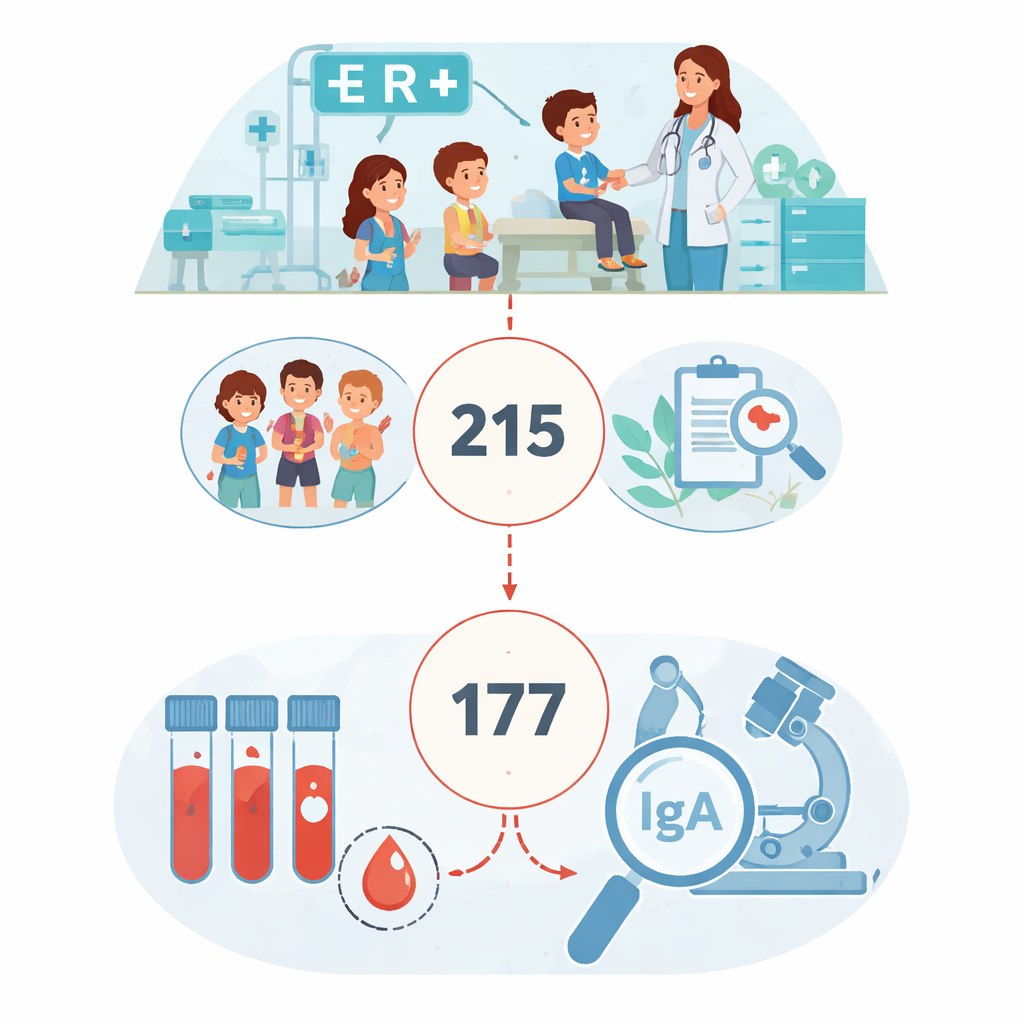
The research team in southern Sweden followed 177 children, all 15 years old or younger, who came to a pediatric emergency department with pain in the lower right side of the belly—a classic warning sign of appendicitis. After parents gave consent, doctors recorded each child’s symptoms, examined them, and drew blood. Standard blood markers of inflammation were measured, and an additional sample was frozen for later IgA testing. Surgeons and pathologists then determined who actually had appendicitis and whether it was mild (uncomplicated) or severe, involving tissue death, perforation, or abscess formation (complicated).
What the IgA blood tests showed
Of the 177 children, 137 truly had appendicitis; 79 of these had a milder form and 58 had complicated disease. When the frozen samples were analyzed, median serum IgA levels were virtually the same in children with appendicitis and in those with other causes of abdominal pain. Within the appendicitis group, children with severe disease tended to have slightly lower IgA levels than those with milder disease, but the difference was small and could easily have been due to chance. When the researchers looked at IgA according to age‑specific “normal,” “high,” or “low” ranges, they again found no meaningful differences between groups.
Other clues that still help doctors
Although IgA in the bloodstream did not distinguish sick children from those with look‑alike pain, other patterns matched what clinicians already see in practice. Boys were more likely than girls to have appendicitis, and certain white blood cell counts (particularly neutrophils) were higher in children whose appendixes were inflamed. Among those with confirmed appendicitis, younger age, the presence of a hard stone‑like blockage in the appendix (an appendicolith), and higher levels of the common inflammatory marker C‑reactive protein (CRP) were linked to more severe disease. These findings support the idea that severe appendicitis reflects a strong whole‑body inflammatory response, even if serum IgA itself does not change much.
What this means and what comes next
For families and frontline clinicians, the key takeaway is that a blood test for total serum IgA does not help diagnose appendicitis in children or predict which cases will become dangerous. IgA remains an important part of the immune system, but this work suggests that the critical action in appendicitis is happening locally on the gut’s surface, where secretory IgA interacts directly with microbes, rather than in the circulating blood. Future studies the authors propose—examining IgA right in the appendix tissue or even in stool samples—may eventually uncover new, noninvasive ways to detect or understand this common childhood emergency.
Citation: Gudjonsdottir, J., Roth, B., Ohlsson, B. et al. Serum immunoglobulin A in pediatric appendicitis. Sci Rep 16, 6363 (2026). https://doi.org/10.1038/s41598-026-39725-8
Keywords: pediatric appendicitis, immunoglobulin A, serum biomarkers, child abdominal pain, gut immunity