Clear Sky Science · en
Design of electric and remote operating vehicles battery carrier by using small aluminum closed-cell foam blocks shielded by aluminum tubes
Smarter Safety for Future Batteries
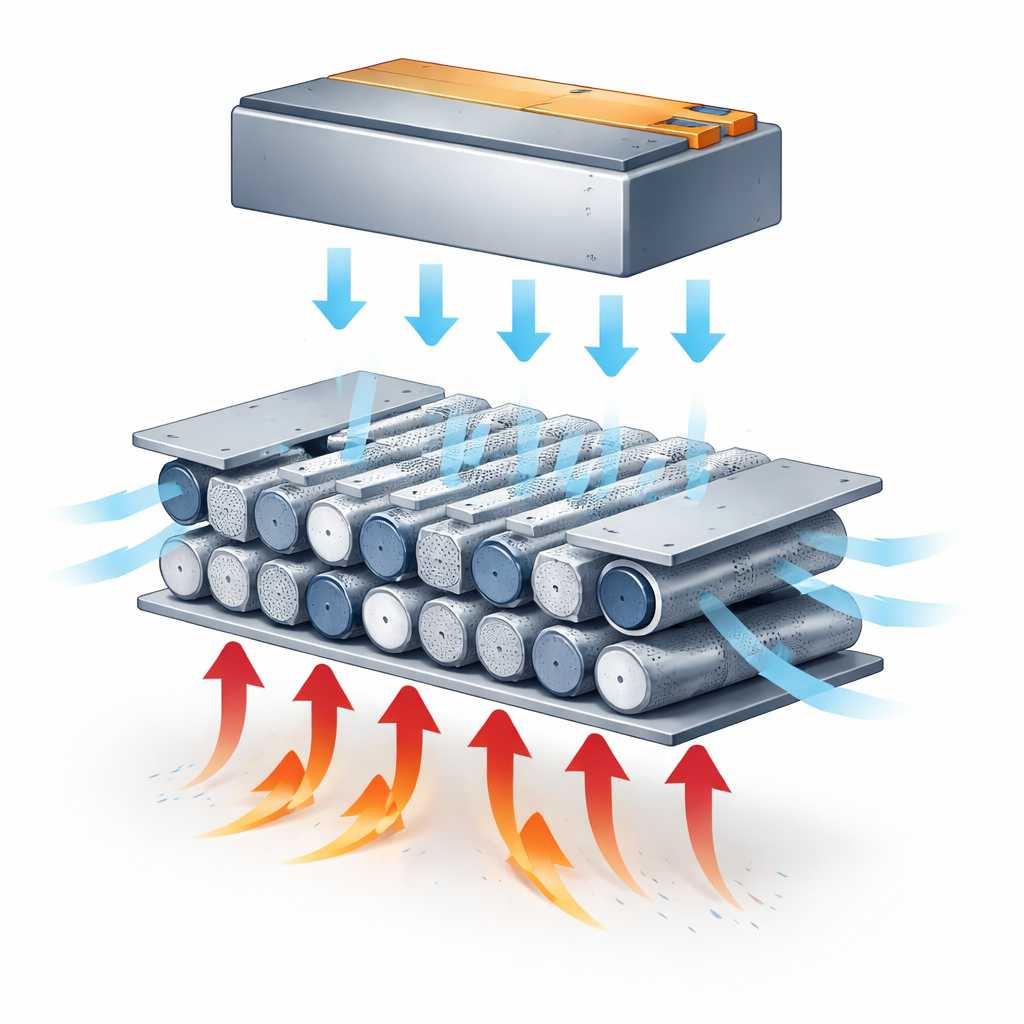
Electric cars on the highway and robot vehicles exploring the seafloor all depend on batteries that must stay both safe and cool. This study explores a new way to build the "floor" that carries and protects those batteries. Instead of using a single thick layer of metal foam, the researchers break that foam into many small blocks, each wrapped in a metal tube. This clever, bone-inspired structure is designed to absorb crashes, shed heat quickly, and make wiring and maintenance easier.
From Bone Structure to Battery Support
The key building block in this design is a tiny cube of closed-cell aluminum foam, about the size of a sugar cube, surrounded by a short aluminum tube. Nature inspired the idea: the shapes echo human finger bones, the spine, and the ear canal, which combine stiffness, shock absorption, and light weight. By arranging many identical blocks into patterns, engineers can create panels that bear loads, cushion impacts, and guide heat, all while fitting into tight spaces inside vehicles.
Why Break One Big Plate into Many Small Blocks
Conventional aluminum foam sheets work well as crash absorbers but have drawbacks. They are expensive to manufacture, difficult to shape and repair, and act like thermal blankets that trap heat rather than release it. The new block approach tackles all three problems. Because blocks are small, they can be cut from standard foam plates with simple tools and then press-fitted into off-the-shelf tubes. Damaged blocks can be replaced individually. Just as important, the gaps left between blocks create open pathways where air or water can flow, turning a once-insulating layer into an efficient cooling structure.
Stronger Support and Faster Cooling
The team tested twelve block shapes and chose a “spine-like” design for detailed study. Under sideways squeezing, this block absorbed more energy per volume than bare foam of the same size, thanks to the stiff aluminum tube around it. When arranged into a small panel for a remotely operated underwater vehicle, nine of these blocks held low battery loads, absorbed impact energy with a comfortable safety margin, and allowed engineers to route cables through built-in channels. Thermal tests showed that a traditional foam sandwich panel took about 15 minutes for heat to pass through, while the block-based panel conducted the same temperature rise in only about 40 seconds.
Scaling Up for Electric Cars
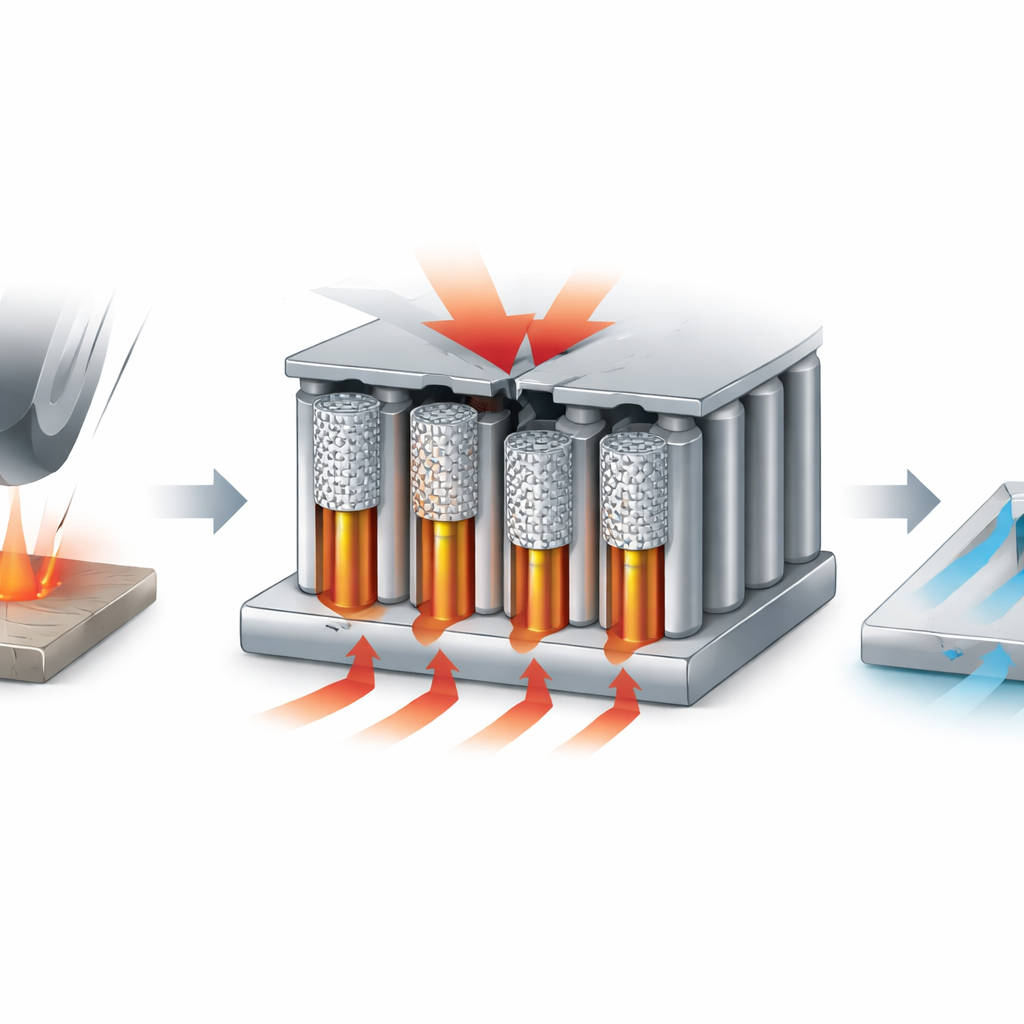
To show that the concept works at full vehicle scale, the researchers designed an underbody shield for a 450-kilogram electric-vehicle battery pack using 400 of the same spine-inspired blocks sandwiched between two aluminum plates. The block array can absorb several times more impact energy than what would be generated if the battery dropped half a meter, and it can withstand loads roughly 25 times the battery’s weight. At the same time, calculations and simulations indicate that heat conducted through the blocks and swept away by moving air is fast enough to cool the shield from summer operating temperatures down toward ambient conditions within tens of minutes at modest driving speeds.
Room to Grow with Cooling and Materials
The modular nature of these blocks opens the door to further refinements. The authors sketch options such as weaving liquid-cooling tubes between rows of blocks, inserting phase-change materials that temporarily store excess heat, or arranging slots in the pattern for even better airflow without sacrificing crash safety. Because the blocks use standard alloys and simple machining, they can be adapted for different environments—from dry roads to hot deserts to cold seawater—by tuning dimensions, spacing, and added materials.
What This Means for Everyday Drivers and Robots
In plain terms, this work offers a smarter “armor and radiator” for batteries in electric cars and remote robots. The foam-filled metal blocks act like tiny shock absorbers that crumple in a crash, while their metal shells and open gaps channel heat away rather than trapping it. Compared with traditional foam sheets, the block-based carriers are easier to build, repair, and cool, yet they still meet strict safety requirements. With more testing under real crash and fatigue conditions, this bone-inspired approach could help future vehicles become lighter, safer, and more reliable without adding complexity to their battery systems.
Citation: Dadoura, M.H., Farahat, A.I., Al-Saady, Z.A. et al. Design of electric and remote operating vehicles battery carrier by using small aluminum closed-cell foam blocks shielded by aluminum tubes. Sci Rep 16, 9225 (2026). https://doi.org/10.1038/s41598-026-39720-z
Keywords: electric vehicle batteries, aluminum foam, crash protection, battery cooling, lightweight structures