Clear Sky Science · en
Cadmium exposure induces renal fibrosis by inhibiting hsa_circ_0075684/miR-363-3p/KLF4 signaling pathway
Why a Hidden Metal Threat Matters
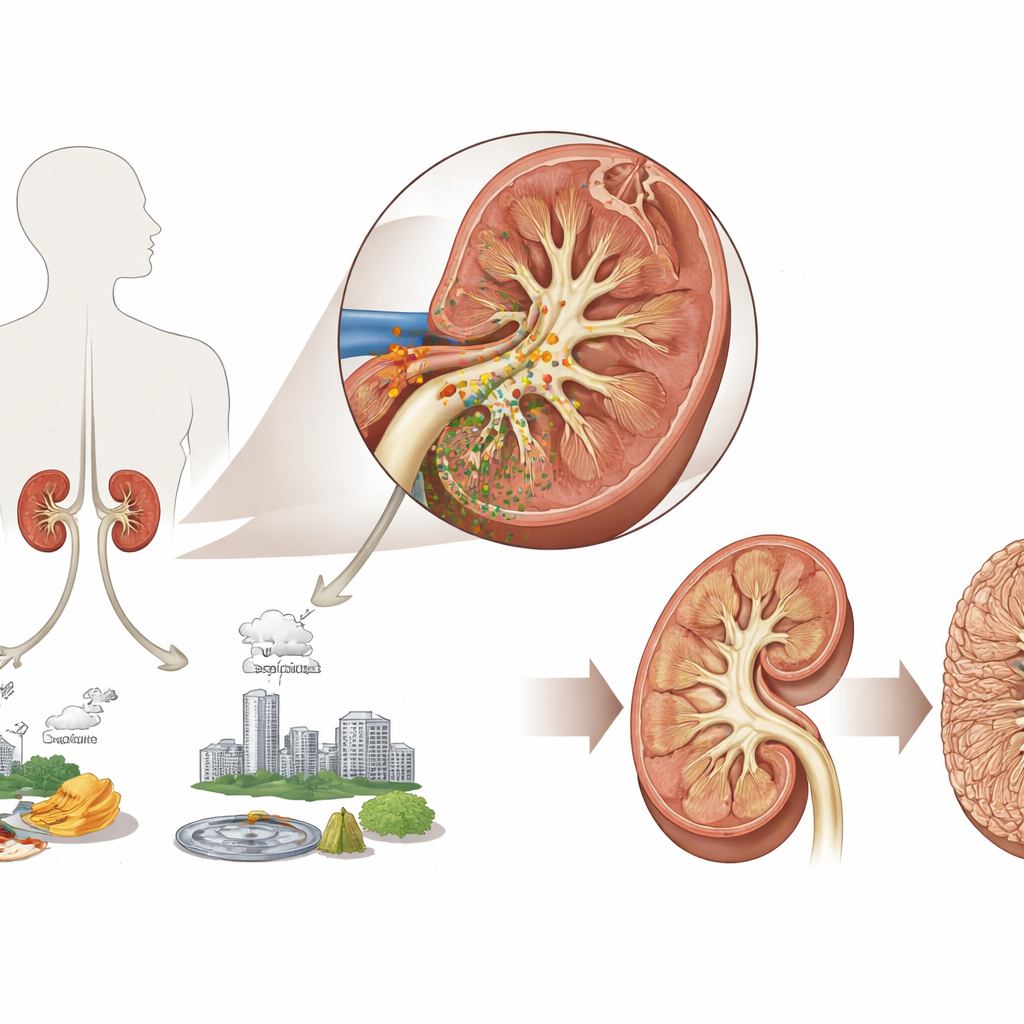
Cadmium is a toxic metal that quietly seeps into our lives through food, cigarette smoke, and industrial pollution. Once inside the body, it lingers for decades, with a special knack for building up in the kidneys. This study digs into how long-term cadmium exposure scars kidney tissue and pinpoints a tiny molecular circuit that could flag trouble early—offering hope for preventing chronic kidney disease rather than just treating it late in the game.
The Slow Burn of Kidney Damage
The kidneys act as the body’s filters, clearing waste from the blood. Cadmium, however, accumulates in these filters over many years and is strongly linked to chronic kidney disease. The authors note that global cases of chronic kidney disease are rising, and there is no effective way to remove cadmium once it settles in the kidneys. Instead of focusing on cleanup, they argue, we need ways to detect and interrupt the damage early—especially the process known as fibrosis, where healthy tissue is slowly replaced by stiff scar tissue that cripples kidney function.
Tiny RNA Messages and a Protective Switch
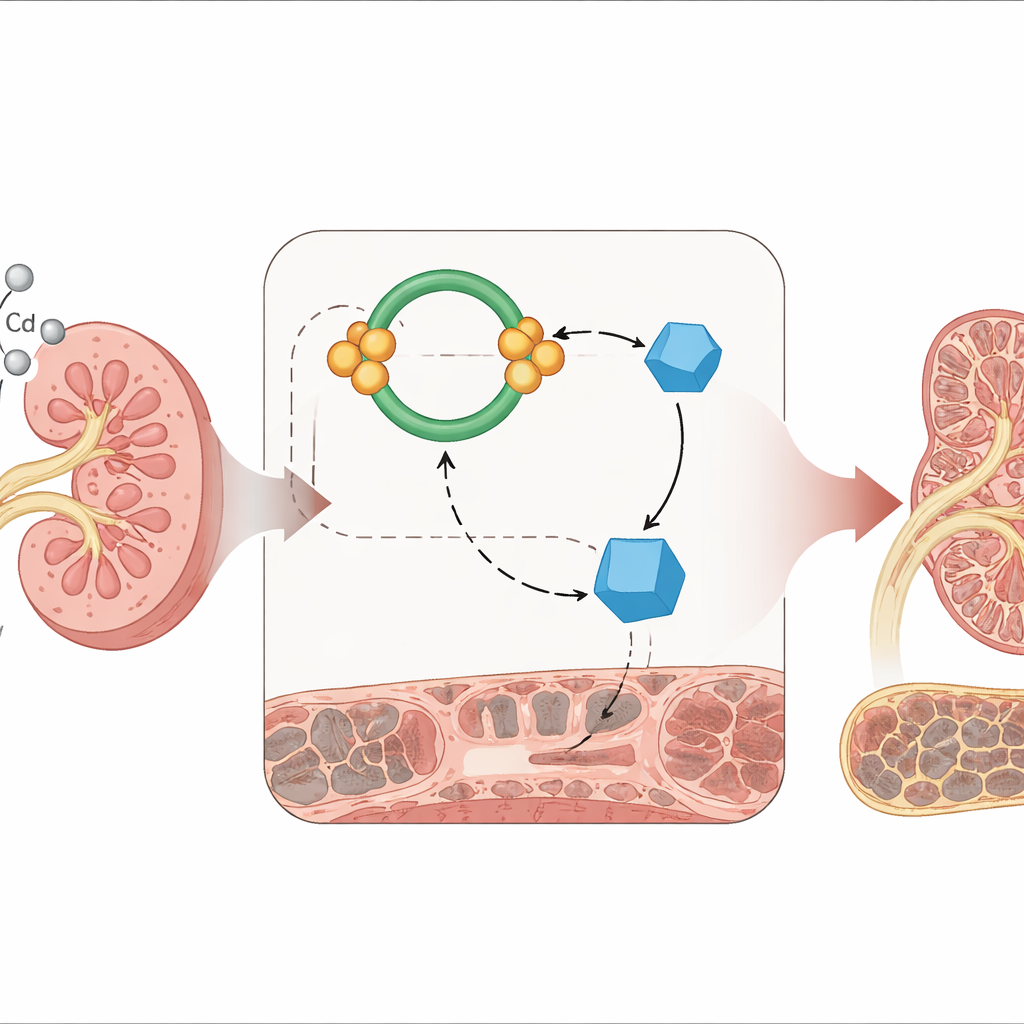
The researchers focused on a small regulatory molecule called miR-363-3p, part of a family of short RNA snippets that fine-tune gene activity. Their earlier work showed this RNA was elevated in factory workers with long-standing cadmium poisoning. Using large public gene databases, they searched for a broader control circuit around miR-363-3p in kidney tissue exposed to cadmium. They identified a three-part pathway: a circular RNA (hsa_circ_0075684) that can “soak up” miR-363-3p, the miR-363-3p molecule itself, and a protein called KLF4 that helps protect kidney cells from scarring. Together, this trio appears to act like a molecular switch that keeps fibrosis in check.
From Cells in a Dish to Mice in the Lab
To test this idea, the team exposed human kidney tubule cells to increasing doses of cadmium. As cadmium levels rose, the cells showed classic signs of fibrosis: proteins linked with scarring went up, while a protein that helps cells stick together and maintain normal structure went down. At the same time, miR-363-3p levels climbed, while both KLF4 and the circular RNA dropped. Genetic experiments showed that miR-363-3p directly binds to KLF4 and lowers its production, and that the circular RNA normally ties up miR-363-3p, preventing it from silencing KLF4. When the scientists boosted miR-363-3p, scarring proteins surged and KLF4 fell; when they blocked miR-363-3p or increased the circular RNA, KLF4 rebounded and fibrosis markers eased, even in the presence of cadmium.
Confirming the Damage in Living Kidneys
The researchers then turned to a mouse model to see whether this molecular pattern also appeared in living animals. Mice were given cadmium by mouth for three months at doses chosen to mimic long-term environmental exposure. Under the microscope, kidneys from cadmium-treated mice showed clear fibrotic changes—blue-stained collagen fibers filling the spaces between tubules. Biochemical tests mirrored the cell-culture findings: scarring proteins rose, the protective protein KLF4 fell, and miR-363-3p levels increased in the kidneys, supporting the idea that this pathway is active during slow, real-world cadmium damage.
What This Means for Protecting Kidneys
Taken together, the results suggest that cadmium promotes kidney scarring by disrupting a delicate balance between a circular RNA, a microRNA, and a protective protein. When cadmium reduces the circular RNA and KLF4, miR-363-3p is free to push cells toward fibrosis. For non-specialists, the key message is that early molecular shifts—long before symptoms appear—might one day serve as warning beacons in blood or urine tests for people at risk of cadmium exposure. While more clinical work is needed, especially in human patients, this newly mapped pathway points toward future tools to detect and perhaps even blunt cadmium-driven kidney damage before irreversible scarring sets in.
Citation: Zhou, J., Huang, Y., Li, G. et al. Cadmium exposure induces renal fibrosis by inhibiting hsa_circ_0075684/miR-363-3p/KLF4 signaling pathway. Sci Rep 16, 8754 (2026). https://doi.org/10.1038/s41598-026-39715-w
Keywords: cadmium exposure, kidney fibrosis, microRNA, environmental toxicology, chronic kidney disease