Clear Sky Science · en
Efficacy of silicon-based agent against aging-related frailty
Why protecting strength in old age matters
Many people now live long lives, but not all of those extra years are spent in good health. As we age, some of us become frail: everyday tasks feel harder, balance and movement worsen, and illness becomes more dangerous. This study explores a new way to tackle frailty using a silicon-based powder that, when swallowed, reacts with water in the gut to release tiny hydrogen molecules. In mice, the researchers asked whether this simple agent could keep bodies stronger for longer by easing the internal damage that builds up with age.
From wear and tear to frailty
Frailty does not arise from one single cause. It reflects a slow loss of physical reserves, including weaker muscles, slower movement, and lower activity, often combined with memory or mood problems. One common thread is an overload of harmful by-products of metabolism, sometimes called “oxidative stress.” These unstable molecules can chip away at cells in muscles, nerves, and other organs. Earlier work showed that people and animals with frailty have more of these damaging substances and fewer of the body’s natural defenses. That link has driven interest in treatments that can gently lower oxidative stress without blocking the body’s normal signaling.
A special kind of antioxidant in the diet
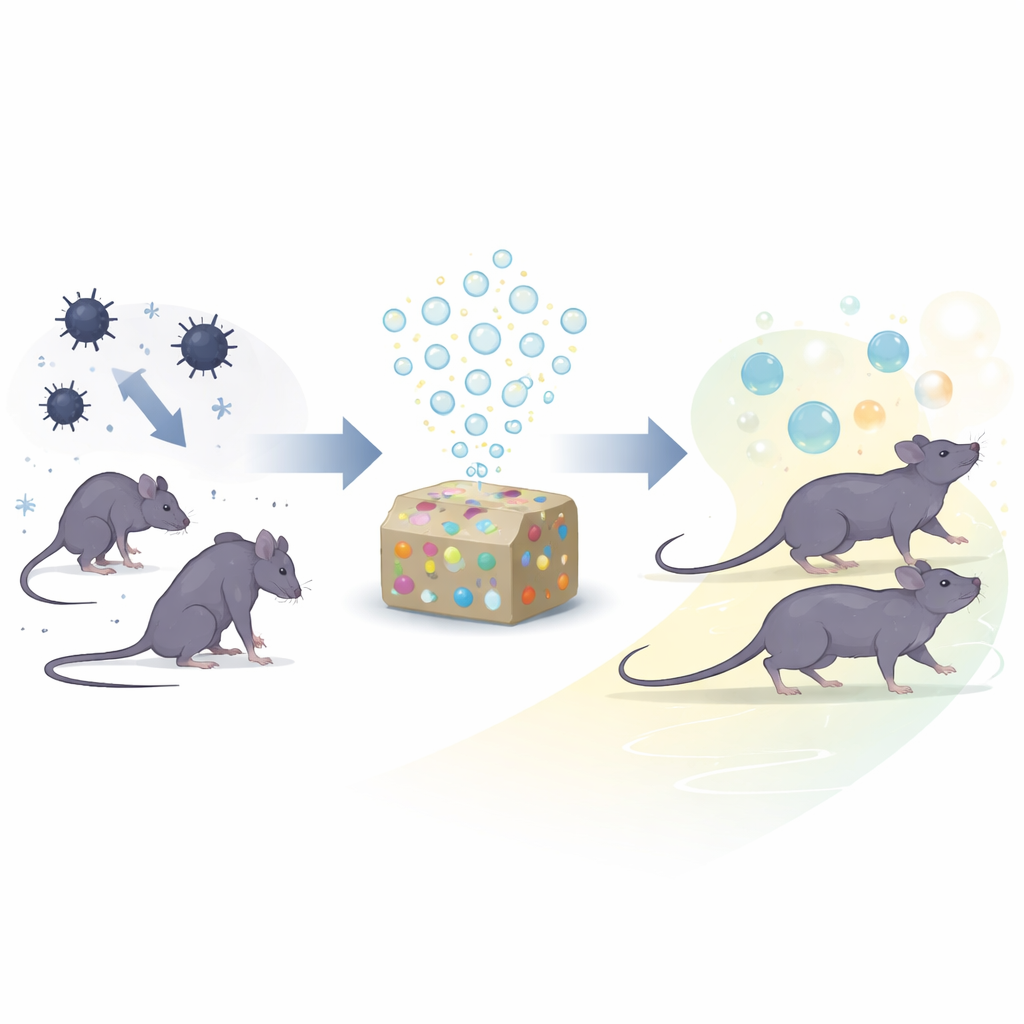
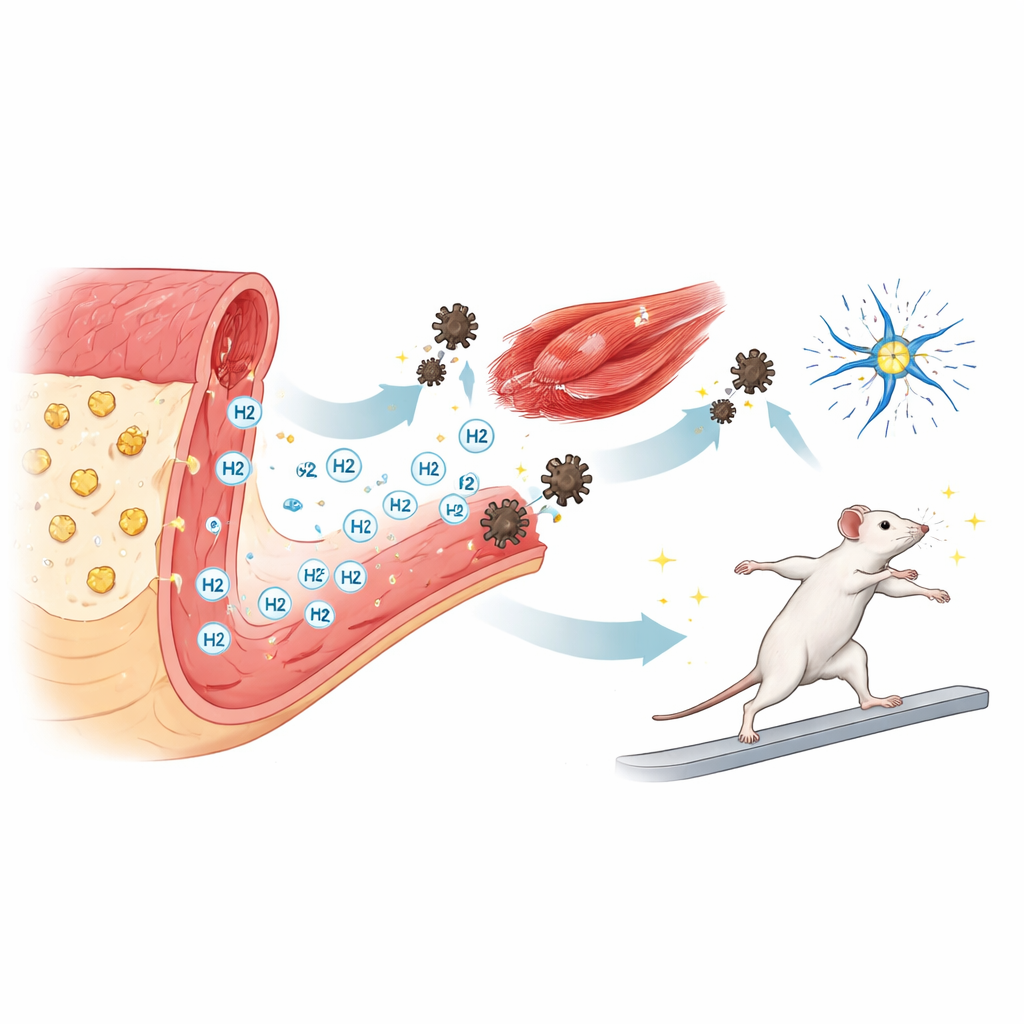
The team focused on a powdered silicon-based agent that steadily releases molecular hydrogen when it encounters water in the digestive tract. Hydrogen is a tiny gas that can slip into cells and selectively neutralize the most toxic reactive molecules while largely sparing useful ones. Mice can safely eat this agent mixed into standard chow. The researchers first tested it in “klotho” mice, which carry a gene defect that makes them age rapidly and develop bent spines, poor fur, weak muscles, and low activity—features that resemble human frailty. Young klotho mice were fed normal food or food containing low or higher amounts of the silicon-based powder for three weeks, then examined for changes in body appearance and movement.
Keeping prematurely old mice more robust
Compared with untreated klotho mice, those given the silicon-based agent looked noticeably better: they grew longer, had fuller coats, and were less likely to show curved backs or underdeveloped organs. Detailed scoring of these traits confirmed that treated animals had milder aging-like changes. When movement was tested, all klotho mice were less active than their healthy littermates, but the treated groups walked farther, moved faster in an open arena, and showed better spontaneous activity in their cages. Using a frailty checklist adapted from human studies—covering activity, walking distance and speed, coordination, and body weight—the authors found that more than half of untreated klotho mice qualified as frail, while none of the treated mice did. Far fewer treated animals fell into the “pre-frail” category, suggesting that the agent not only eased symptoms but also shifted overall frailty status.
Helping naturally aged mice move and survive
To see whether the benefits extended beyond this extreme aging model, the researchers next studied ordinary male mice that were already about two years old—roughly equivalent to very old humans. One group received regular food, while another received food containing the silicon-based powder. Over the following months, treated mice performed better on a balance beam test, reaching the goal more quickly and falling less often, especially on the narrowest beam. Their body weight, which normally drifts downward at this age, was largely maintained instead of dropping by around ten percent. Fewer treated mice died early in the observation period, and overall survival tended to be longer, although the final difference did not reach strict statistical certainty.
Dialing down internal stress
The team also measured chemical signs of oxidative stress in the blood of aged mice. Compared with younger animals, older untreated mice showed higher levels of reactive molecules. In those fed the silicon-based diet, this rise was blunted, and a combined index that reflects the balance between damage and antioxidant defenses shifted in a healthier direction. While the study did not track these changes in individual organs, the findings fit with the idea that constant, low-level hydrogen release from the silicon agent lightens the oxidative burden throughout the body. This, in turn, may help preserve muscle function, coordination, and resilience.
What this could mean for healthy aging
In simple terms, the study suggests that adding a hydrogen-generating silicon powder to food helped two kinds of aging mice stay stronger, more active, and alive for longer by easing internal chemical stress. Treated animals looked less “old,” moved with better balance, kept more of their body weight, and showed fewer signs of frailty on a multi-part test. Because mouse biology and human aging are not identical, this is not yet a treatment for people. Still, the results highlight a promising strategy: using a gentle, long-acting antioxidant source to support the body’s own defenses and slow the slide into frailty, potentially extending the years of life spent in good physical condition.
Citation: Koyama, Y., Kobayashi, Y., Kobayashi, H. et al. Efficacy of silicon-based agent against aging-related frailty. Sci Rep 16, 8813 (2026). https://doi.org/10.1038/s41598-026-39711-0
Keywords: frailty, aging, oxidative stress, molecular hydrogen, silicon-based agent