Clear Sky Science · en
An intraspecific origin of B chromosomes in Tetragonisca fiebrigi (Apidae: Meliponini) inferred from cytogenetic and nuclear genome size data
Why tiny extra chromosomes in bees matter
Stingless bees are important pollinators and popular with small-scale beekeepers in Brazil. Two nearly indistinguishable “jataí” bee species share the same landscapes and even hives, yet one carries mysterious extra chromosomes while the other does not. These surplus pieces of DNA, called B chromosomes, have puzzled biologists for decades: are they useless genetic baggage, selfish hitchhikers, or part of the species’ own genome history? This study explores where these extra chromosomes in one jataí species came from and what they might mean for bee evolution.
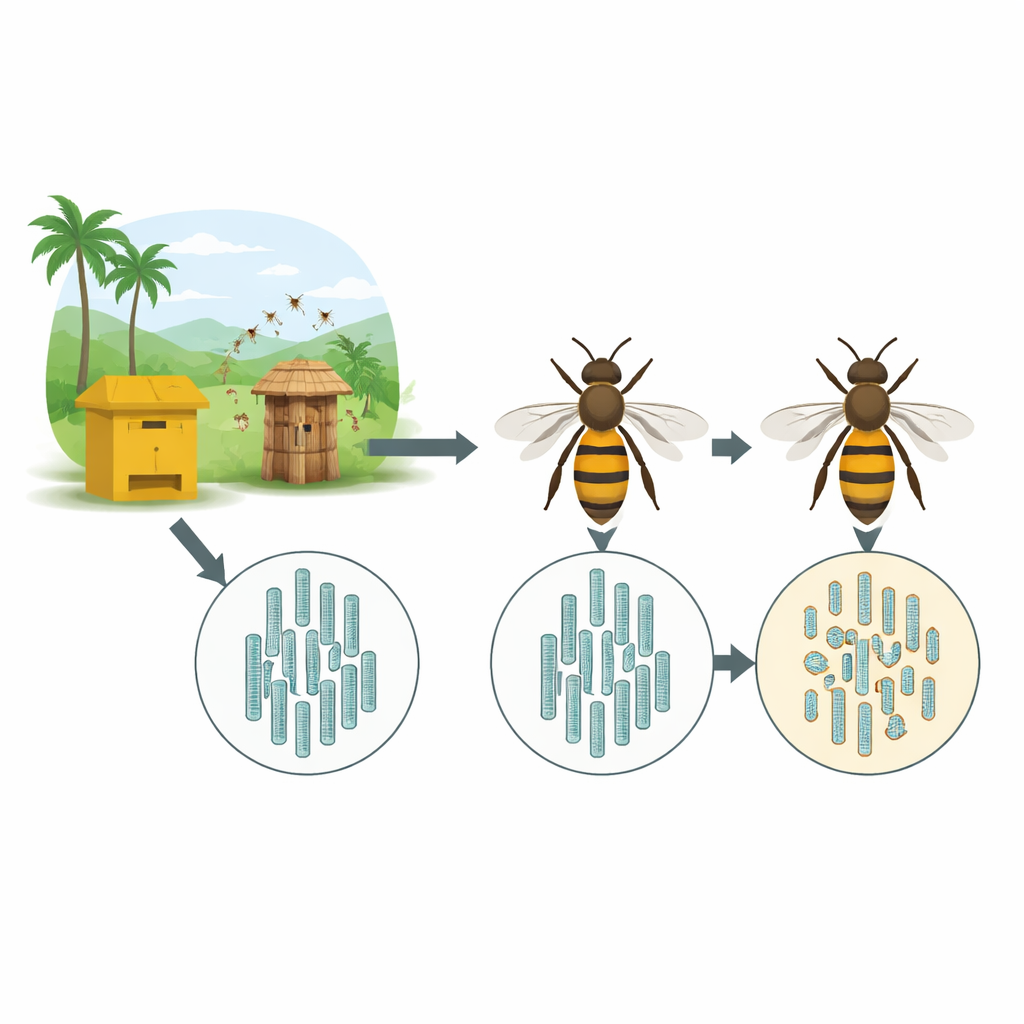
Two look‑alike bees with hidden differences
The researchers focused on two closely related stingless bees, Tetragonisca angustula and Tetragonisca fiebrigi, both commonly kept by beekeepers and known by the same common name. To the naked eye, the species are extremely similar and mainly distinguished by subtle color and male anatomy traits. Under the microscope, however, previous work had shown one clear difference: only T. fiebrigi carries B chromosomes, extra pieces beyond the normal chromosome set. Because these bees are widespread and easy to keep, they offer a natural laboratory for testing how such extra chromosomes arise and spread.
Checking chromosomes across many colonies
The team sampled 10 colonies of T. angustula and 16 colonies of T. fiebrigi from several locations in Brazil. Using classical chromosome staining techniques, they examined the complete chromosome sets of males and females. Both species had the same basic arrangement: 34 chromosomes in females and 17 in males, all with one arm rich in active DNA and the other arm dominated by tightly packed, repetitive DNA. Only T. fiebrigi showed B chromosomes, and these extra elements were often among the largest in the cell. Females always had at least one B chromosome and could carry up to seven, while males ranged from none to five. This pattern hints that some sort of “drive” helps B chromosomes persist and multiply in colonies, especially in females.
Measuring DNA content like weighing genomes
To see whether these extra chromosomes actually add bulk to the genome, the scientists measured total DNA content in individual bees using flow cytometry, a technique that estimates how much genetic material is packed inside cell nuclei. They analyzed 45 individuals of T. angustula from two distant regions and 53 individuals of T. fiebrigi from three colonies. Despite the presence of many and often large B chromosomes in T. fiebrigi, both species had almost identical average genome sizes. Within each species, individuals showed some variation, but statistical tests found no meaningful difference either between regions or between the two species overall.
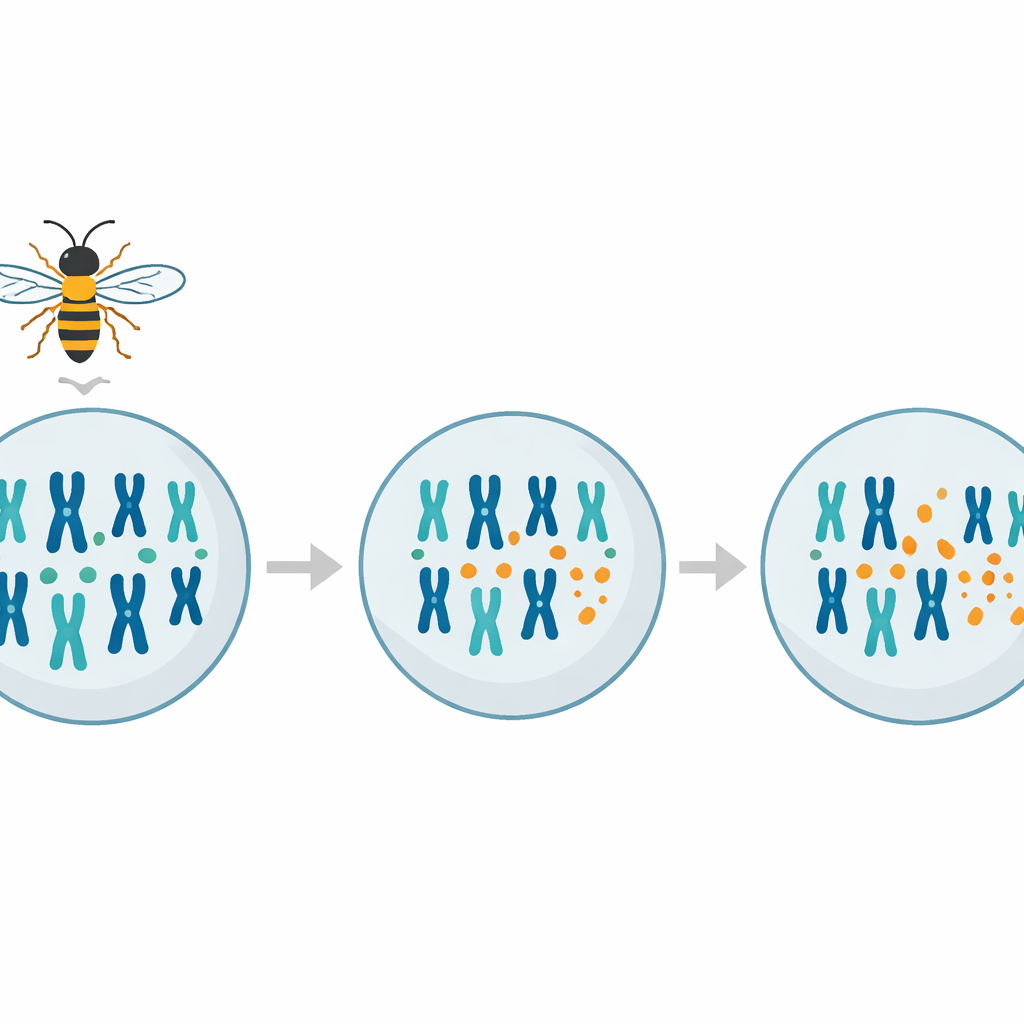
Clues to where the extra chromosomes came from
If the B chromosomes in T. fiebrigi had originated from another species through hybridization, the researchers would expect them to noticeably increase genome size or to be found in both species. Instead, T. angustula completely lacks B chromosomes, and the overall DNA amount of the two species is the same. At the same time, a key repetitive DNA sequence that dominates the B chromosomes is also present in the standard chromosomes of both species, and the pattern of tightly packed DNA differs between them: T. fiebrigi has more active long arms, while T. angustula has more compact ones. These clues suggest that, in T. fiebrigi, pieces of its own standard chromosomes likely broke off and stabilized as extra chromosomes.
What this means for bees and their genomes
For non‑specialists, the take‑home message is that the mysterious extra chromosomes in one jataí bee species probably arose from within its own genome, rather than arriving from another species. Even though these B chromosomes can be large and numerous, they do not noticeably change the total amount of DNA in the species compared with its close relative. By examining many colonies and individuals, this study shows how genomes can reshuffle and generate extra chromosome fragments without obvious external input. Understanding how such elements originate and persist helps biologists piece together how bee genomes evolve and adapt—insight that ultimately supports conservation and sustainable use of these vital pollinators.
Citation: Cunha, M.S., Lino-Neto, J., Soares, F.A.F. et al. An intraspecific origin of B chromosomes in Tetragonisca fiebrigi (Apidae: Meliponini) inferred from cytogenetic and nuclear genome size data. Sci Rep 16, 9040 (2026). https://doi.org/10.1038/s41598-026-39709-8
Keywords: stingless bees, B chromosomes, genome size, chromosome evolution, bee cytogenetics