Clear Sky Science · en
The contribution of phenolic endocrine-disrupting chemicals to breast cancer risk: A comprehensive bioinformatics analysis
Chemicals in Everyday Life
Plastics, detergents, food containers, and receipts are so common that we rarely think about the chemicals they contain. Yet some of these compounds behave like hormones inside the body and may nudge cells toward disease. This study looks closely at three such chemicals—bisphenol A (BPA), nonylphenol (NP), and octylphenol (OP)—and asks a pressing question: could long-term, low-level exposure to them help raise a woman’s risk of breast cancer?
Why These Hidden Hormone Mimics Matter
BPA, NP, and OP belong to a class called phenolic endocrine‑disrupting chemicals. They are found in a wide range of consumer products and often end up in soil and water, where they can enter the human body through food, skin contact, and air. Because their shapes resemble natural hormones, especially the female hormone estrogen, they can latch onto hormone‑sensitive systems. Breast tissue is one of the organs most responsive to hormonal signals, so scientists have long suspected that these chemicals might influence the development or growth of breast tumors, but the biological links have been hard to map.
Mining Big Data to Trace the Risk
Instead of relying on traditional toxicology, which typically tests one chemical and one target at a time, the authors used a “network” approach. They first collected thousands of possible protein targets for BPA, NP, and OP from several large databases, then overlapped these with more than 7,000 genes linked to breast cancer. This digital cross‑matching produced 156 shared targets that could connect the chemicals to the disease. Computer‑based enrichment analyses showed that many of these targets sit in pathways controlling cell growth, stress responses, hormonal signaling, and resistance to hormone‑based therapies—systems already known to be important in breast cancer. 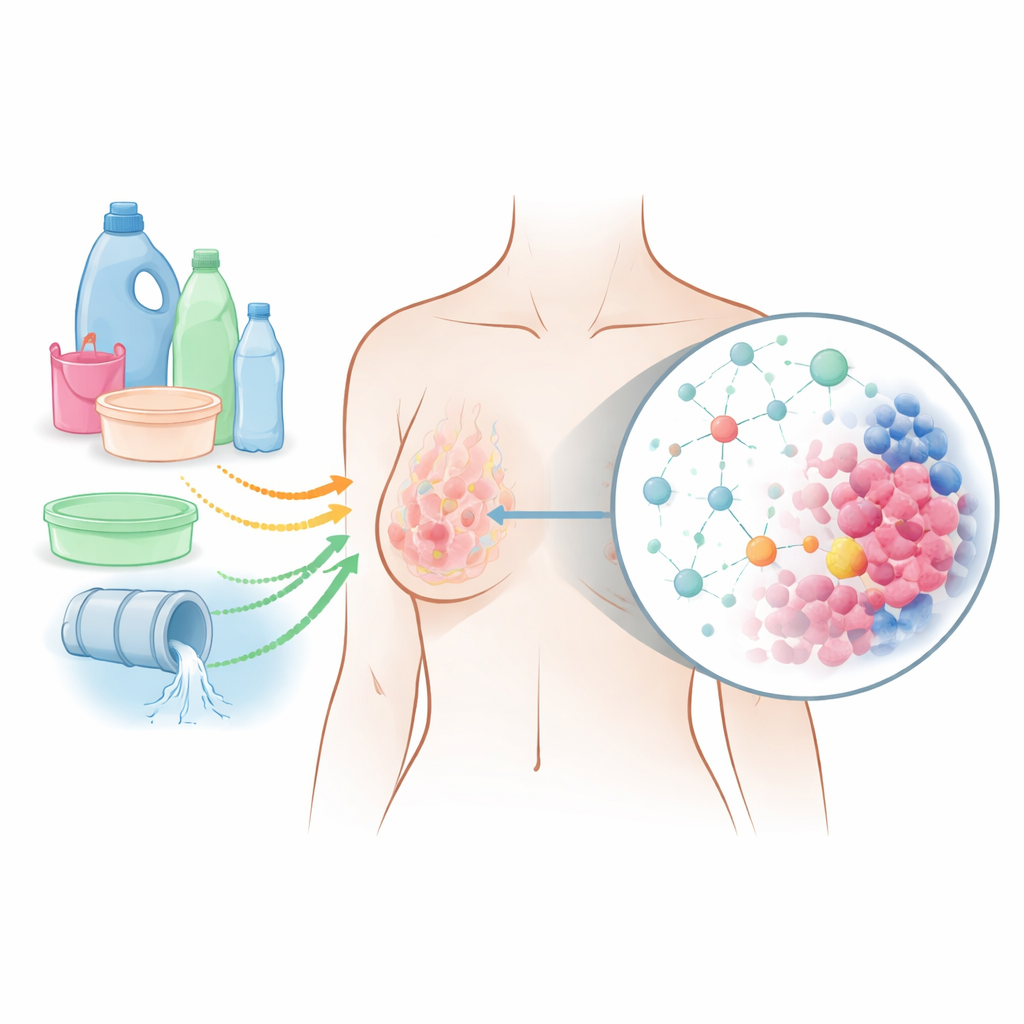
Six Key Genes and the Immune Shift
To narrow the list, the team applied two machine‑learning techniques to gene‑activity data from breast tumors and healthy breast tissue. Both methods converged on six genes—MAOA, MGLL, ADRA2A, RPN2, GF1R, and CTSD—that best distinguished cancer from normal tissue. Three of these genes were more active in tumors, while three were less active. When tested as potential diagnostic markers, four of them separated cancerous from normal samples with high accuracy. Further analyses suggested that these genes sit at the crossroads of several cancer‑related routes, including signals that shape how immune cells behave in and around the tumor.
How Chemistry, Metabolism, and Immunity Interact
The study then asked how these “hub” genes might change the immune landscape of breast tissue. Using computational tools that estimate which immune cells are present based on gene patterns, the authors found that altered activity of the six genes was linked to changes in multiple immune cell types. In particular, there was a shift toward macrophages that typically support tumor growth (often called M2‑like cells) and away from certain T cells that help mount anti‑tumor attacks. One stand‑out gene, MGLL, helps break down fat‑related molecules and has been tied to aggressive cancer behavior and immune evasion. Detailed docking and molecular dynamics simulations showed that BPA binds to the MGLL protein tightly and stably, suggesting a plausible route by which this everyday chemical could disturb fat metabolism and immune balance in breast tissue. 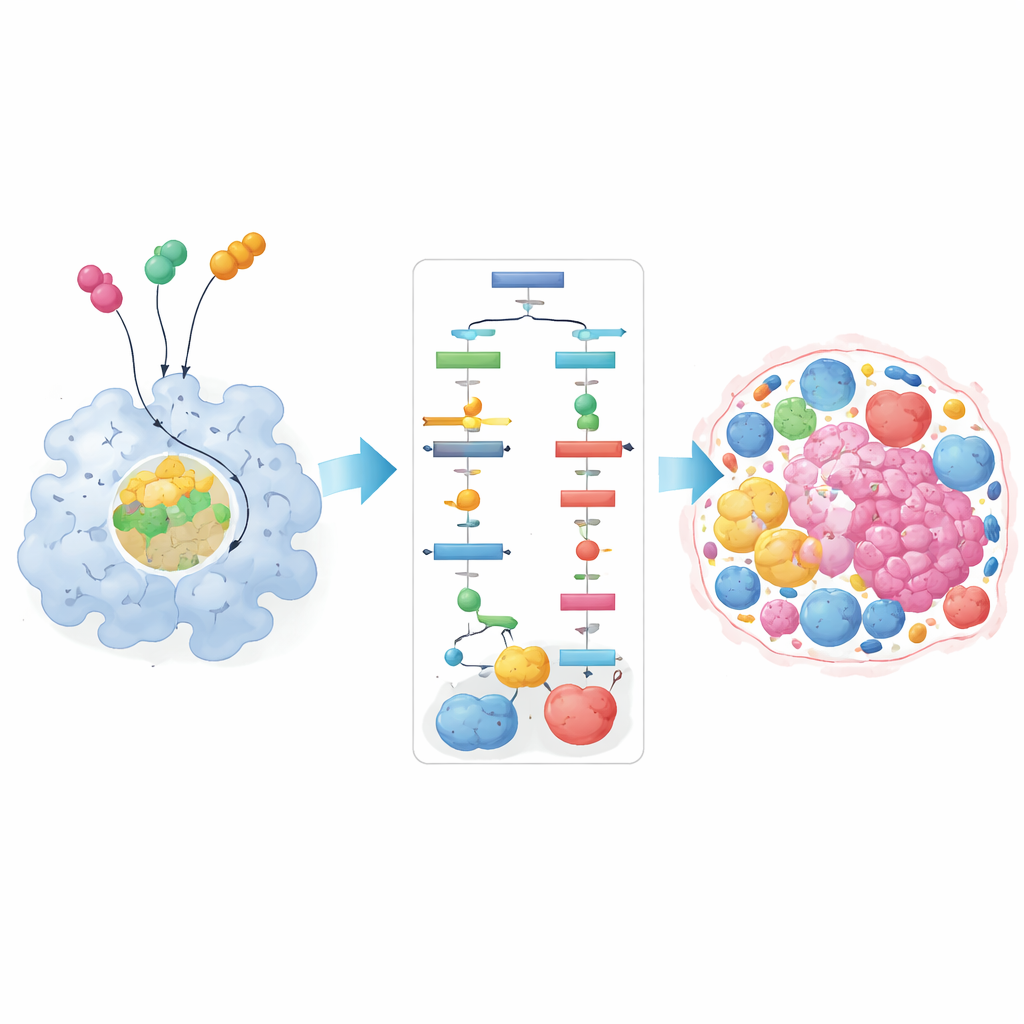
What This Means for Health and Policy
Taken together, the results support a picture in which phenolic endocrine disruptors do not act through a single switch, but instead through a “multi‑target–immune microenvironment–metabolic reprogramming” axis. In other words, by binding to many proteins at once, these chemicals may subtly rewire hormone signals, cell metabolism, and immune defenses in ways that make breast cancer more likely or more aggressive. The work does not prove that BPA, NP, or OP cause breast cancer in real‑world settings, but it maps out testable mechanisms and highlights six genes as promising early‑warning or treatment targets. The findings strengthen the case for closer scrutiny of hormone‑like chemicals in consumer products and point to the need for long‑term animal and human studies to translate this digital evidence into clear guidance for prevention.
Citation: Dou, Y., Li, X., Li, M. et al. The contribution of phenolic endocrine-disrupting chemicals to breast cancer risk: A comprehensive bioinformatics analysis. Sci Rep 16, 8283 (2026). https://doi.org/10.1038/s41598-026-39706-x
Keywords: endocrine disruptors, bisphenol A, breast cancer, immune microenvironment, environmental health