Clear Sky Science · en
Neural responses to virtual avatars are shaped by user preference and personality traits
Why Our Brains Care Which Avatar We Talk To
From customer service chatbots to virtual teachers and digital health coaches, more and more of our conversations with technology happen through cartoon-like faces on a screen. Yet we quickly sense that we would rather talk to some of these virtual characters again—and happily skip others. This study asks what happens in the brain during those first few seconds with a new avatar, and how our own personality shapes which digital faces we prefer.
Meeting a New Digital Face
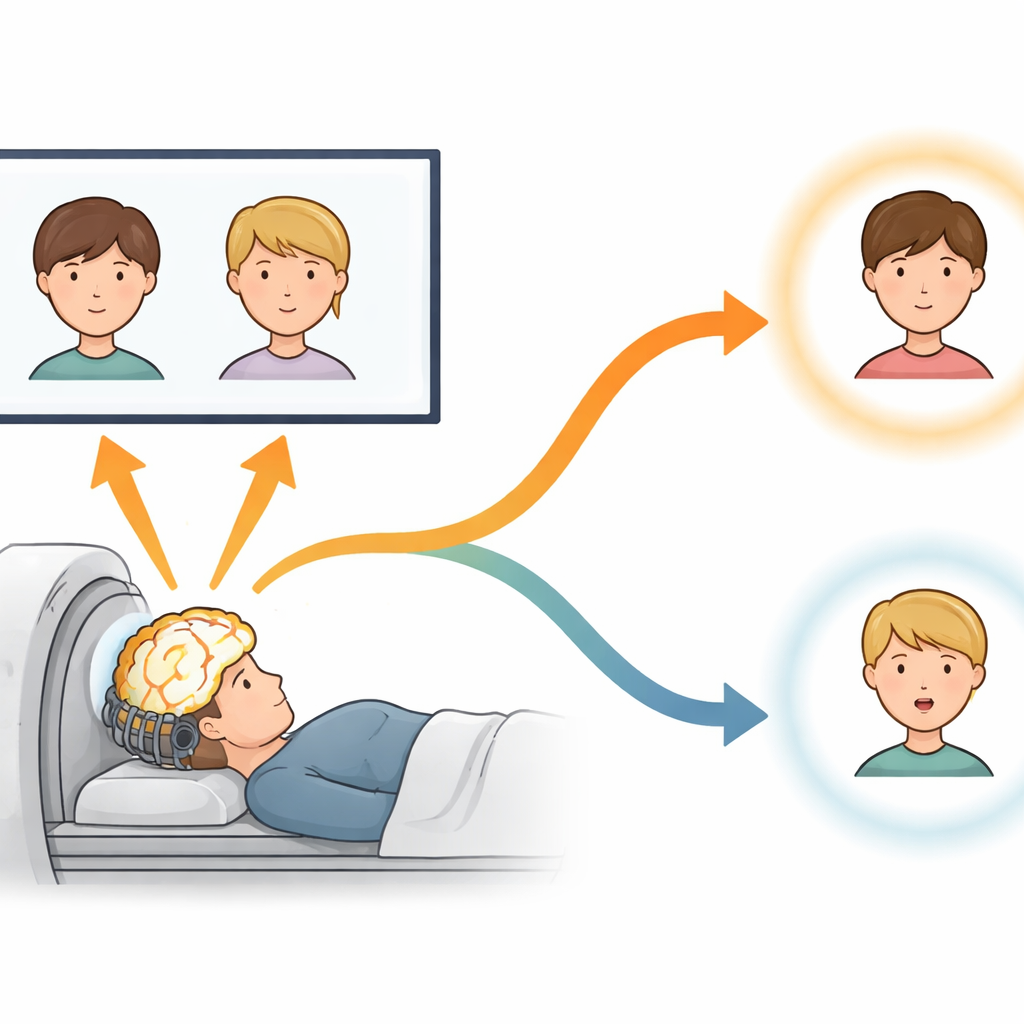
Researchers invited 42 adults into a brain scanner and showed them short videos of cartoon-style avatars. Each avatar differed in age, gender, and broad racial appearance, but they all said the same simple greeting in the same cheerful way. In every trial, participants saw two avatars one after the other and then chose which one they would rather talk to again. This design stripped away complex dialogue and focused on snap judgments based mainly on how the avatars looked and sounded.
How People Felt About the Avatars
After the scanning session, participants rated each avatar on a series of scales covering traits such as likable or unlikable, cute or ugly, and approachable or unapproachable. Across the board, the avatars people chose to talk to again were seen as warmer, nicer, more natural, and more approachable than those they rejected. However, even the non‑selected avatars were not strongly disliked. Because the researchers deliberately used friendly, cartoon-like characters rather than eerie, ultra-realistic faces, both groups of avatars tended to be viewed in a generally positive light.
What the Brain Does During a First Impression
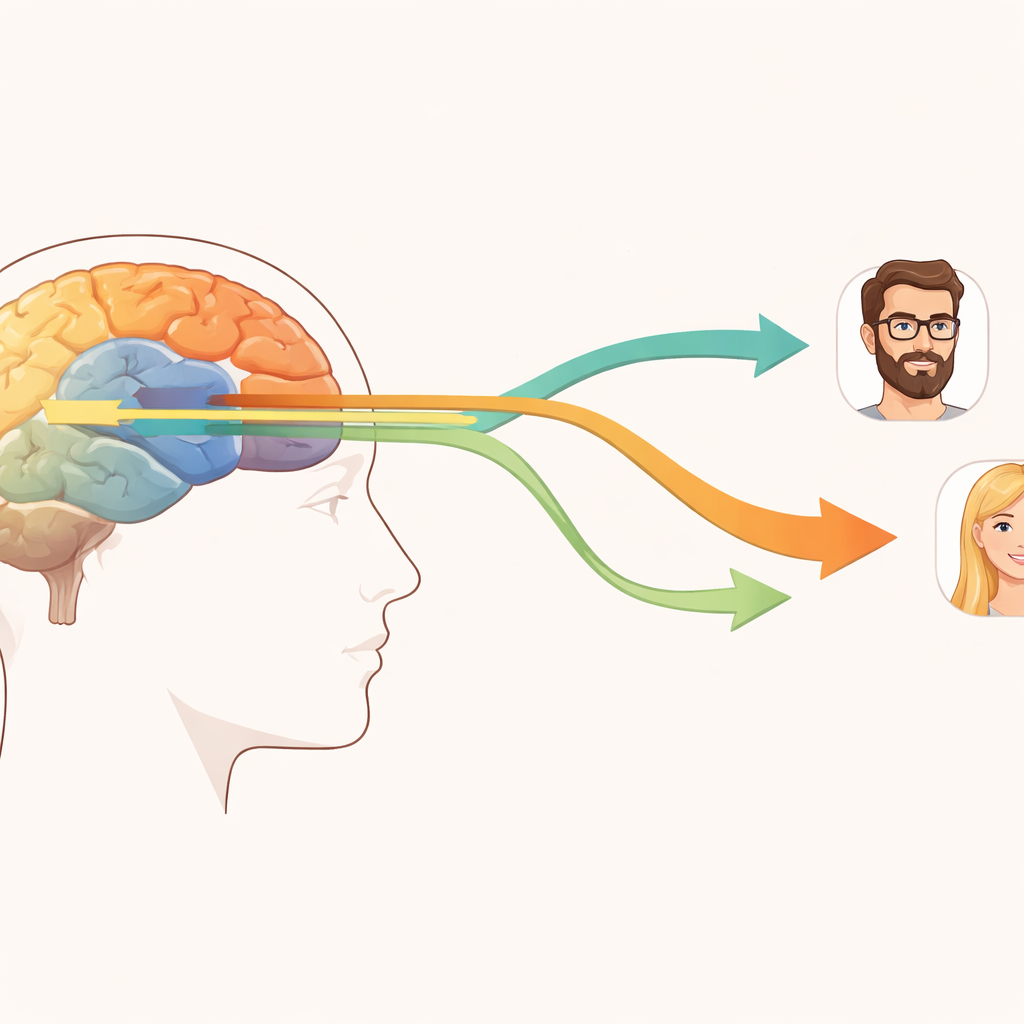
While people watched the greeting videos, the scientists measured brain activity using functional MRI. When participants viewed avatars they later chose, certain areas on the left side of the brain—the middle and superior temporal gyri—became more active than when they viewed avatars they did not choose. These regions are known to help combine what we see and hear, and to process faces and social cues. The finding suggests that favored avatars may simply engage our social perception systems more strongly, even when their words and expressions are identical to those of less favored avatars. Surprisingly, no brain regions showed stronger activity for the avatars people rejected, consistent with the fact that these characters were not strongly negative or unsettling.
Personality Makes a Difference
The team also collected brief personality profiles using a standard "Big Five" measure, focusing on traits such as openness to new experiences. They found that people who scored higher on openness actually showed lower activity in two brain regions—the right superior frontal gyrus and the left middle cingulate gyrus—while viewing avatars they selected. These regions are often linked to self-reflection and weighing the value of choices. One possible interpretation is that open-minded individuals may need less effort from these evaluation systems when deciding they like a new avatar, although the study cannot prove cause and effect. For avatars that were not selected, this relationship with openness did not appear, underscoring that personality mainly shaped how the brain responded to preferred digital partners.
What This Means for Future Avatars
Together, the results show that our first impressions of virtual characters are reflected in the brain within just a few seconds, especially in regions that handle faces and integrate sights and sounds. These early responses are not only about the avatar’s surface features; they also depend on who we are as individuals. While the study does not pinpoint exact feelings like trust or familiarity, it reveals the neural groundwork of “I’d talk to this avatar again” decisions. As avatars become routine guides, helpers, and companions in daily life, understanding these rapid, brain-based preferences—and how they vary with personality—can help designers create digital characters that people find more engaging, comfortable, and worth returning to.
Citation: Takemoto, A., Sugiura, M. Neural responses to virtual avatars are shaped by user preference and personality traits. Sci Rep 16, 8060 (2026). https://doi.org/10.1038/s41598-026-39704-z
Keywords: virtual avatars, human–computer interaction, personality traits, social neuroscience, user preference