Clear Sky Science · en
Improved uranium bioleaching in brackish environments via microbial consortium using RSM based modelling and optimization
Why salty water and tiny helpers matter
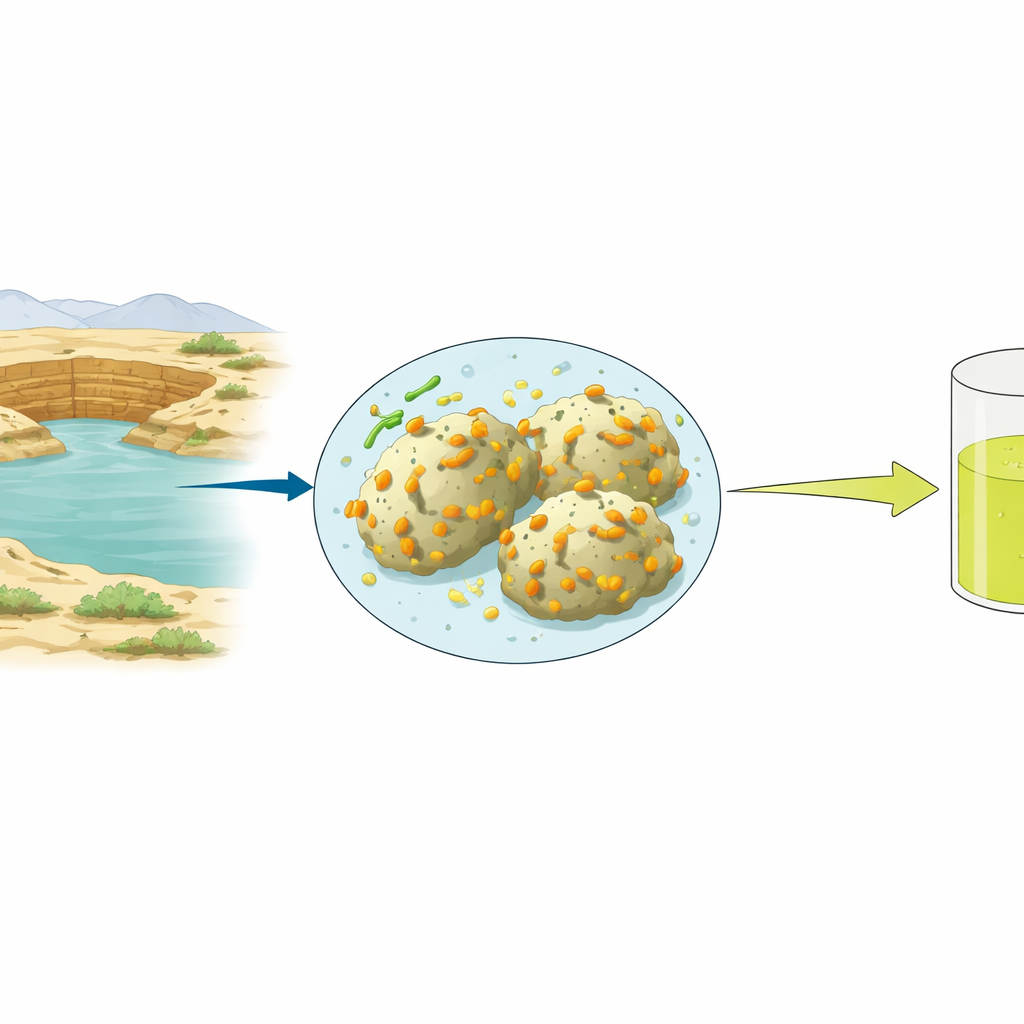
As high-quality uranium ore becomes harder to find and freshwater grows scarcer, mining companies are searching for cleaner, cheaper ways to extract this critical fuel for nuclear power. One promising approach is to let microbes do the work: certain bacteria can slowly dissolve metals out of rock in a process called bioleaching. But there is a catch—these microbes usually dislike salty, brackish water, which is often the only water available in dry mining regions. This study explores a clever workaround: teaming up a salt-tolerant bacterium with a yeast so they can jointly pull uranium from low-grade ore in brackish conditions.
Letting microbes mine the rock
Instead of using high temperatures or harsh chemicals, bioleaching relies on microorganisms that gain energy by transforming iron and sulfur in the ore. In doing so, they create an acidic, oxidizing environment that turns solid uranium minerals into dissolved forms that can be recovered from solution. The researchers worked with a low-grade uranium ore from central Iran and grew a halotolerant bacterium, Acidithiobacillus ferrooxidans strain THA4, in a laboratory medium containing controlled amounts of salt, crushed ore, and air. By carefully measuring how much uranium ended up in the liquid under different conditions, they could see how well the microbes were “mining” the rock.
Testing salty water and ore load
A key question was how much salt and solid material the bacteria could handle before their performance dropped. Using a statistical approach called response surface methodology, the team varied salt level, ore concentration (pulp density), contact time, and starting amount of bacteria across dozens of experiments. They found that higher salt and more solid ore both reduced uranium recovery: salt put the microbes under osmotic stress, while dense slurries limited oxygen and made it harder for cells to reach mineral surfaces. Extending the leaching time helped up to about ten days, giving the bacteria time to grow and produce oxidizing agents, but beyond that performance slipped, likely because nutrients were used up and waste products accumulated.
Adding a partner for tough conditions
To boost extraction in brackish water, the researchers introduced a second microbe: the yeast Rhodotorula toruloides strain IR-1395, which can tolerate acidity and salt. Instead of competing, the two species play different roles. The bacterium feeds on inorganic iron and sulfur and depends on carbon dioxide, while the yeast uses organic material and releases carbon dioxide back into the liquid. When both were present at carefully chosen amounts, the system became more robust. The optimized combination of bacteria and yeast increased uranium recovery by about 24 percent compared with the bacterium alone under similar saline conditions, and the solution became more oxidizing and more acidic—both favorable for dissolving uranium.
Watching microbes build mining communities
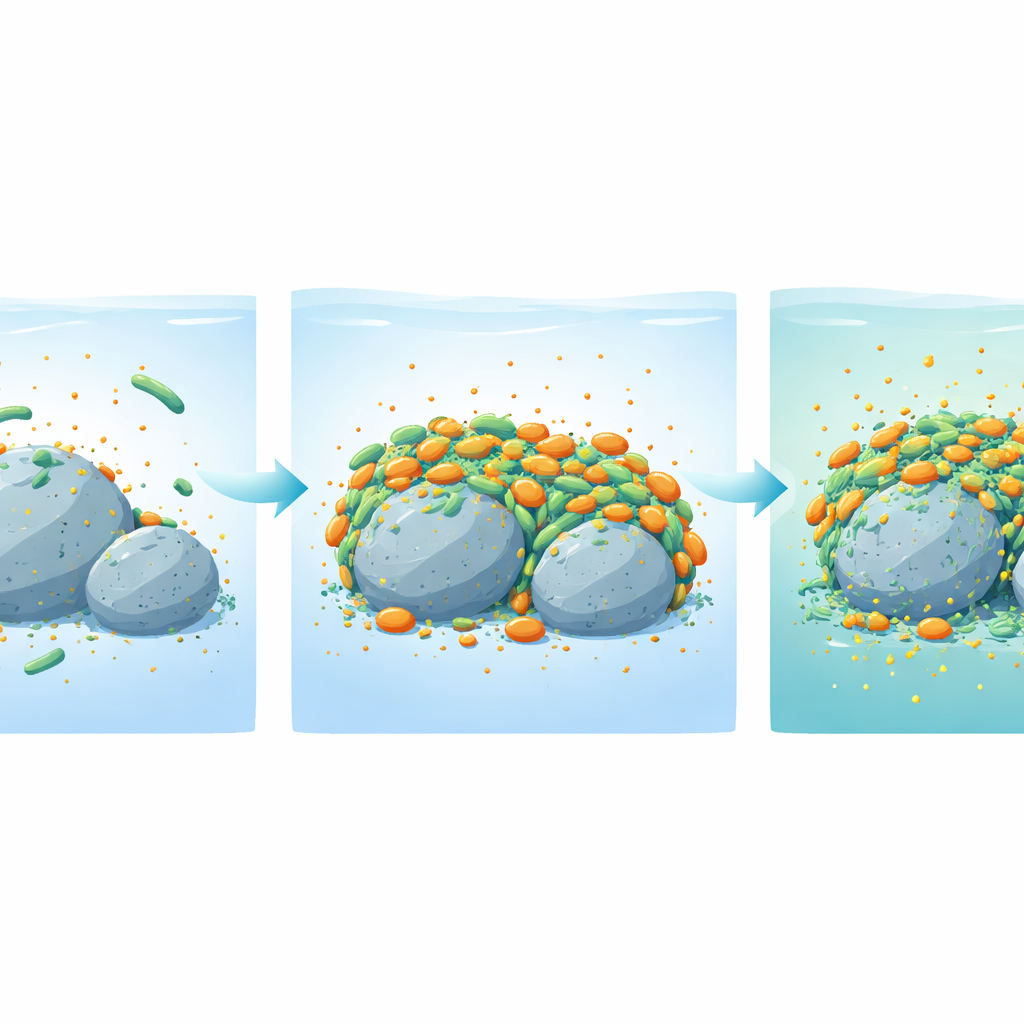
The team also used scanning electron microscopy coupled with elemental analysis to look directly at how the organisms colonized the ore. Within a few days, they observed individual bacterial cells attaching to mineral grains. After 16 days, samples with both bacterium and yeast showed dense microbial layers—biofilms—covering the rock, along with mineral crusts such as jarosite on the surface. These biofilms help hold cells in close contact with the ore, where they can continuously produce chemicals that attack the mineral and keep uranium moving into solution. The visual evidence supported the measurements: the consortium not only survived but actively reshaped the rock surface in the salty environment.
What this means for future uranium recovery
Overall, the study shows that a thoughtfully designed partnership between different microbes can overcome one of bioleaching’s main obstacles: sensitivity to salt. By pairing a salt-tolerant bacterium with a compatible yeast and using statistical tools to fine-tune salt level, ore loading, microbe doses, and time, the researchers created an efficient uranium-leaching system that works in brackish water and on low-grade ore. For lay readers, the takeaway is that tiny organisms can act as eco-friendly miners, and that teaming them up in the right way may help recover valuable metals where clean water and rich ores are no longer available.
Citation: Shoja, M., Mohammadi, P., Tajer-Mohammad-Ghazvini, P. et al. Improved uranium bioleaching in brackish environments via microbial consortium using RSM based modelling and optimization. Sci Rep 16, 9697 (2026). https://doi.org/10.1038/s41598-026-39700-3
Keywords: bioleaching, uranium extraction, saline water, microbial consortia, biomining