Clear Sky Science · en
Effects of adding transcutaneous vagus nerve stimulation to vestibular rehabilitation on dizziness and postural control in vestibular migraine: a randomized clinical trial
When Head Spinning Won’t Stop
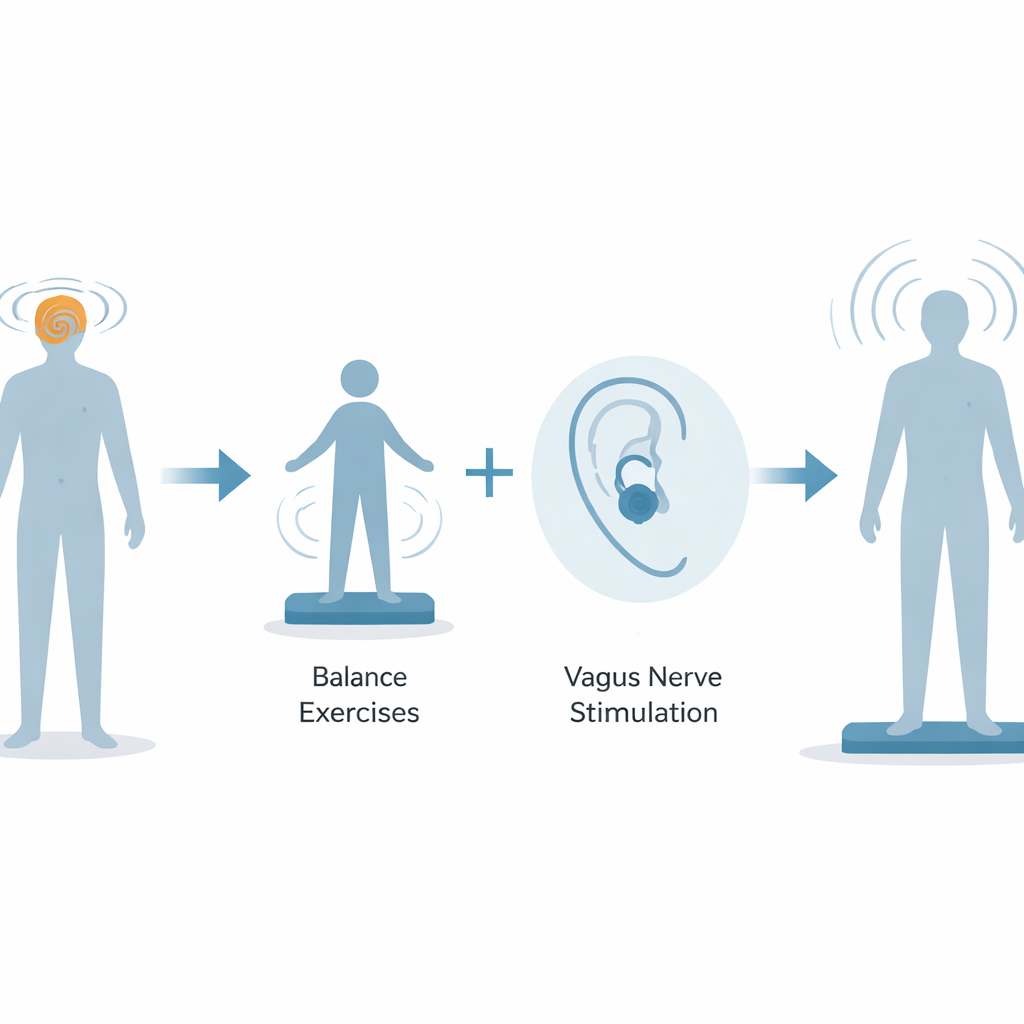
Dizzy spells that feel like the room is tilting or spinning can be terrifying, especially when they come with pounding headaches and an unsteady walk. For people with vestibular migraine—a common cause of recurrent vertigo—everyday tasks like walking in a crowded store or turning the head quickly can trigger symptoms. This study explores whether pairing a simple home exercise program with a gentle electrical pulse to the ear can offer extra relief, improving both balance and headache burden without resorting to stronger medications.
A Double Challenge: Vertigo and Migraine
Vestibular migraine blends two problems: migraine, which brings headaches and sensitivity to light and sound, and vestibular disorders, which disrupt the inner ear balance system. People may feel spinning, swaying, or rocking sensations that last from minutes to days, even when no headache is present. Usual migraine drugs often do not fully control these dizzy episodes, and some can cause drowsiness or interfere with daily life. As a result, clinicians are interested in non-drug approaches that might calm the balance system and ease pain at the same time.
Two Gentle Treatments Working Together
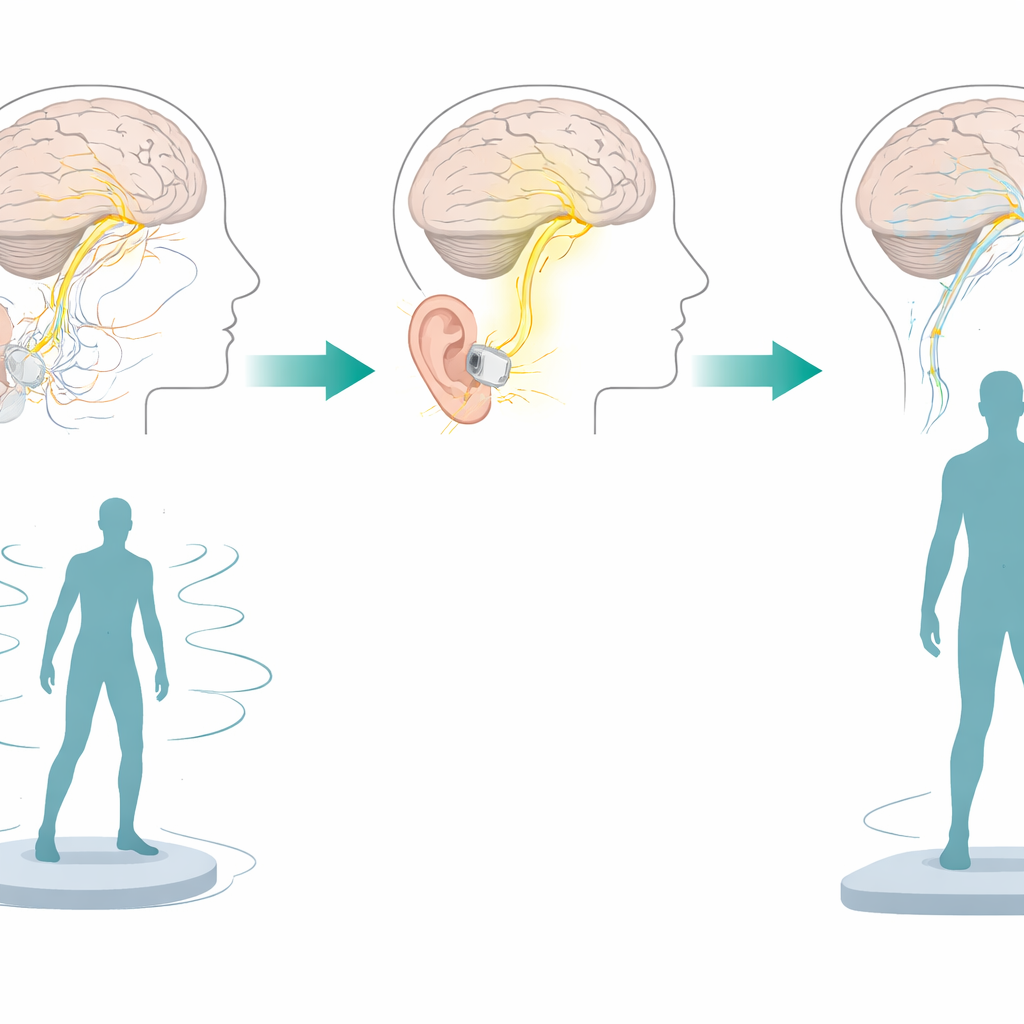
The researchers focused on two noninvasive options. The first, vestibular rehabilitation, is a set of customized balance and eye–head movement exercises done at home every day. These movements train the brain to better handle conflicting signals from the eyes, inner ears, and body, gradually reducing dizziness and improving stability. The second, called transcutaneous auricular vagus nerve stimulation, delivers tiny electrical pulses to part of the outer ear rich in nerve endings linked to the vagus nerve. This nerve connects to brain regions that regulate pain, balance, and automatic body functions like heart rate. Earlier work suggested that stimulating it might reduce migraine attacks and help with chronic dizziness.
Putting the Therapies to the Test
To see how well these methods work alone and together, 28 adults with diagnosed vestibular migraine were randomly assigned to one of four groups for one month: exercises only, ear stimulation only, exercises plus fake (sham) stimulation, or exercises plus real stimulation. Everyone continued their usual stable medications, but no new drugs were added. The team measured balance by tracking how much a person’s body swayed while standing under easy and challenging conditions, such as eyes closed or standing on foam. They also recorded how often vertigo and headaches occurred and how much these symptoms disrupted daily life, using standard questionnaires.
Clear Gains, Especially with the Combo
All four groups improved after a month: people swayed less when standing, reported fewer dizzy spells and headaches, and said their symptoms interfered less with daily activities. But those who combined exercises with real ear stimulation showed the most consistent and largest gains, especially when balance tasks were hardest—eyes closed on a soft surface. This combined group also had the greatest drop in dizziness severity and in the number of vertigo episodes. When looking specifically at headaches, the groups that received real ear stimulation—whether or not they did exercises—benefited more than those who did exercises with no real stimulation. Importantly, no serious side effects were seen; only mild, brief skin irritation at the ear clips was reported.
What This Could Mean for Patients
For people living with vestibular migraine, the results suggest that a month of daily balance exercises can meaningfully reduce dizziness and improve stability, and that adding gentle electrical stimulation of the ear may boost these effects and further ease headache burden. The study was small and short, so larger and longer trials are needed to confirm how long the benefits last and which patients gain the most. Still, this work points toward a promising, low-risk combination therapy that targets both the brain’s balance centers and pain pathways, offering new hope for those whose world is too often spinning out of control.
Citation: Farahani, A., Adel Ghahraman, M., Togha, M. et al. Effects of adding transcutaneous vagus nerve stimulation to vestibular rehabilitation on dizziness and postural control in vestibular migraine: a randomized clinical trial. Sci Rep 16, 8133 (2026). https://doi.org/10.1038/s41598-026-39697-9
Keywords: vestibular migraine, dizziness, vagus nerve stimulation, balance exercises, noninvasive therapy