Clear Sky Science · en
Electromyographic evaluation of effectiveness of passive stretch training in patients with temporomandibular disorders and limited mouth opening
When a Stiff Jaw Becomes a Daily Problem
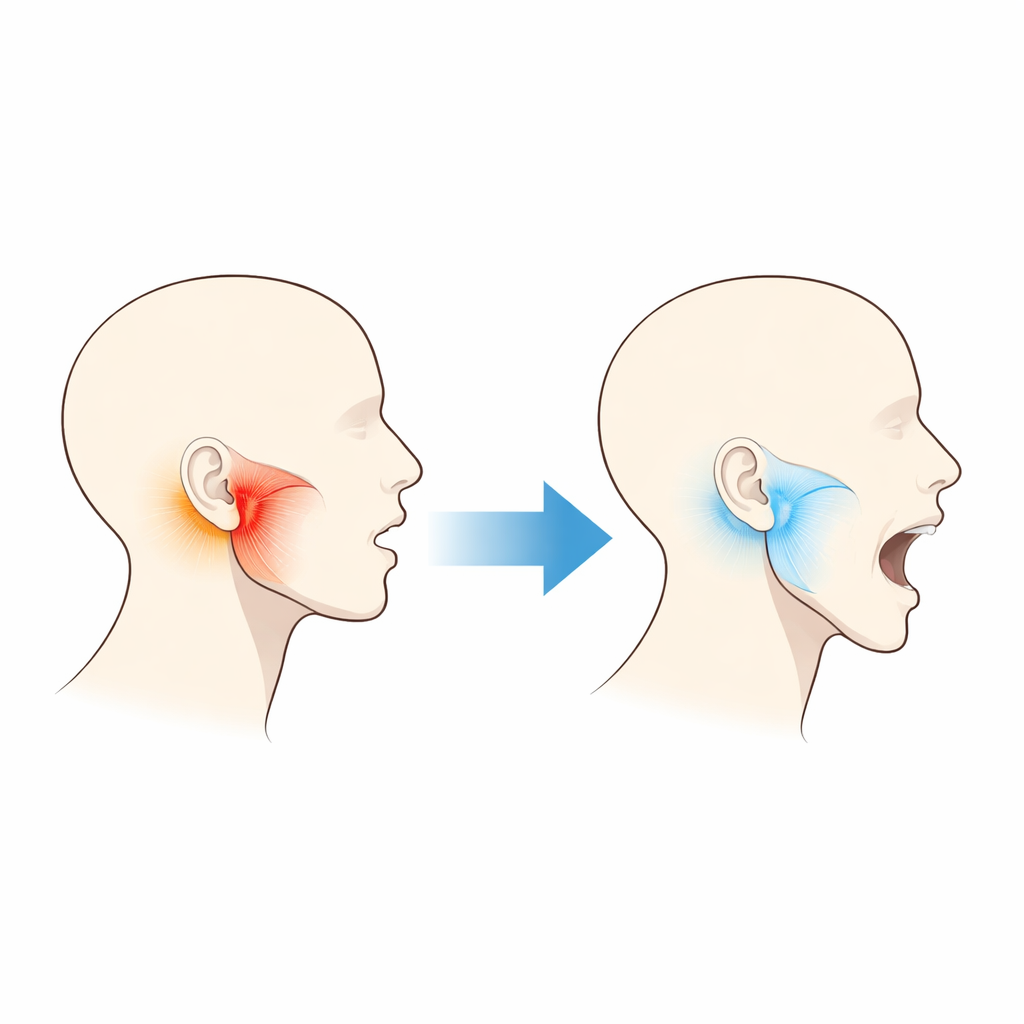
Struggling to open your mouth wide enough to eat, speak, or yawn can turn everyday life into a chore. Many people with jaw joint trouble—known broadly as temporomandibular disorders—live with pain, stiffness, and a "locked" feeling that standard treatments do not always fix. This study explores a simple, home-based stretching routine for the jaw and asks a key question: can gentle repeated stretching actually relax overactive jaw muscles, ease pain, and help people open their mouths more comfortably over time?
Jaw Trouble, Muscle Tension, and Quality of Life
Temporomandibular disorders are among the most common long-lasting muscle and joint problems after low back pain. They often cause soreness in the face and around the jaw joint, noises when moving the jaw, and, crucially, limited mouth opening that can make chewing, talking, and dental care difficult. Earlier work showed that people with painful, stiff jaws often have unusually high activity in the chewing muscles, especially the masseter muscle that lifts the jaw. Even light but constant clenching can make these muscles sore and tight, trapping patients in a cycle of pain and restricted movement.
A Simple Stretching Routine Put to the Test
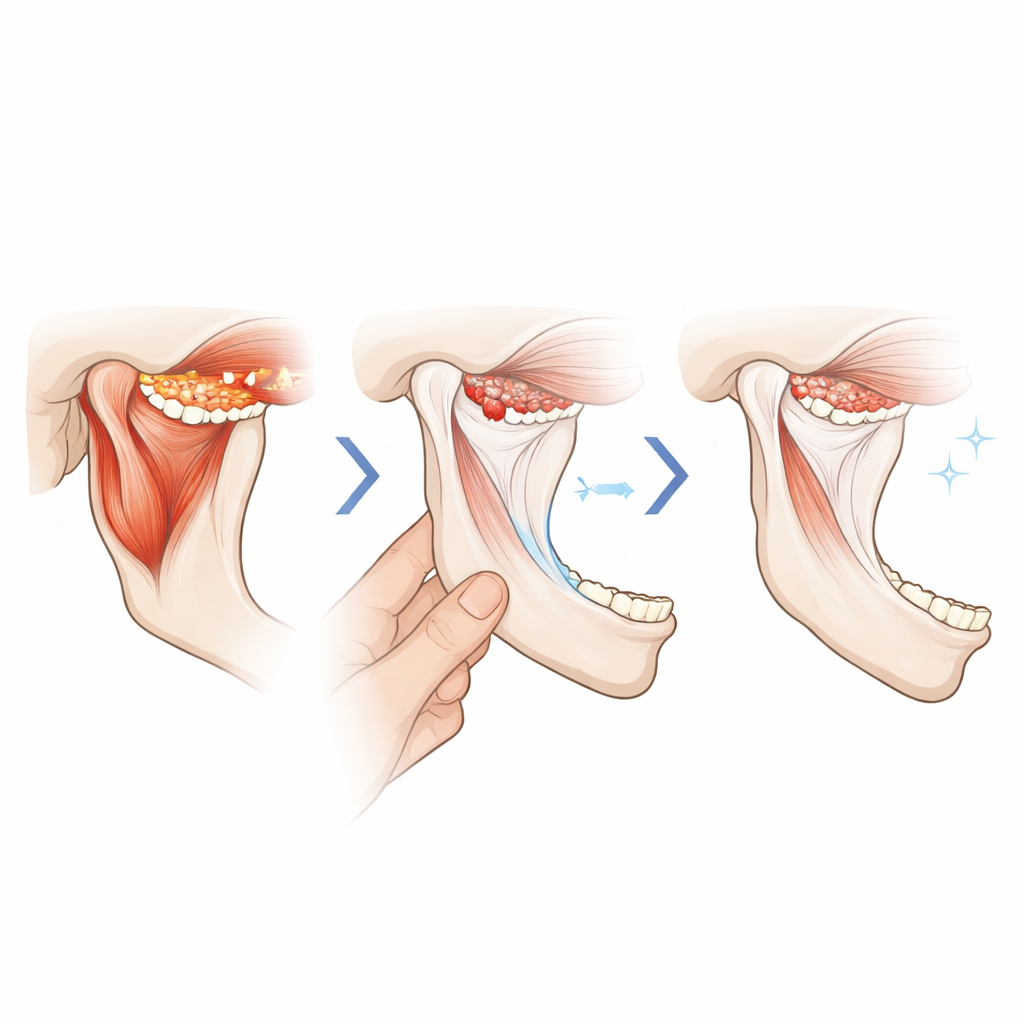
The researchers studied 37 patients with jaw disorders and limited mouth opening, along with 27 healthy volunteers. Patients fell into three groups: those with a slipped jaw disc, those with muscle-based jaw pain, and those with both problems. At the clinic, all participants first opened their mouths as wide as possible three times while sensors on the skin recorded electrical signals from the jaw muscles. After a short rest, patients performed a guided stretching routine: using their own fingers to gently pull the lower jaw downward and hold the stretch briefly, repeating this 15 times. They then repeated the maximum opening task. Some patients with muscle pain were also asked to continue this stretching at home for about three months and return for the same set of tests.
What Happened Right After Stretching
Right away, most patients could open their mouths wider after 15 stretches. The electrical recordings revealed that in patients with muscle pain—whether or not they also had a slipped disc—the masseter muscle became less active during and after the stretching session. In contrast, healthy volunteers and patients whose main problem was a slipped disc without muscle pain showed little change in muscle activity, even though their mouth opening still improved. Together, these results suggest that for people whose limited opening is driven by tight, overactive muscles, brief daily stretching can quickly calm those muscles and give the jaw more freedom to move.
Lasting Changes After Months of Home Practice
Among the patients who stuck with the home routine and returned for a second visit, the benefits went beyond a single session. After about three months of daily stretching, those with muscle-based jaw pain reported noticeably less pain and could open their mouths much wider than before. Their jaw muscle signals during maximum opening were also clearly lower, indicating that the muscles were no longer working as hard or tensing defensively. Healthy volunteers, who had no jaw problems to begin with, showed no meaningful changes over time, which supports the reliability of the measurements.
How Gentle Stretching May Calm a Guarded Jaw
The findings fit with modern views of chronic pain, in which the nervous system often keeps muscles in a guarded, protective state even when this stiffness becomes part of the problem. Repeated, controlled stretching of the jaw appears to reduce this defensive muscle activity, easing the sense of threat associated with opening the mouth. Over time, this not only loosens the muscles but may also retrain the way the brain and spinal cord regulate movement and pain signals. In people whose limited opening stems mainly from disc position rather than muscle overactivity, stretching may instead work by improving the mobility of soft tissues inside the joint.
What This Means for People With a Locked Jaw
For patients with jaw disorders and painful, limited opening, this study offers encouraging news: a simple, non-surgical stretching routine, combined with feedback from muscle sensors, can both reduce jaw muscle overactivity and increase how wide the mouth can open, with benefits that build over several months. While the study was relatively small and long-term results still need confirmation, it supports the idea that carefully guided self-stretching is a practical, low-risk tool that people can use at home to help unlock a stiff, painful jaw.
Citation: Lin, X., Takaoka, R., Moriguchi, D. et al. Electromyographic evaluation of effectiveness of passive stretch training in patients with temporomandibular disorders and limited mouth opening. Sci Rep 16, 8302 (2026). https://doi.org/10.1038/s41598-026-39696-w
Keywords: jaw pain, temporomandibular disorder, passive stretch training, limited mouth opening, muscle relaxation