Clear Sky Science · en
Isotopic evidence for human adaptation to island environments in the Canary Islands during the Amazigh period
People Making a Home on Remote Islands
The Canary Islands, off the northwest coast of Africa, were once a remote frontier for seafaring settlers from North Africa. Long before European ships arrived, these Indigenous Amazigh communities had to feed themselves in landscapes that ranged from green, cloud‑draped mountains to bare, wind‑scoured deserts. This study uses chemical traces locked inside ancient bones to reveal how these islanders tuned their farming, herding, gathering, and fishing to each island’s challenges—and how they weathered more than a thousand years of climatic ups and downs.
Reading Diets from Ancient Bones
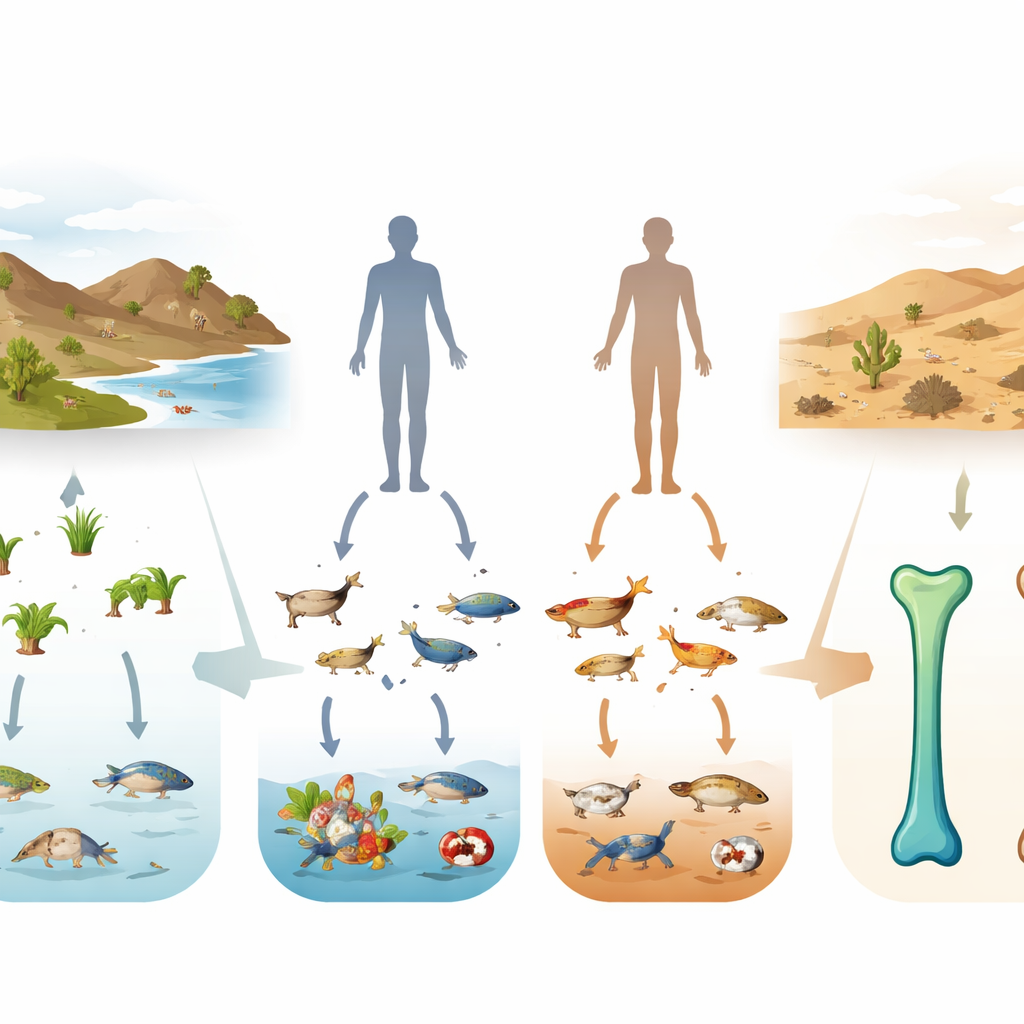
When people eat plants and animals, tiny variations of carbon and nitrogen from those foods become part of their body tissues, including bone. By measuring these stable isotopes in 457 skeletons from all seven main Canary Islands, and tying them to more than 150 radiocarbon dates, the researchers built a detailed picture of how diets differed from island to island between the 1st and 15th centuries CE. They also compared human values with those from local crops, wild plants, livestock, and marine life to see which foods best match the chemical fingerprints found in bone.
Different Islands, Different Ways to Eat
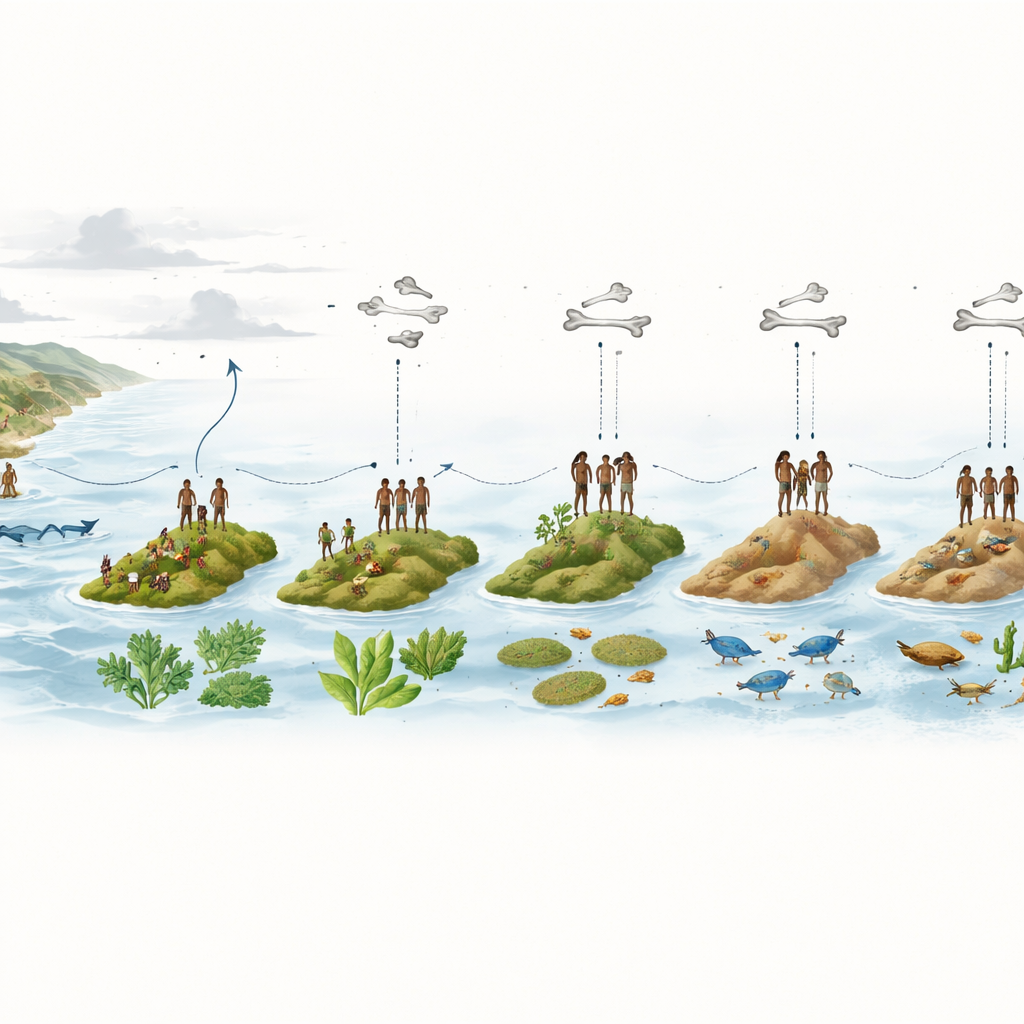
The team found that geography and climate were the main forces shaping what people ate. On the western, more mountainous islands such as La Palma and La Gomera, the isotope patterns point to a diet rooted in classic temperate crops like barley and wheat, combined with meat from herd animals and a wide variety of wild plants from lush forests. These islands show the widest spread in values, suggesting flexible strategies that could swing toward gathered plants—such as tough fern roots—when harvests failed. Nearby El Hierro stands out: its people show stronger signals of marine foods, matching archaeological finds of shellfish heaps along the coast and hinting that the sea helped buffer this small, resource‑poor island from famine.
Stable Fields and Harsh Deserts
In the central islands of Tenerife and Gran Canaria, the isotope values cluster more tightly. This narrower band suggests stable farming systems that reliably produced cereals and supported herds over many generations. Subtle differences still emerge: people on Gran Canaria appear to have drawn more heavily on richer marine fish, fitting with evidence for permanent coastal villages and intensive fishing. At the other extreme lie the eastern islands, Lanzarote and Fuerteventura, where flat terrain and proximity to the Sahara bring intense dryness. Here, human bones show very high nitrogen values and relatively enriched carbon, pointing to diets rich in high‑level marine foods such as seabirds, large fish, and possibly marine mammals. At the same time, the authors note that extreme aridity and sea spray can push plant and animal isotope values upward, meaning that climate and chemistry amplify the “marine” signal even when people are also eating land‑based foods.
Adapting Through Centuries of Climate Swings
The study spans major climate episodes, from the warm, dry Roman Warm Period and Medieval Climate Anomaly to the cooler, wetter Little Ice Age. By combining isotope data with a careful timeline model, the researchers tested whether diets shifted as conditions changed. Overall, they saw only gentle swings: slightly higher values in warmer, drier phases and somewhat lower values in cooler, wetter times. Statistical tests show that these changes are minor compared with the strong contrast between greener, high‑relief islands and low, desert‑like ones. In other words, where people lived mattered more than when they lived.
A Long‑Lasting Balance with Limited Landscapes
To a non‑specialist, the most striking message is how resilient these island societies were. Despite locust plagues, droughts, and limited wild game, the Amazigh communities of the Canary Islands maintained broadly stable ways of getting food for roughly 1,500 years. Each island community crafted its own balance—some leaning on forests and wild plants, others on fields and herds, and the driest islands turning strongly toward the sea—yet none show the abrupt dietary upheavals that later came with European crops like maize and new livestock practices. By carefully reading chemical traces in bone, this work reveals not a tale of collapse, but of long‑term adjustment and ingenuity in some of the Atlantic’s most isolated environments.
Citation: Sánchez-Cañadillas, E., Morquecho Izquier, A., Smith, C. et al. Isotopic evidence for human adaptation to island environments in the Canary Islands during the Amazigh period. Sci Rep 16, 9120 (2026). https://doi.org/10.1038/s41598-026-39695-x
Keywords: Canary Islands prehistory, ancient diet, stable isotope analysis, island adaptation, Amazigh archaeology