Clear Sky Science · en
Residual inflammatory risk and clinical outcomes after contemporary percutaneous coronary intervention: a systematic review and meta-analysis
Why hidden heart inflammation matters
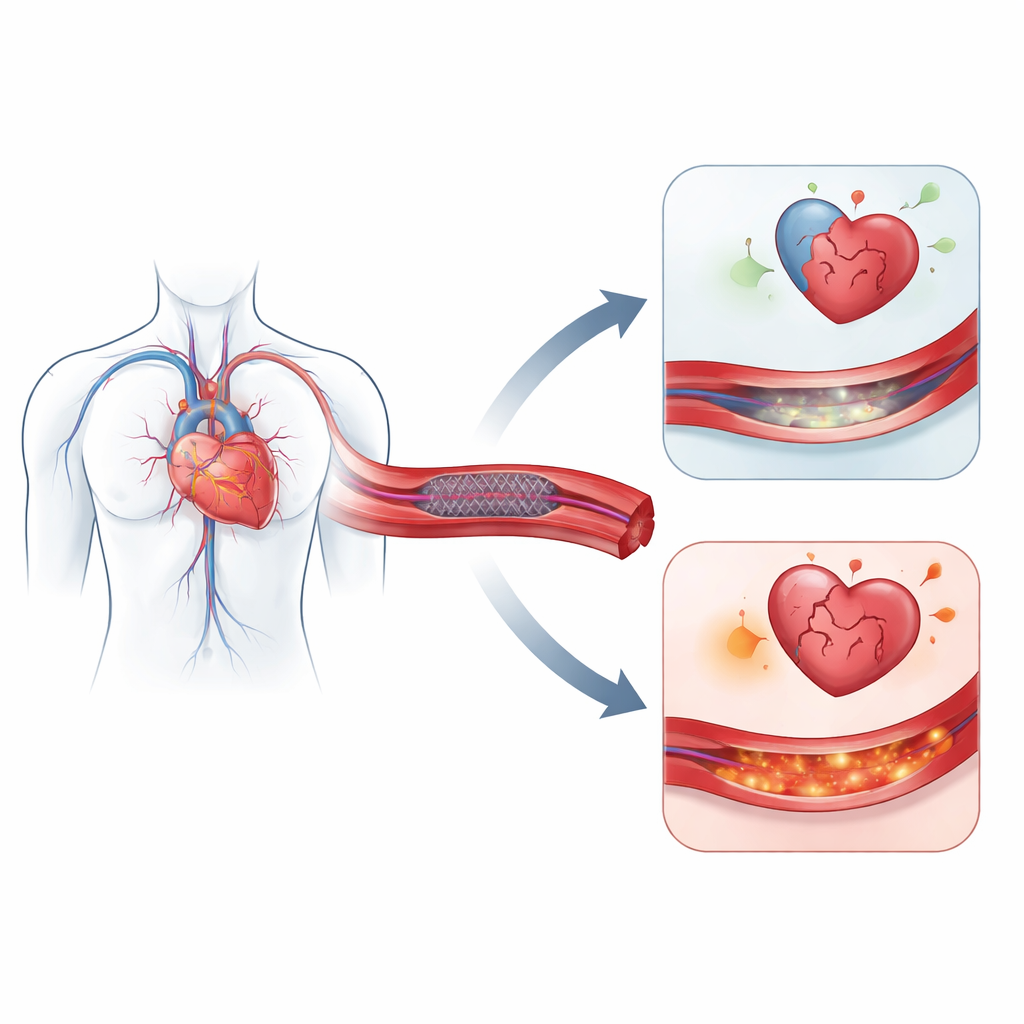
Many people who undergo a stent procedure to open clogged heart arteries leave the hospital believing the danger has been fixed. Yet, even when cholesterol is well controlled with modern drugs, some patients still suffer heart attacks, strokes, or die in the following years. This study asks a simple but crucial question: is a quiet, lingering form of inflammation in the blood a major part of that remaining risk, and could measuring it help doctors better protect their patients?
A closer look at patients after stent procedures
The researchers combined data from five large studies that followed 13,604 adults who had percutaneous coronary intervention, the catheter-based procedure in which a balloon and often a stent are used to widen narrowed heart arteries. Most of these patients were already receiving statins and other standard treatments to lower cholesterol and blood pressure. Despite this, the team found that more than 40 percent had signs of ongoing low-level inflammation one month after their procedure, even though they might have felt well and had acceptable cholesterol numbers.
A simple blood signal of ongoing trouble
Inflammation was tracked using a widely available blood test called high-sensitivity C‑reactive protein, which rises when the body’s immune system is activated. Patients were tested around the time of their stent procedure and again about a month later. Those whose levels stayed above a modest cutoff at follow-up were labeled as having high residual inflammatory risk. Importantly, the study was not looking at dramatic infections or flare-ups, but rather a smoldering background process in the artery wall that can quietly destabilize plaque and promote clots even after the mechanical blockage has been relieved.
What lingering inflammation means for outcomes
When the researchers compared people with high versus low residual inflammation, the differences over the next year were striking. Those with persistent inflammation had roughly a two-thirds higher risk of suffering a major cardiovascular event, defined as heart attack, stroke, or death. Their risk of dying from any cause was nearly three times higher. They were also more likely to experience non-fatal heart attacks and strokes, though the exact sizes of these risks varied between studies. These patterns appeared in patients from both Western and Asian countries, suggesting that the link between inflammation and poor outcome holds across different health systems and backgrounds.
Beyond cholesterol: rethinking heart risk
The findings challenge the long-standing view that reaching target cholesterol levels after a stent procedure is enough to tame future danger. Instead, they support a “two-track” picture of heart disease in which cholesterol and inflammation each drive damage, sometimes independently. The authors point out that standard guidelines already push doctors to check cholesterol after procedures, but do not routinely recommend measuring inflammatory markers. Their analysis suggests that a simple repeat blood test for inflammation a month after intervention could highlight a large group of patients who remain vulnerable, even when their cholesterol is well controlled, kidney function is acceptable, and standard drug therapy has been optimized.
New paths for treatment and prevention
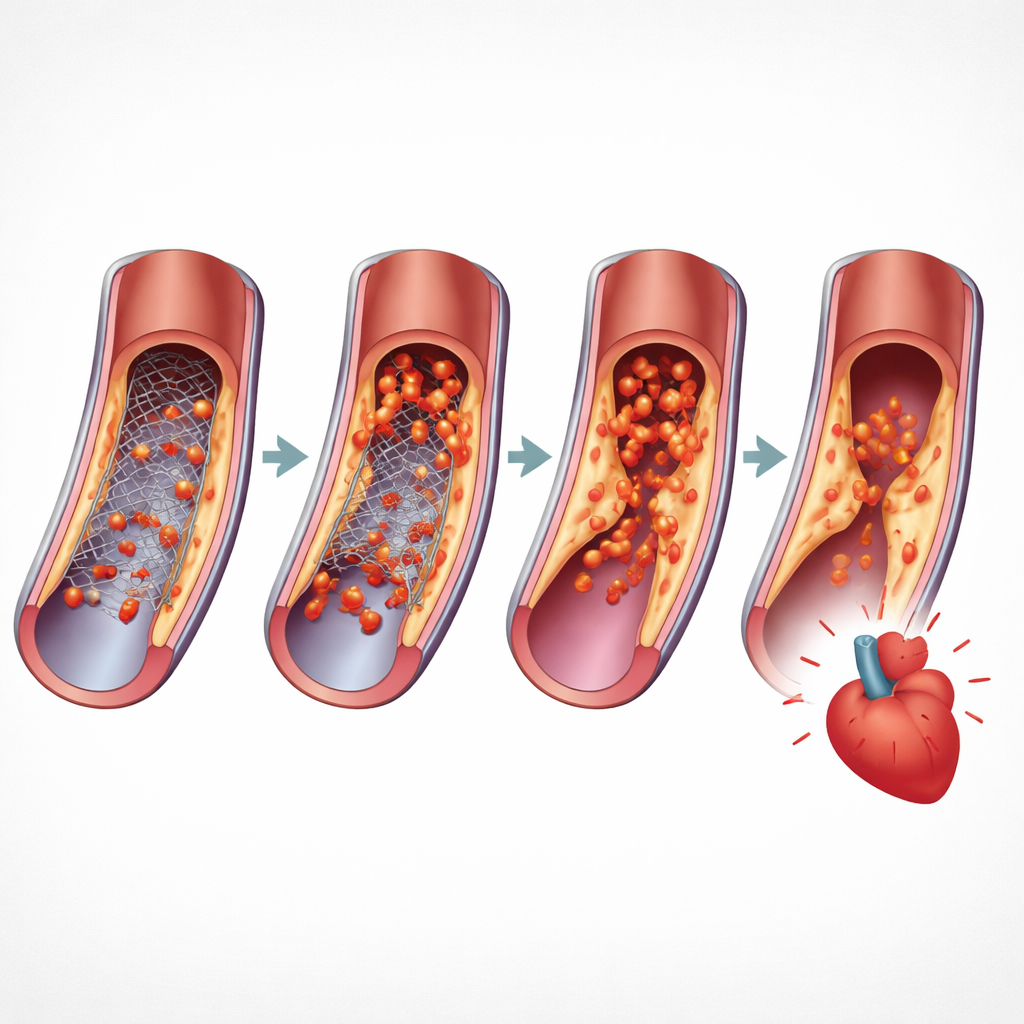
Because this research is based on observational studies rather than randomized treatment trials, it cannot prove that lowering inflammation will by itself improve survival. Still, it adds weight to growing evidence from other work that anti-inflammatory approaches—such as low-dose colchicine or newer drugs that target specific immune signals—may offer extra protection beyond cholesterol-lowering alone. The authors argue that future trials should specifically focus on patients with high residual inflammatory risk after stenting, testing whether guiding therapy by inflammation levels can prevent more heart attacks and strokes. For patients and clinicians, the take‑home message is that fixing a blocked artery is only part of the story; keeping the artery calm by addressing hidden inflammation may be just as important for staying well in the long run.
Citation: Romeo, F.J., Golino, M., Morello, M. et al. Residual inflammatory risk and clinical outcomes after contemporary percutaneous coronary intervention: a systematic review and meta-analysis. Sci Rep 16, 8584 (2026). https://doi.org/10.1038/s41598-026-39691-1
Keywords: heart stent, inflammation, C-reactive protein, cardiovascular risk, cholesterol