Clear Sky Science · en
Comparative analysis of flower volatiles from four Jasminum species growing in Egypt using multivariate analysis
Why the scent of jasmine matters
Many people know jasmine as a sweet, calming fragrance in perfumes, soaps and teas. This study asks a deeper question: what exactly is in that scent, how does it differ among jasmine types, and could those fragrant molecules help support mood and mental health? By comparing four jasmine species grown in Egypt, the researchers link the flowers’ complex aroma chemistry to activity on a key brain enzyme involved in depression, offering a scientific glimpse into why jasmine has long been used for relaxation and emotional balance.
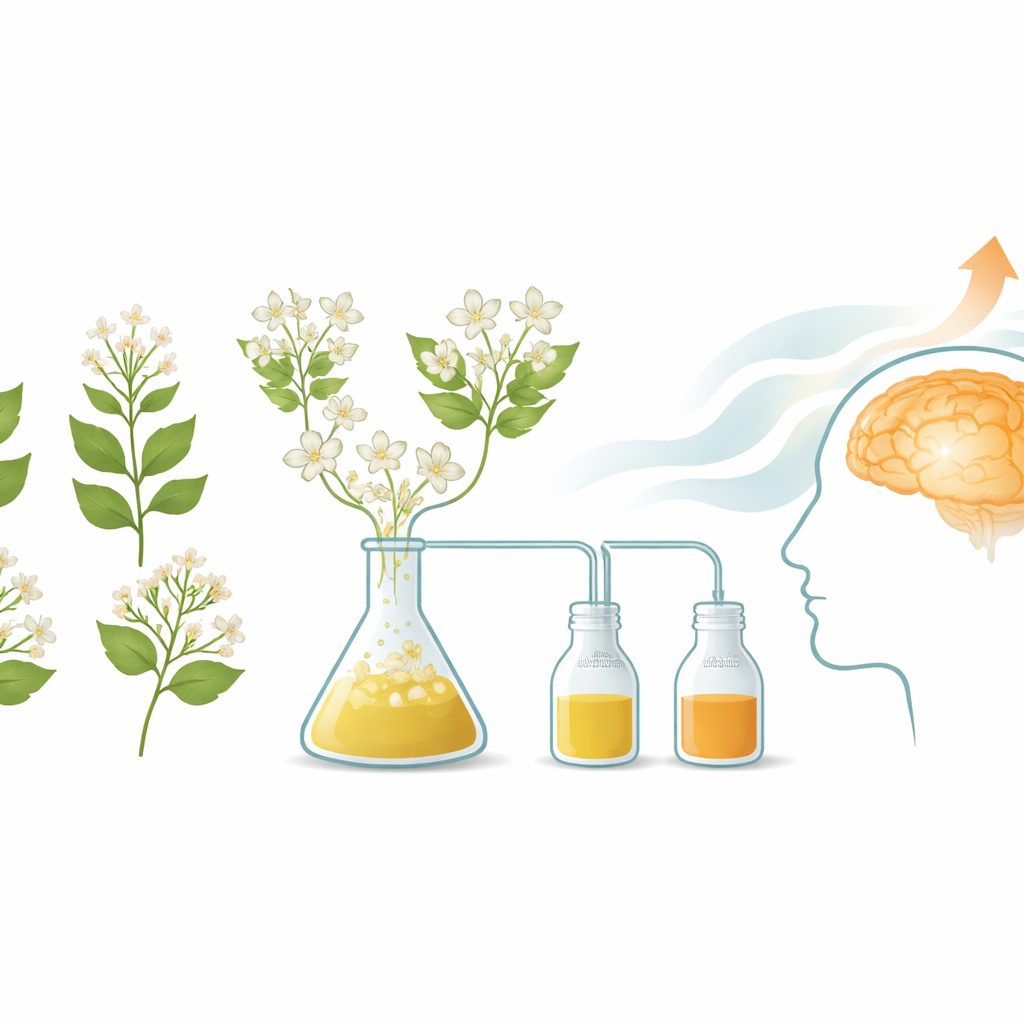
Different jasmines, different scents
The team focused on four species: the widely cultivated Jasminum grandiflorum, the popular tea flavoring J. sambac, the ornamental J. multiflorum, and the rarer J. azoricum. They collected fresh flowers in Egypt during summer and prepared two perfumery products from them. First, a non‑polar solvent pulled out a waxy, fragrant “concrete.” Then an alcohol wash removed the waxes to yield a more refined “absolute,” the prized material used in high‑end fragrances. Using sensitive instruments that separate and identify airborne compounds, the scientists cataloged 157 different volatile molecules spanning many chemical families that together build each jasmine’s characteristic smell.
The chemistry behind the aroma
Each species turned out to have its own scent “fingerprint.” Monoterpene alcohols such as linalool contributed fresh, floral notes and were especially abundant in J. sambac and J. grandiflorum. Larger molecules called sesquiterpenes, including farnesol and nerolidol, were more prominent in the concretes and absolutes and are often used in cosmetics and detergents. Heavier triterpenes like 2,3‑epoxysqualene dominated in J. multiflorum extracts, whereas J. grandiflorum was rich in diterpenes such as phytol. Classic jasmine notes like benzyl acetate and benzyl benzoate, which give a sweet, fruity scent and help the fragrance last on skin, were especially important markers for J. grandiflorum and for factory‑made products. Advanced statistical tools grouped samples according to these patterns, clearly separating species, extraction types and even factory material from laboratory extracts.
How season and extraction change the smell
The researchers also sampled the natural “headspace” above fresh flowers in June, July and August to see how the living scent shifts through the season. They found that cooler, early‑season blossoms emphasized certain green and fatty notes, while August flowers—when jasmine scent is often perceived as richest—showed higher levels of sweet, fruity esters like benzyl acetate and cis‑3‑hexenyl acetate, as well as more linalool in some species. Headspace analysis, which does not heat or boil the flowers, captured more of these highly volatile, delicate components than solvent extraction could. This helped explain why concrete and absolute sometimes smell heavier and less “fresh” than the living flower: some top notes are lost or transformed during processing.
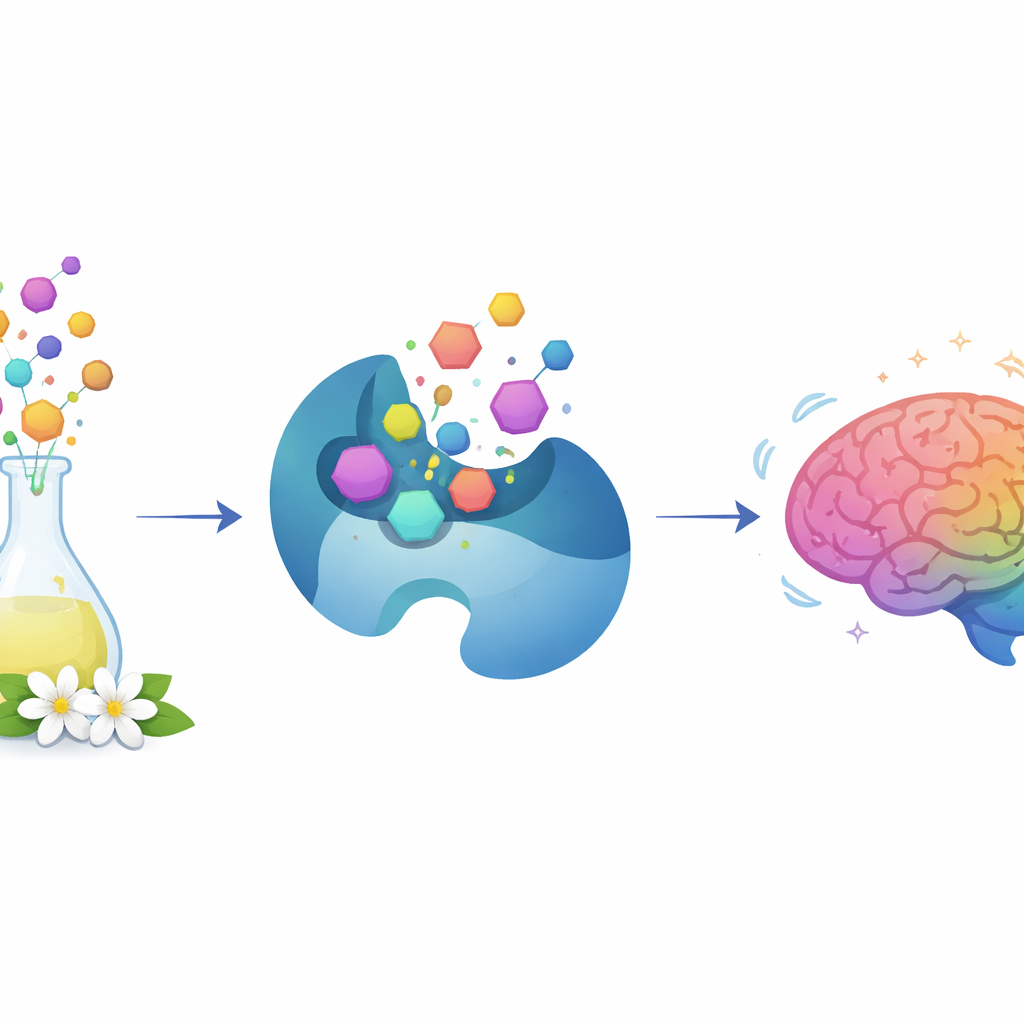
From fragrance to mood‑related activity
Beyond cataloguing scents, the study tested whether these jasmine extracts could influence monoamine oxidase A (MAO‑A), a brain enzyme that breaks down mood‑related messengers like serotonin and noradrenaline. Standard antidepressant drugs often work by limiting this breakdown. In test‑tube assays, all concretes and absolutes from the four species inhibited human MAO‑A, with the absolutes generally being much more potent. Factory and lab samples of J. grandiflorum and J. multiflorum absolute showed inhibition levels approaching those of a reference MAO‑A drug. Statistical modeling linked this activity to a cluster of fragrance molecules—including linalool, indole, benzyl acetate, eugenol, α‑farnesene, methyl jasmonate and phytol—that have each been separately reported to show neuroprotective or antidepressant‑like effects in animal studies.
What this means for everyday jasmine use
To a non‑specialist, the findings suggest that jasmine’s appeal is more than just pleasant smell. Different jasmine species and harvest times yield distinct aromatic profiles, and some of these complex blends can strongly affect an enzyme central to mood regulation, at least in laboratory tests. August‑harvested J. grandiflorum in particular combines a chemistry that perfumers prize with a mix of compounds that correlate with MAO‑A inhibition. While this does not mean jasmine oil or tea can replace antidepressant medication, it provides a biochemical basis for traditional uses of jasmine in relaxation, sleep improvement and emotional support, and it sets the stage for future animal and clinical studies to explore how inhaled or topical jasmine preparations might gently complement conventional treatments.
Citation: Yassen, M.S., Ayoub, I.M., El-Ahmady, S.H. et al. Comparative analysis of flower volatiles from four Jasminum species growing in Egypt using multivariate analysis. Sci Rep 16, 8947 (2026). https://doi.org/10.1038/s41598-026-39688-w
Keywords: jasmine fragrance, essential oils, depression, monoamine oxidase, aromatherapy