Clear Sky Science · en
Behavioral and lethal effects of yeast based bioformulations on Bactrocera dorsalis
Why tiny flies matter to your fruit bowl
The Oriental fruit fly is a small insect with an outsized impact, destroying fruits like mango, guava, and citrus across the globe and forcing farmers to rely on chemical sprays. Those pesticides can harm pollinators, contaminate soil and water, and drive insects to evolve resistance. This study explores a different path: using naturally occurring yeasts and plant oils to lure and repel fruit flies, offering a cleaner way to protect harvests and our food supply.
From problem pest to gentler solutions
Fruit flies such as Bactrocera dorsalis cause billions of dollars in crop losses and trigger strict trade quarantines. Current control methods lean heavily on synthetic insecticides, which bring environmental and health concerns. Scientists are therefore searching for tools that fit within integrated pest management, an approach that combines multiple low-impact tactics. One promising source lies inside insects themselves: the communities of fungi and yeasts that live on and within them, quietly producing scented vapors that guide insect behavior.
Turning friendly yeasts into pest fighters
The researchers focused on two yeast species that naturally live with another fruit-loving fly, the African fig fly. They combined each yeast with a plant-derived lemon-scented oil rich in citral, making four different oil–yeast mixtures and testing their stability at fridge, room, and warm temperatures. Two mixtures, where citral oil was paired with either Debaryomyces hansenii or Pichia kudriavzevii, formed smooth, long-lasting emulsions that did not separate, an essential feature if such products are to be stored, shipped, and used in real orchards.
Smells that pull flies in or drive them away
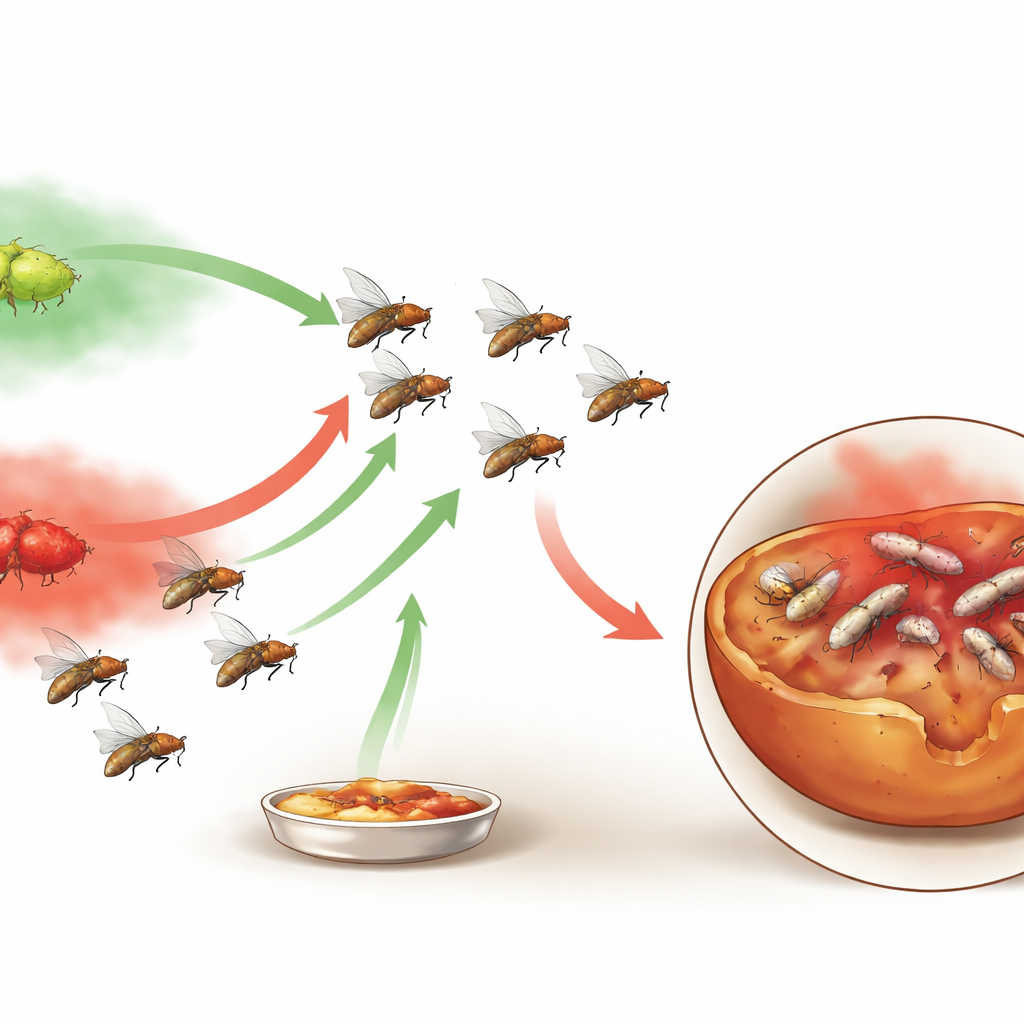
The team then asked a simple question: given a choice between treated food and plain guava, where do female fruit flies go? The citral mixture with D. hansenii strongly attracted flies, drawing the vast majority toward the treated food. In contrast, the citral mixture with P. kudriavzevii powerfully repelled them, with nearly all flies avoiding it. To understand why, the scientists analyzed the vapors released by each mixture using a chemical “nose” called gas chromatography–mass spectrometry and tested key compounds in a Y-shaped choice chamber. Molecules linked to ripe or fermenting fruit, such as acetophenone and certain fatty-aldehyde scents, helped explain the attraction, while other substances, including plant-like terpenes and specific fatty acids, triggered strong avoidance.
Beyond behavior: hitting the next generation
Stopping adult flies is only part of the story; their larvae hidden inside fruit do most of the damage. The researchers mixed different doses of the yeast–oil blends into larvae food and tracked how many individuals grew up to emerge as adults. The citral oil on its own killed some larvae, but when paired with P. kudriavzevii it became markedly more deadly, causing more than half of the larvae to die at relatively low concentrations. Statistical tests confirmed a clear dose–response pattern. At the same time, the team measured how much citral oil the yeasts themselves could tolerate, finding that lower doses kept the fungi alive and active, while higher doses were too harsh for them.
Bringing push–pull tactics to the orchard
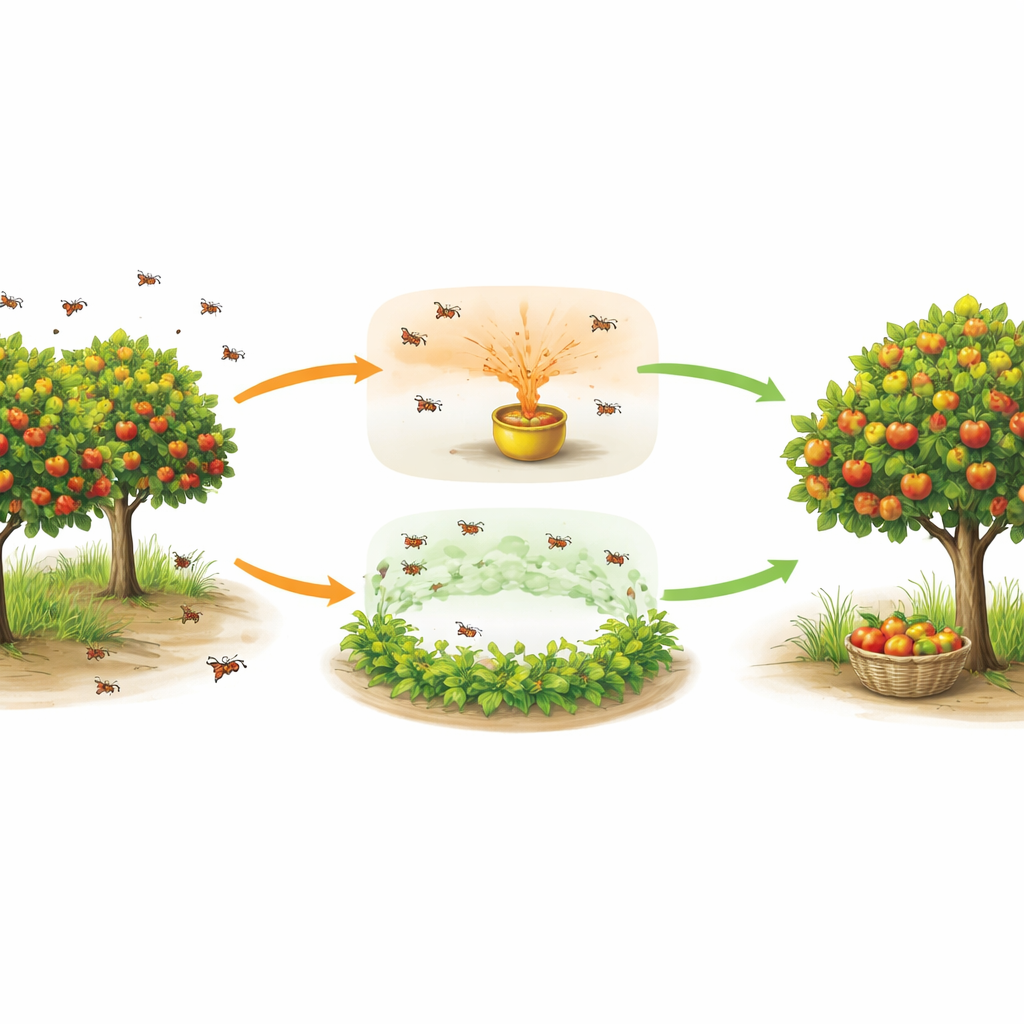
Viewed together, these results point toward a practical toolkit built from nature’s own chemistry. One yeast–oil mix acts as a powerful scent beacon that pulls fruit flies into traps or treated spots where they can be removed (“attract and kill”). The other mixture forms a scented shield that both discourages adult flies from approaching fruit and harms their larvae (“push” plus larvicide). Because these ingredients come from insect-associated yeasts and plant oils, they fit well with the goal of reducing conventional pesticide use. The study suggests that insect microbiomes are a rich reservoir of future pest-control agents and lays the groundwork for field trials that could bring safer, smarter protection to farmers and consumers alike.
Citation: Ramniwas, S., Sharma, A., Singh, N.V. et al. Behavioral and lethal effects of yeast based bioformulations on Bactrocera dorsalis. Sci Rep 16, 8778 (2026). https://doi.org/10.1038/s41598-026-39684-0
Keywords: fruit fly control, biological pest management, yeast-based bioformulation, essential oils, push–pull strategy