Clear Sky Science · en
Prognostic value of right ventricular–pulmonary artery coupling in patients with muscular dystrophies
Why the Right Side of the Heart Matters in Muscle Disease
People often think of muscular dystrophies as conditions that only weaken arms and legs. But these inherited diseases can also strain the heart and lungs, quietly shaping how long and how well patients live. This study asks a simple but crucial question: can a single ultrasound-based measure of how the right side of the heart talks to the lungs help doctors predict which patients are at higher risk of serious heart problems?
How Weak Muscles Affect Heart and Lungs
In Duchenne and Becker muscular dystrophy and related disorders called sarcoglycanopathies, the muscles that move the chest wall and help with breathing gradually weaken. As breathing becomes more difficult, many patients develop a restrictive lung pattern and eventually need home mechanical ventilation. These changes can raise pressure in the blood vessels of the lungs and force the right side of the heart, which pumps blood into the lungs, to work harder. Over time, this extra strain can push the right heart toward failure and trigger rhythm problems, heart failure episodes, or even shock. Understanding how well the right heart is keeping up with this load is therefore central to caring for these patients.
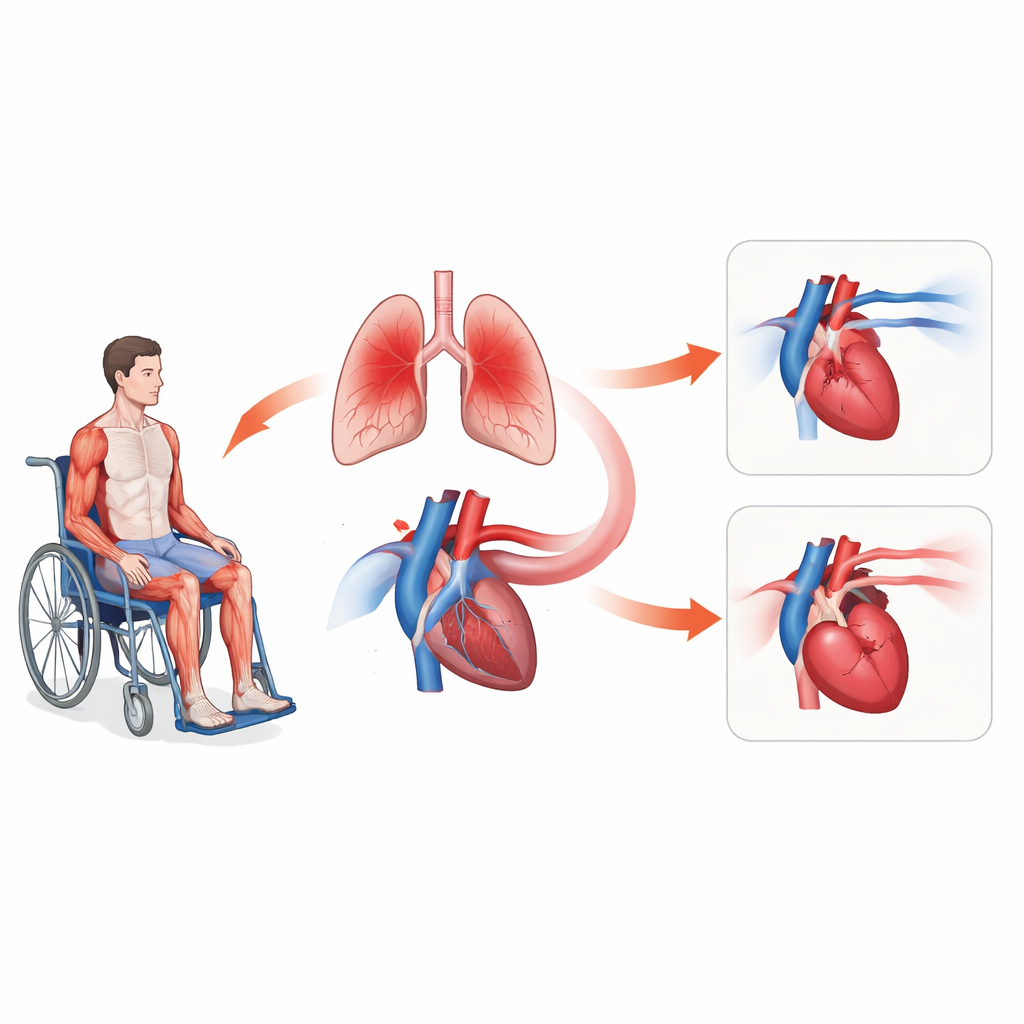
A Simple Heart–Lung Score
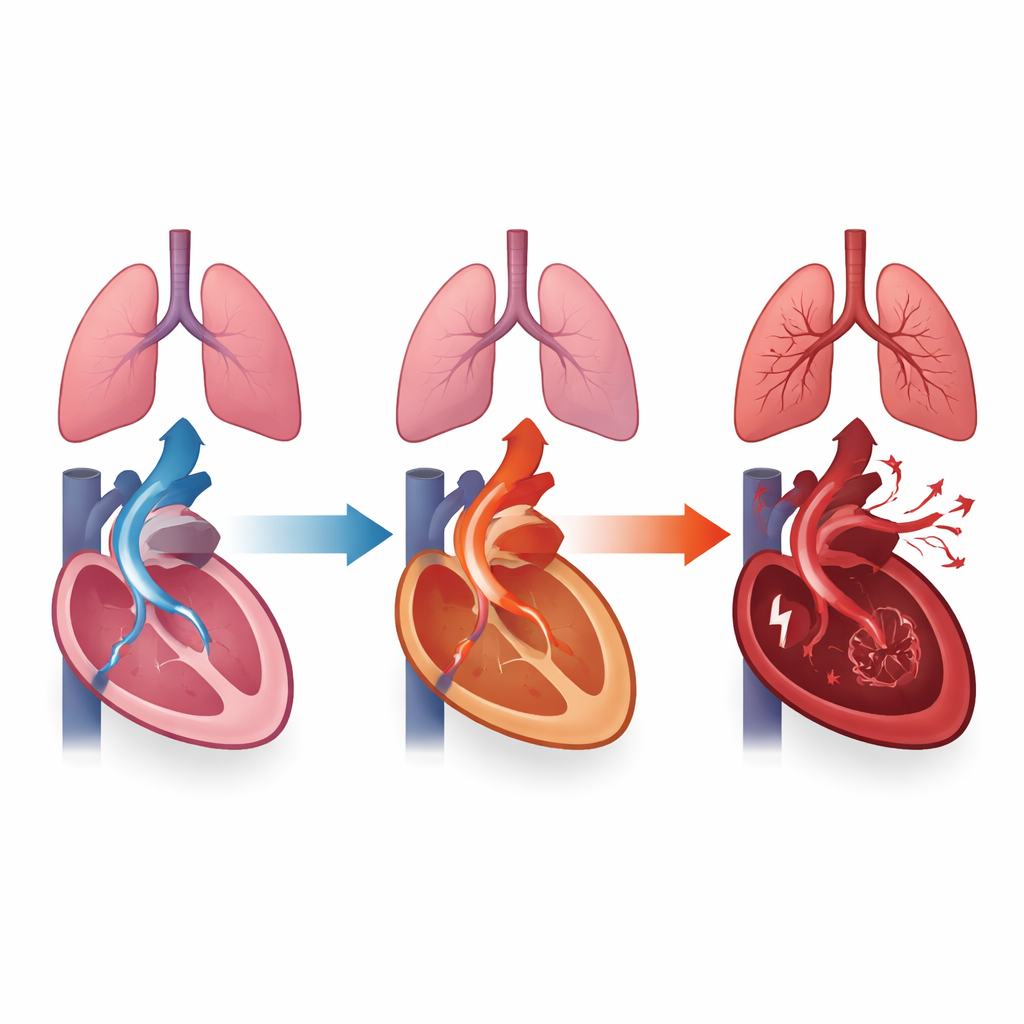
The researchers focused on a combined measure derived from routine echocardiography, an ultrasound test of the heart. One part, called tricuspid annular plane systolic excursion, reflects how vigorously the right ventricle shortens with each beat. The other part is the systolic pressure in the pulmonary artery, which shows how hard the right ventricle must push to move blood into the lungs. By taking the ratio of these two values, doctors obtain an index of heart–lung "coupling"—in other words, whether the right ventricle’s pumping strength is well matched to the load created by the lung circulation. A higher ratio suggests that the heart is coping well; a lower ratio suggests that the right ventricle is struggling against its load.
What the Study Found in Real Patients
The team reviewed data from 113 adults with Duchenne muscular dystrophy, Becker muscular dystrophy, or sarcoglycanopathies followed at two French neuromuscular centers between 2015 and 2023. Most were young adults (median age 28), many used wheelchairs, and nearly half needed home mechanical ventilation. Using standard ultrasound methods, the researchers measured right heart motion and pulmonary artery pressure and calculated the coupling ratio for each patient. They then tracked who went on to experience major heart-related events, such as acute heart failure, cardiogenic shock, or dangerous rhythm disturbances, and who died during follow-up.
A Threshold for Higher Cardiac Risk
When the investigators analyzed the data, they found a clear pattern: patients with a lower coupling ratio had more serious cardiac events. Using a statistical method called the Youden criterion, they identified a threshold value of the ratio—equivalent to 0.53 in conventional units—below which risk rose noticeably. For every step up in the ratio, the chance of cardiac events fell sharply, indicating that better heart–lung matching meant better outcomes. Interestingly, this index did not show a strong link with overall mortality in this relatively small group, likely because deaths were few and patients were still relatively young. Even so, the signal for predicting nonfatal but serious heart complications was strong.
What This Could Mean for Everyday Care
Because the coupling ratio can be obtained from a single echocardiogram, it offers an appealing, noninvasive way to flag muscular dystrophy patients whose right hearts are under strain. Those with low values might benefit from closer monitoring, careful adjustment of ventilator settings to ease the load on the right ventricle, and timely treatment of heart failure. Although the study has limits—it was retrospective, from only two centers, and involved a modest number of events—it suggests that this simple heart–lung score can act as a practical early-warning sign. For patients and families, the message is that protecting the right side of the heart and its connection to the lungs is a key part of living longer and better with muscular dystrophy.
Citation: Fayssoil, A., Mansencal, N., Chaffaut, C. et al. Prognostic value of right ventricular–pulmonary artery coupling in patients with muscular dystrophies. Sci Rep 16, 8537 (2026). https://doi.org/10.1038/s41598-026-39683-1
Keywords: muscular dystrophy, right heart function, pulmonary artery pressure, echocardiography, cardiac risk prediction