Clear Sky Science · en
Sliding properties of anodized aluminium alloy tested in water and hydraulic oil
Why this matters for cleaner machines
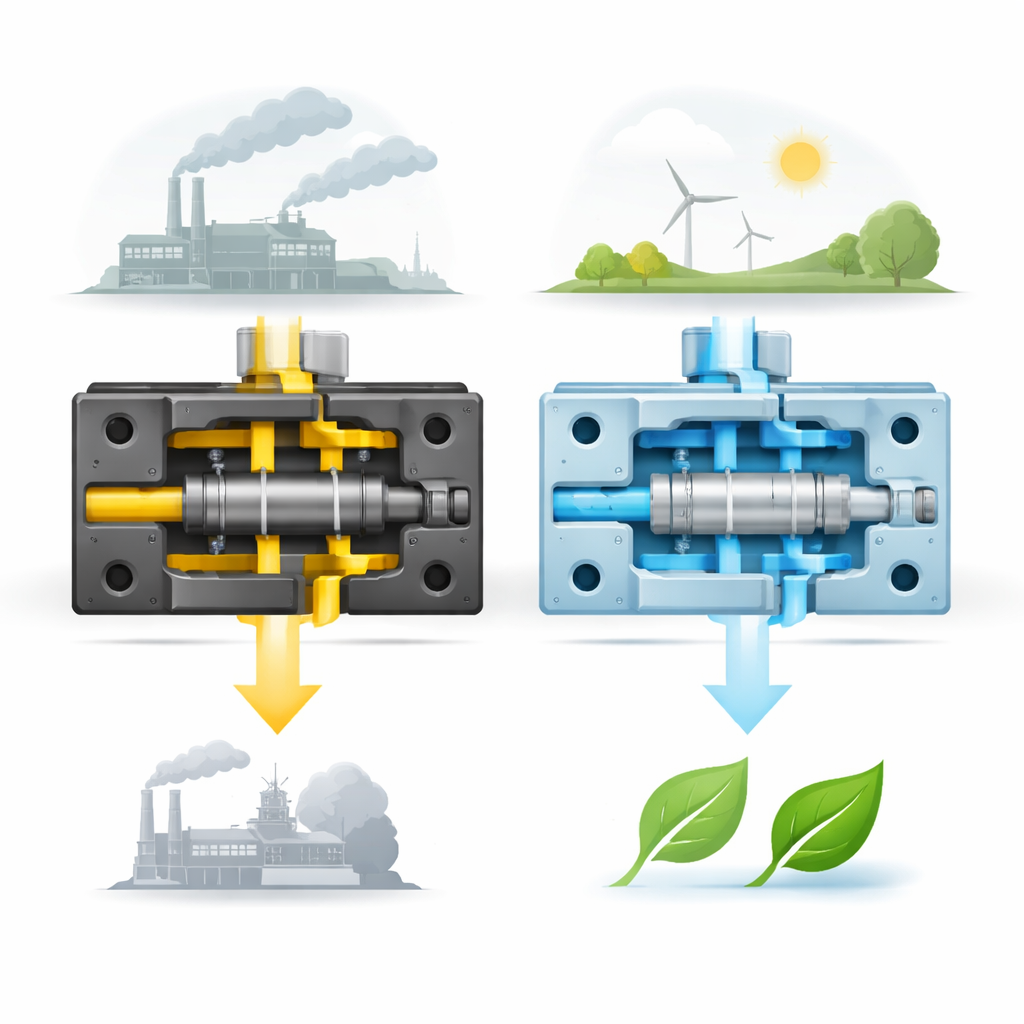
Hydraulic systems quietly power everything from diggers and factory robots to ships and wind turbines. Yet the oil they rely on can leak, pollute soil and water, and is costly to handle. This study asks a simple but important question: can we redesign key moving parts so they work reliably even when water, not oil, is the working fluid? The researchers explore whether a common lightweight metal, aluminium, with a treated surface, can safely replace heavier steel parts while still sliding smoothly in both water and oil.
Lighter parts for faster, greener hydraulics
Modern industry is pushing hydraulics to be faster, more efficient and more environmentally friendly. One way to do this is to make the moving pieces inside valves lighter, so they can switch more quickly and waste less energy. Aluminium alloys are attractive because they are light, easy to machine and widely available, but their soft surfaces can wear out quickly under load. To strengthen them, engineers often use a process called anodizing, which creates a thin, hard oxide layer on the surface. While this treatment is well known for parts running in oil, much less is understood about how anodized aluminium behaves when water is the lubricant, where corrosion, poor lubrication and wear are much tougher problems.
How the team tested sliding in water and oil
The researchers focused on a typical sliding pair found in hydraulic spool valves: a hard ball pressing and sliding back and forth over a flat surface. They compared three disc materials: standard valve steel that had been hardened at the surface, raw aluminium alloy EN AW-6082, and the same aluminium after anodizing. A stainless-steel ball moved in short, rapid strokes over each disc under a fixed load, mimicking the stroke and forces inside real valves. Tests were run in two liquids—demineralized water and a standard hydraulic oil—and at two different speeds to see how sliding rate influenced friction and wear over 90 minutes of motion.
What happened to friction and wear
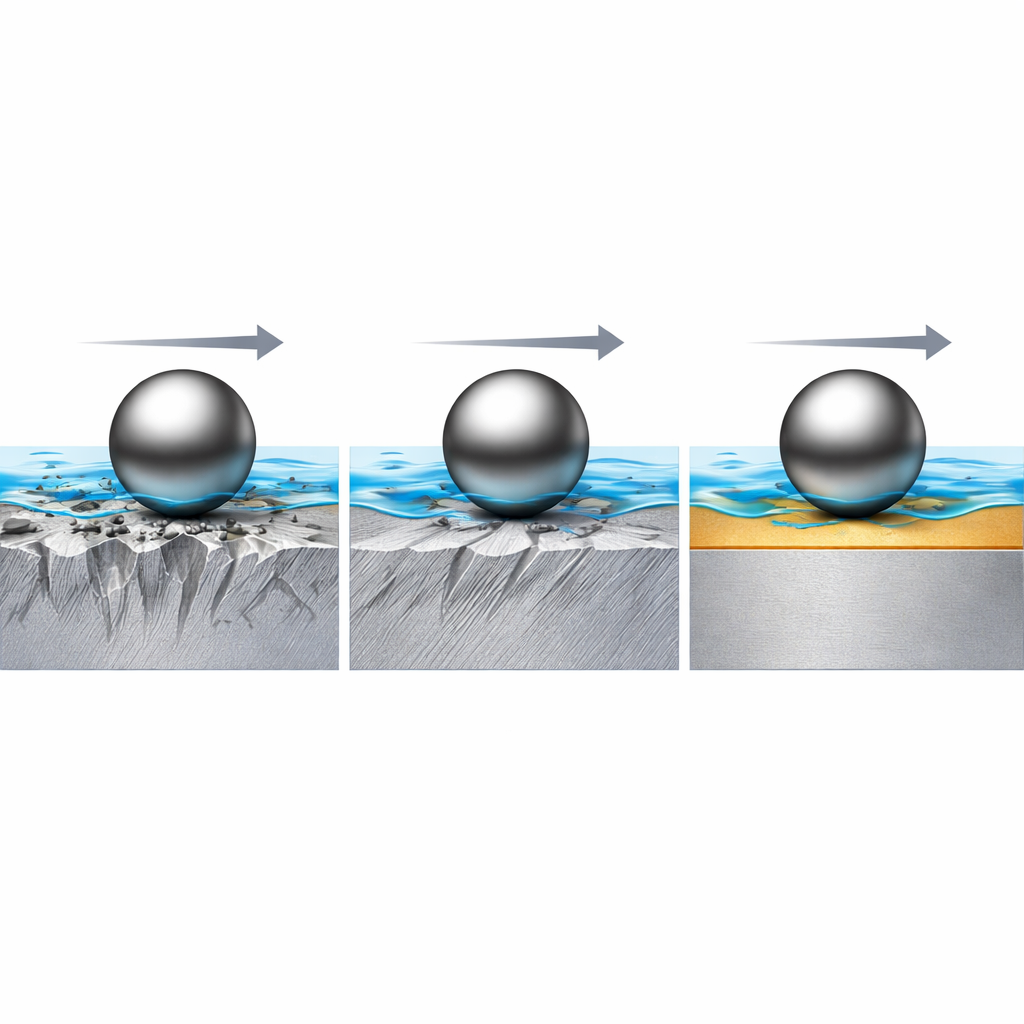
In oil, all three materials slid very smoothly, with friction staying low and wear minimal. Under these conditions, anodized aluminium performed almost as well as the hardened steel, suggesting it is already a solid candidate for lightweight valve parts in conventional oil hydraulics. The real challenge appeared in water. Switching from oil to water made friction and wear jump for every material, and the sliding traces became noisier, signaling unstable lubrication. Here the surface treatment made a big difference: at the lower speed, anodized aluminium showed a clearly lower and more stable friction than raw aluminium, and its wear volume came close to that of the hardened steel. Microscopy revealed that the anodized surface developed only fine cracks and shallow scratches, while the untreated aluminium suffered deep grooves, smearing and heavy material loss.
When protection starts to break down
At the higher sliding speed in water, the protective limits of the anodized layer became clear. Friction on anodized aluminium remained the lowest of all three materials, but its wear increased sharply and surpassed that of the hardened steel. Detailed images showed that the oxide coating was cracking and flaking, creating debris that transferred onto the steel ball. By contrast, the hardened steel surface kept a relatively uniform wear pattern with less loose material. The researchers also observed transfer films—thin layers of material rubbed off the discs and deposited on the ball—forming more quickly and more thickly when untreated aluminium was involved, especially at high speed. Anodizing reduced but did not eliminate this transfer under demanding water conditions.
What this means for future hydraulic design
For a non-specialist, the bottom line is that a simple surface treatment can turn a common lightweight aluminium into a serious contender for critical sliding parts in hydraulic valves. In oil, anodized aluminium can match the performance of traditional hardened steel, while in gently operated water-based systems it keeps friction and wear at acceptable levels. However, when sliding in water becomes too fast and demanding, the thin oxide layer starts to fail, and the part wears too quickly. The study suggests that with improved coatings—thicker or harder oxide layers and other advanced treatments—engineers could design lighter, faster and more environmentally friendly hydraulic valves that safely run on water or other green fluids instead of conventional oils.
Citation: Trajkovski, A., Bartolj, J., Novak, N. et al. Sliding properties of anodized aluminium alloy tested in water and hydraulic oil. Sci Rep 16, 9117 (2026). https://doi.org/10.1038/s41598-026-39681-3
Keywords: water hydraulics, anodized aluminum, tribology, green lubrication, hydraulic valves