Clear Sky Science · en
Dengue fever epidemic and public health implications in southern Iran
Why this outbreak matters to everyday life
Dengue fever is often thought of as a distant tropical problem, but this study shows how quickly it can take hold in a busy coastal city and what that means for the people who live and work there. By following a short, intense outbreak in Bandar Abbas, a major port in southern Iran, the researchers reveal how an infection carried by mosquitoes can move from being an imported concern in travelers to a homegrown threat inside crowded neighborhoods and work camps.
A mosquito-borne illness on the move
Dengue fever is a viral illness spread by Aedes mosquitoes that thrive in warm, humid cities and breed in small collections of water around homes and workplaces. Worldwide, hundreds of millions of people are infected each year, and climate change is expanding the areas where the mosquitoes can survive. Iran has recently joined the list of countries facing repeated dengue introductions, with a large national surge in 2024 linked mainly to travelers returning from nearby endemic nations.
A coastal city under pressure
Bandar Abbas, the focus of this study, is not just another town on the map. It is a low-lying, hot and humid port city on the Persian Gulf, handling heavy cargo and passenger traffic. Those same features that fuel trade and jobs also create ideal conditions for dengue: constant human movement from other countries, long months of warm weather, and dense urban development. In 2025, for the first time, the city experienced a clearly documented, locally driven dengue outbreak rather than just scattered imported cases.
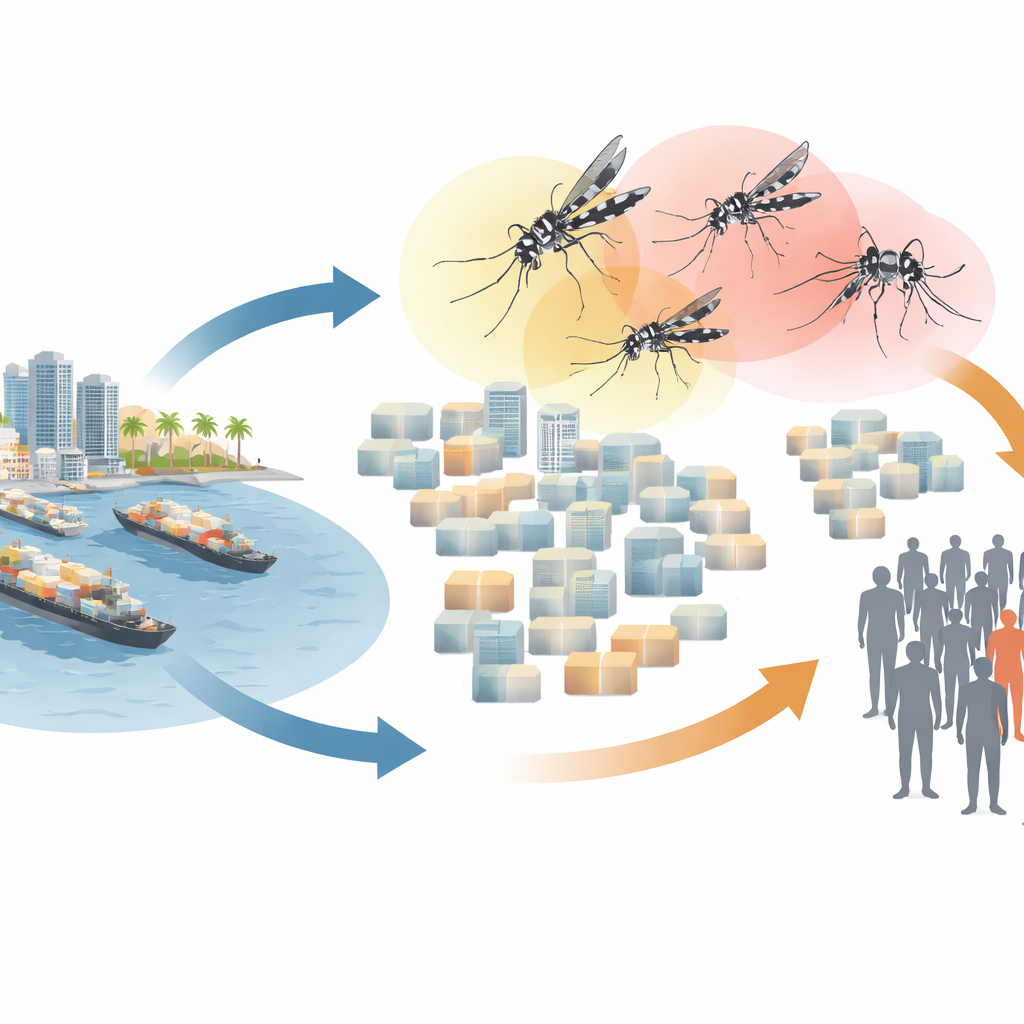
Tracking who got sick and where
The researchers reviewed medical records from all public and private health facilities in the city between early August and early October 2025. Over those two months, they identified 56 confirmed dengue cases, with a rapid rise in mid-August before daily numbers settled into a lower, steady level. All patients lived in urban parts of the city, and clusters of cases appeared in specific neighborhoods. The average patient was in their mid-thirties, and about two-thirds were men, many working in jobs such as construction or self-employment that involve outdoor activity or travel.
Hidden infections among workers
Mapping of home addresses showed that one neighborhood, Shahrak Parvaz, contained a striking cluster of cases among construction workers. Notably, some of these workers had no symptoms at all but tested positive through contact tracing, highlighting how silent infections can help the virus circulate without drawing attention. Overall, nearly 30 percent of patients reported recent travel within Iran or to neighboring countries, but more than 70 percent had not left the area, a strong sign that the virus was already spreading from person to person via local mosquitoes rather than being continually re-imported.
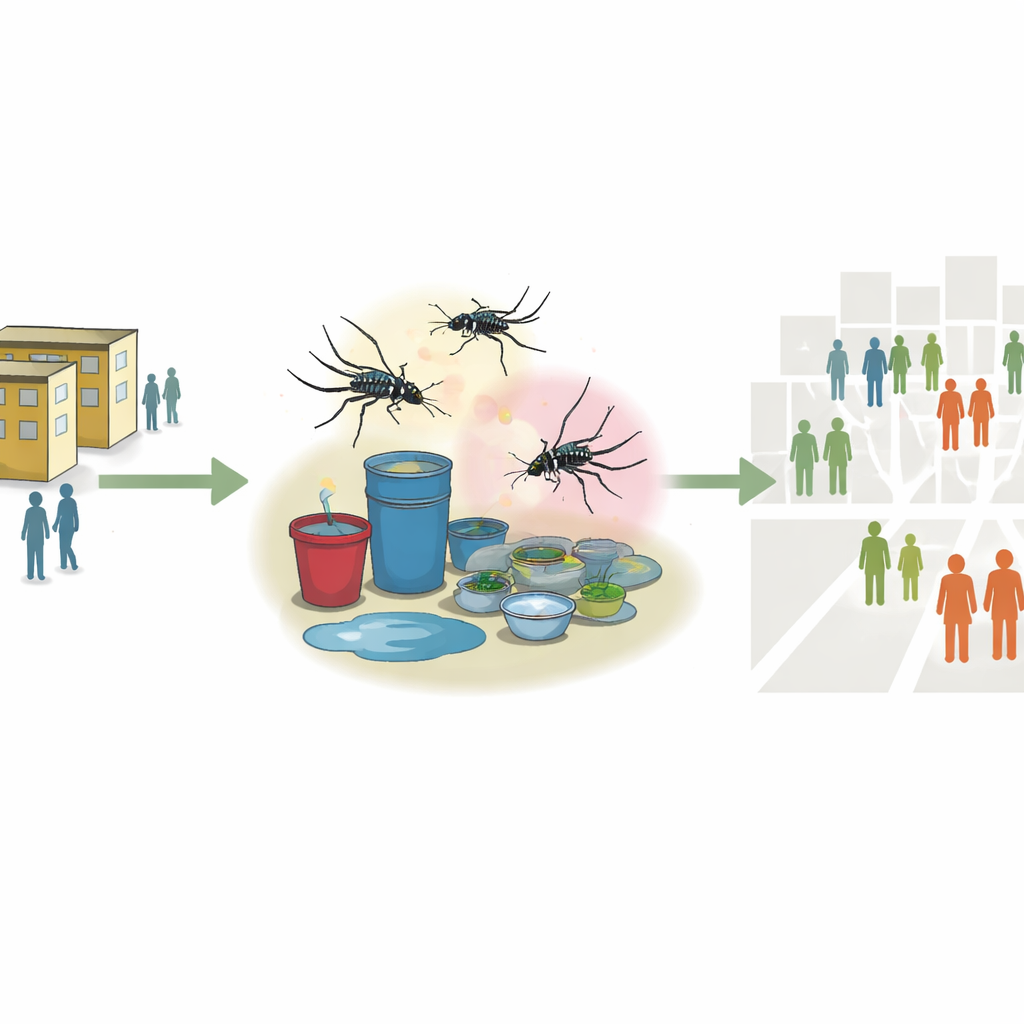
Illness patterns and medical outcomes
Most of those who fell ill reported classic dengue complaints such as severe headache, body aches and muscle pain, with some also experiencing diarrhea, chills or eye pain. About one in five patients needed hospital care, especially older adults, very young children and people with high blood pressure or diabetes. Yet despite the intensity of the outbreak, every patient ultimately recovered and no deaths were recorded. This pattern—many mild to moderate cases, a minority needing hospital care, and very low fatality when treatment is timely—matches findings from other recent outbreaks in nearby countries.
What this tells us about future risk
Taken together, the findings show that dengue has crossed an important line in southern Iran: it is no longer only a problem brought in by travelers but has become a locally sustained infection in at least one high-risk coastal city. For lay readers, the key message is that bustling trade, frequent travel and favorable climate can turn any warm, crowded port into a launching pad for mosquito-borne disease. The authors argue that early diagnosis, careful tracking of cases, and focused mosquito control in worker housing, dense neighborhoods and transport hubs are essential to stop small clusters from turning into wider epidemics—both in Bandar Abbas and in other cities facing similar conditions.
Citation: Abbasi, M., Nikpour, F., Rahimi, S. et al. Dengue fever epidemic and public health implications in southern Iran. Sci Rep 16, 8547 (2026). https://doi.org/10.1038/s41598-026-39680-4
Keywords: dengue fever, mosquito-borne disease, Bandar Abbas, local transmission, public health outbreak