Clear Sky Science · en
Quantifying improvement of psychotic symptoms in clozapine-treated schizophrenia: clinical note analysis with large language models
Why everyday speech can reveal hidden changes
When people living with schizophrenia talk about their day, their choice of words can quietly reflect how well their treatment is working. But in busy hospitals, doctors rarely have time to comb through years of clinical notes to see whether a patient’s speech is becoming clearer, calmer, or more hopeful. This study shows how modern artificial intelligence tools, called large language models, can read those notes for us and pick up subtle signs that symptoms are improving during treatment with the drug clozapine.
Turning routine notes into useful signals
The researchers focused on a group of 30 people with severe, treatment-resistant schizophrenia who started clozapine, a medicine reserved for cases where other drugs have failed. In Japan, starting clozapine requires a hospital stay and careful monitoring, which creates a rich trail of electronic health records. From these records, the team pulled out only the parts where psychiatrists had written down what patients said, such as greetings, complaints about sleep, or reports of hearing voices. They ended up with more than 22,000 sentences from over 5,000 notes, covering the month before clozapine and three equally long phases during hospital treatment. 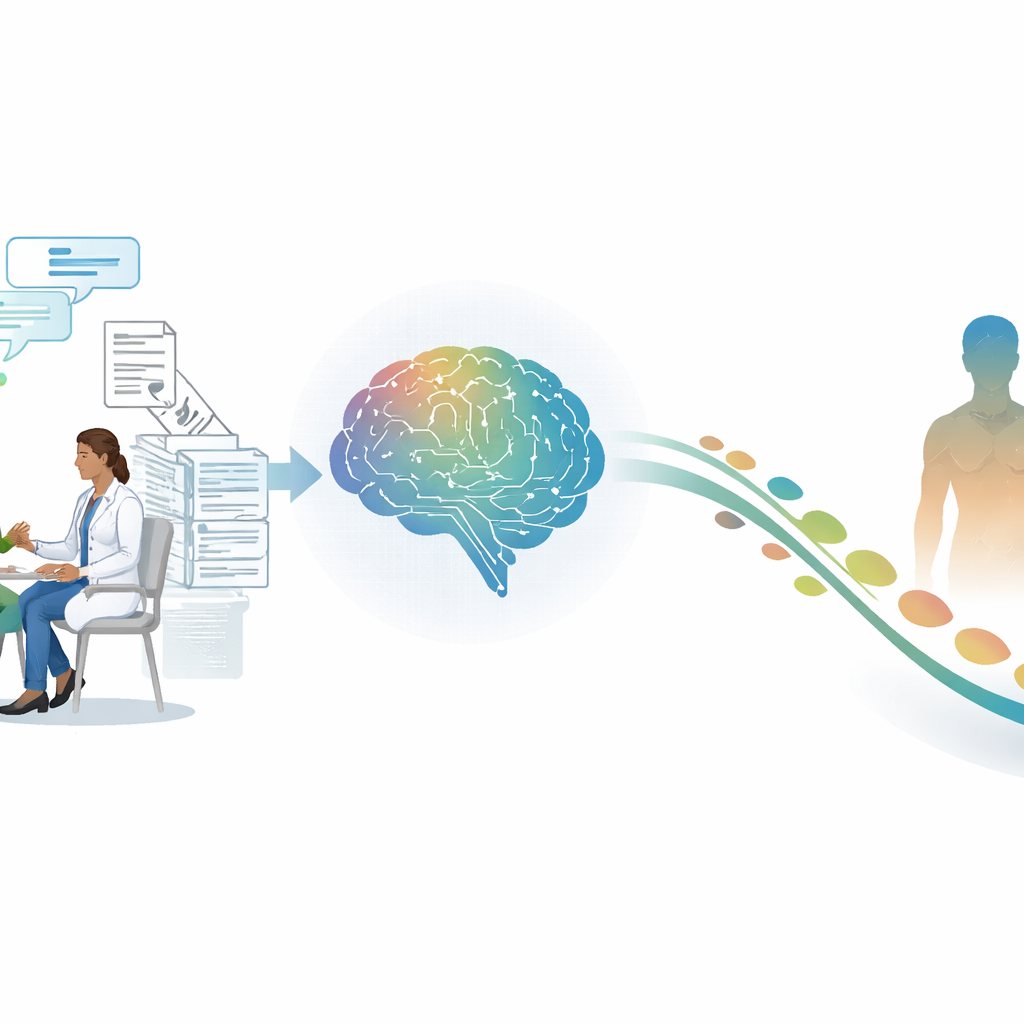
Asking AI to rate psychiatric symptoms
To turn raw text into symptom scores, the team used three powerful language models. They gave each model detailed instructions to behave like an expert psychologist and rate every note according to a standard checklist used in psychiatry, the Brief Psychiatric Rating Scale. Rather than relying on body language or tone of voice, the models judged only what patients said, scoring features like anxiety, disorganized thinking, unusual beliefs, hallucinations, suspiciousness, and depressed mood. The models agreed that several key symptoms dropped during clozapine treatment: anxiety, conceptual disorganization, suspiciousness, unusual thoughts, hallucination-like talk, and low mood all declined as time went on. Somatic worries about the body rose at first—likely reflecting early side effects such as fatigue or sleepiness—then gradually eased.
How word choice shifted during treatment
The team also applied more traditional language analysis methods to better understand what the models were picking up. They counted different types of words, like nouns, verbs, adverbs, and adjectives, in each sentence. Over time, patients used more adjectives, especially words describing feelings and bodily states such as “good,” “pleasant,” “tired,” “sleepy,” “terrible,” and “scary.” Meanwhile, use of the word “no” declined. Looking at short two-word combinations, the researchers saw that “no” often appeared in phrases like “no change” or “nothing in particular,” the kind of flat replies patients give when they feel detached or unmotivated. Fewer such phrases over time suggested that patients were engaging more fully with their doctors instead of shutting conversations down.
Measuring emotional tone in the words themselves
To dig deeper into emotion, the researchers used a tool called Linguistic Inquiry and Word Count, which checks how often people use words linked to positive or negative feelings. They found that positive emotional words became more frequent in the later part of treatment, while negative emotional words did not change much. When they compared these patterns with the scores produced by the language models, they found that both approaches were related but not identical. The models were especially good at capturing broad shifts in anxiety and mood, while the dictionary-based counts highlighted the rise in explicitly positive expressions. Together, they painted a picture of patients whose speech grew more emotionally rich and less dominated by distress as treatment progressed. 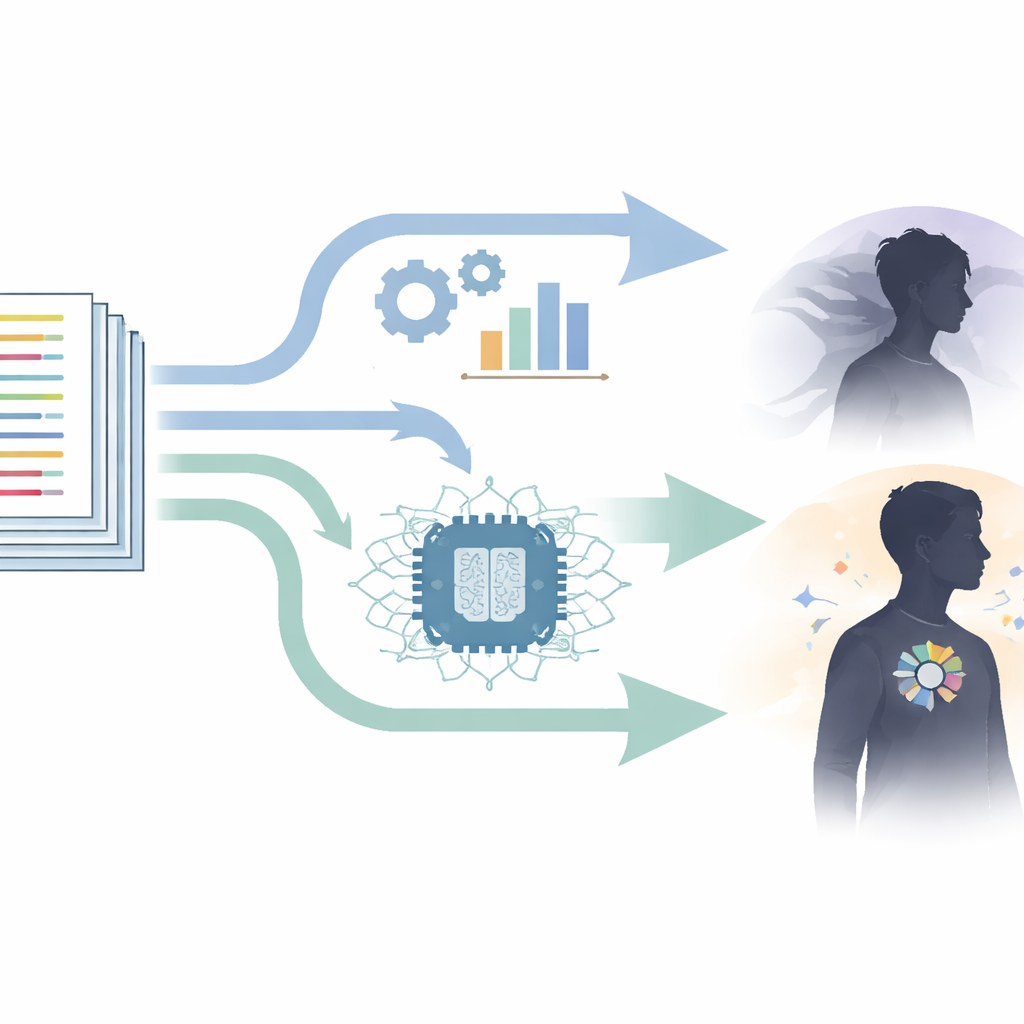
What this means for future care
For a non-specialist, the main message is straightforward: by carefully listening to how patients talk—through the clinical notes already written in their records—AI systems can detect meaningful improvements in psychotic symptoms and emotional life during treatment. The study suggests that, even when notes are short and imperfect, large language models can support clinicians by tracking trends that might otherwise be missed, such as clearer thinking, fewer hallucination-related comments, and more positive, engaged conversation. While these tools will not replace human judgment, they could someday provide low-effort, behind-the-scenes monitoring that helps doctors tailor care, spot problems earlier, and understand how patients’ inner worlds change over time.
Citation: Matsumura, M., Nishida, K., Toyoda, K. et al. Quantifying improvement of psychotic symptoms in clozapine-treated schizophrenia: clinical note analysis with large language models. Sci Rep 16, 8835 (2026). https://doi.org/10.1038/s41598-026-39676-0
Keywords: schizophrenia, clozapine, clinical notes, large language models, psychosis symptoms