Clear Sky Science · en
Elbow flexion enables rescuers with low BMI to deliver chest compressions in compliance with CPR guideline recommendations
Why this matters for real‑world emergencies
When someone’s heart stops, anyone nearby—often a family member, a nurse, or even a teenager—may be the only person who can push hard enough on the chest to keep blood flowing. Yet smaller rescuers, especially those with lower body weight, can struggle to reach the recommended chest compression depth during cardiopulmonary resuscitation (CPR). This study asks a practical question with life‑or‑death consequences: can changing how we use our arms, particularly by bending and straightening the elbows, help smaller rescuers deliver CPR that meets international guidelines?
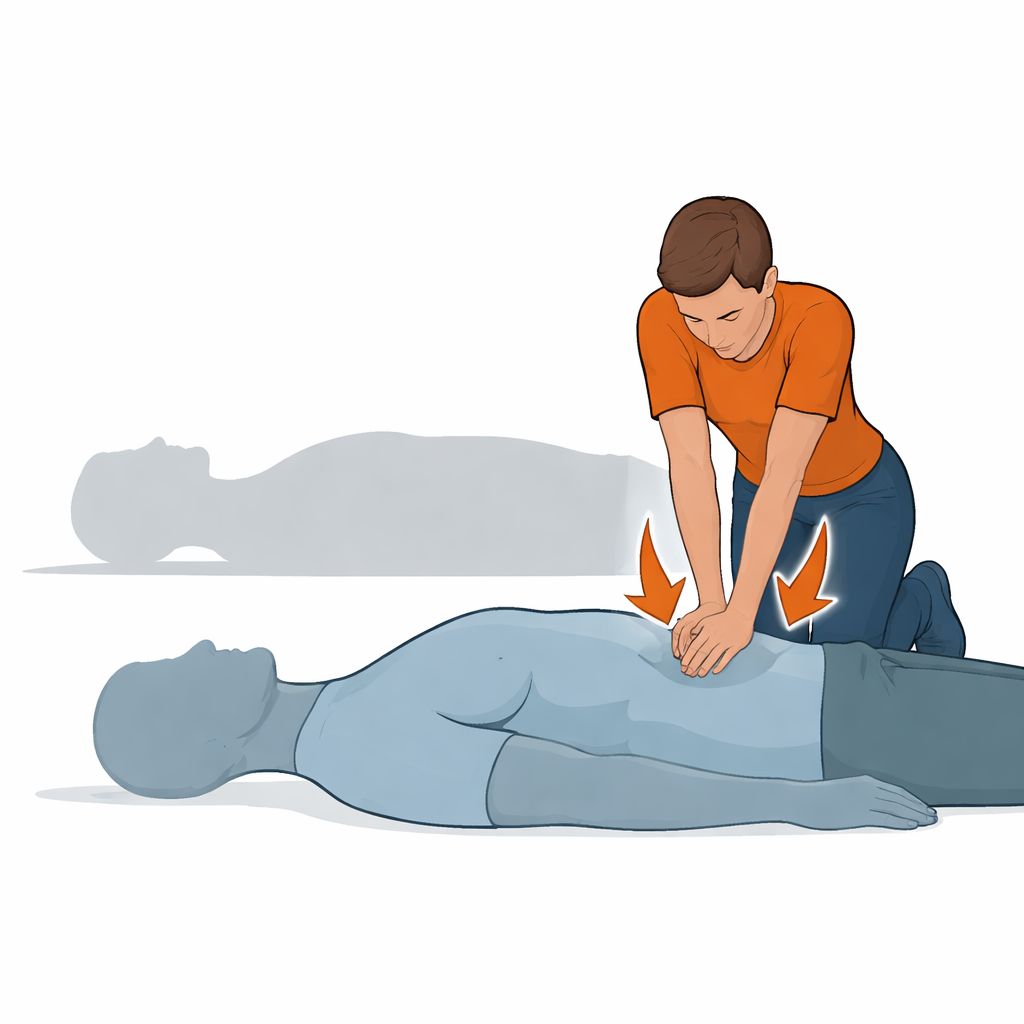
How CPR is supposed to work
Conventional CPR teaching emphasizes kneeling beside the patient, locking the elbows straight, and using the weight of the upper body to push the breastbone down about 5–6 centimeters at a steady rhythm. That approach assumes the rescuer is heavy and strong enough that simple body weight does the job. But in many real situations—such as a child performing CPR on a parent, a nurse treating a larger patient, or an obese patient with a stiff chest—the rescuer may be physically smaller and unable to generate enough force using straight arms alone. Space medicine research has already shown that in low‑gravity environments, rescuers naturally bend their arms more to make up for reduced body weight. The authors wondered whether a similar strategy might already be helping smaller people perform effective CPR on Earth.
What the researchers tested
The team recruited 23 healthy young adults with normal or low body mass index (BMI) and trained them in standard CPR. Each person performed three five‑minute CPR sessions on an adult manikin whose internal spring could be swapped to mimic an easy, normal, or hard‑to‑compress chest. A small motion sensor at the elbow of the dominant arm recorded how much the arm bent and straightened during compressions. At the same time, the manikin measured key CPR quality markers: how deep the chest was pushed down, how fast compressions were delivered, and how well the chest was allowed to recoil between pushes. Heart rate and a simple “effort” score (the Borg scale) captured how hard the exercise felt and how taxing it was physically.
What they discovered about arm motion and size
As the chest became harder to compress, both men and women pushed less deeply overall—but depth usually stayed within guideline targets, except for women on the stiffest setting. Compression rate, however, remained comfortably within the recommended 100–120 pushes per minute for all spring settings and both sexes. Crucially, the average elbow bend increased as the chest got stiffer, especially in participants with lower BMI and particularly in women. Statistical analyses showed a strong pattern: the lower a person’s BMI, the more they tended to flex and extend their elbows during CPR. This suggests that smaller rescuers instinctively add an extra “arm pump” to the usual body‑weight technique to reach the necessary compression depth when pushing on a firm chest.
Effort, fatigue, and what the body is telling us
Women, who on average had lower BMI than the men in this study, reported feeling more tired as the chest stiffness increased, even though heart rate responses were similar between groups. Greater variability in elbow movement was linked to higher perceived fatigue, but not to major changes in heart rate, hinting that standard fitness measures may miss some of the true muscular strain involved in long CPR efforts. While elbow motion patterns explained only part of the variation in chest compression depth, the findings support the idea that controlled bending and straightening of the arms is one of several useful tools smaller rescuers use to maintain CPR quality.
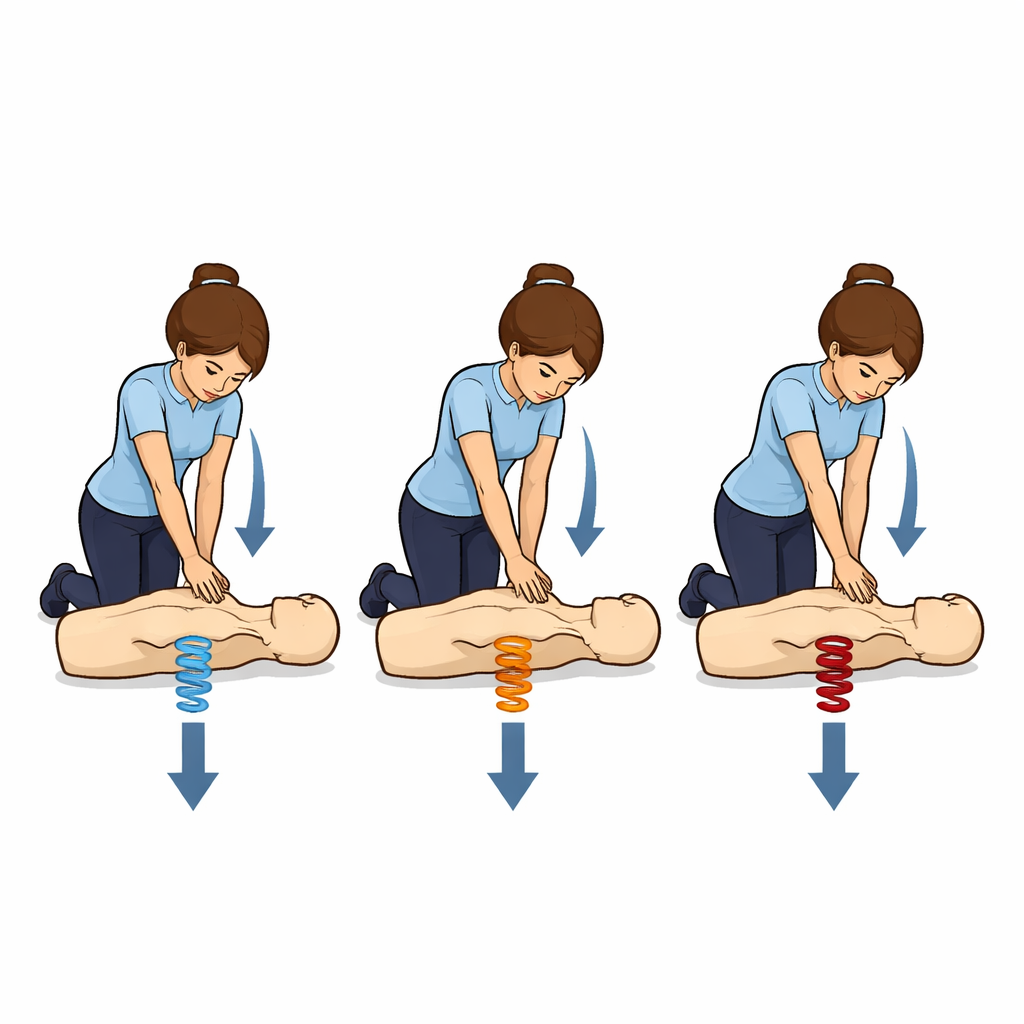
What this could mean for CPR training
Overall, the study suggests that a modest change in technique—allowing the elbows to bend and straighten rather than insisting on perfectly straight arms—may help lighter or less strong rescuers push a victim’s chest deep enough, especially when the chest is stiff or the patient is much larger than the rescuer. This echoes strategies already proposed for CPR in reduced gravity, such as on the Moon or Mars, and brings those insights back to everyday CPR on Earth. While larger, more diverse studies are still needed, the results argue that future CPR guidelines and training might explicitly teach controlled elbow flexion as an acceptable, even beneficial, way for smaller or novice rescuers to deliver high‑quality, life‑saving compressions.
Citation: Thurlow, K., Rehnberg, L., Ivetić, J. et al. Elbow flexion enables rescuers with low BMI to deliver chest compressions in compliance with CPR guideline recommendations. Sci Rep 16, 9723 (2026). https://doi.org/10.1038/s41598-026-39671-5
Keywords: cardiopulmonary resuscitation, chest compressions, elbow flexion, rescuer body size, hypogravity CPR