Clear Sky Science · en
Assessing entrepreneurial transformation in agricultural universities using hybrid multi-criteria decision-making
Why this matters for farms and food
Universities do far more than teach classes and grant degrees. In agriculture, they can help turn new ideas into real-world solutions for farmers, rural communities, and food systems. This study looks at how agricultural universities, especially in Iran, can reinvent themselves to act more like engines of innovation and job creation, and pinpoints which changes matter most for making that shift successful.
From teaching centers to idea launchpads
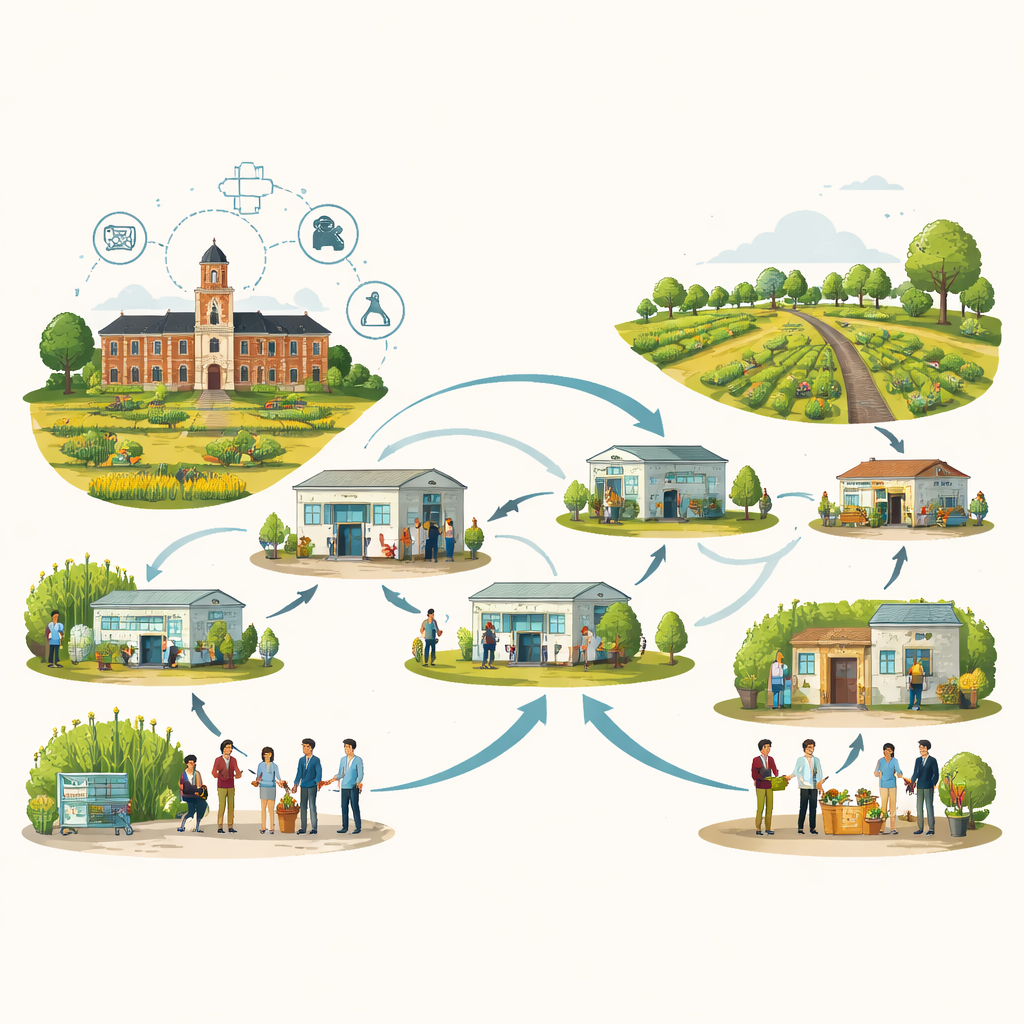
The authors start from a global trend: leading universities are no longer just places that pass on knowledge. They also help create new businesses, patents, and partnerships with industry and government. In Iran, however, most agricultural universities still follow an older model, with centralized control, limited links to industry, and graduates who struggle to find work or start ventures. The paper argues that, if these institutions are to support an innovation-driven economy, they must become "entrepreneurial universities" that actively encourage students and staff to turn ideas into useful products and services for the farm and food sectors.
Listening to experts to map the path
To understand how this transformation can happen, the researchers combined in-depth interviews with structured surveys involving 140 experienced faculty members, entrepreneurship specialists, and decision-makers from agricultural universities across Iran. First, open-ended interviews and qualitative analysis produced a broad list of 10 major policy areas and 86 possible strategies, ranging from how universities are managed to how students are taught. Next, a fuzzy Delphi method was used to sift this long list down to 51 strategies that experts broadly agreed were important, allowing the team to handle vague or uncertain opinions more systematically.
Weighing what works best
After agreeing on the set of strategies, the authors used a pair of decision tools—Fuzzy Analytic Hierarchy Process and TOPSIS—to weigh and rank them. Experts judged each strategy on how effective it would be, how easy it would be to implement, whether it fit available resources and skilled people, how well it matched Iran’s culture, and how closely it aligned with national policies. This step turned expert judgments into numerical priorities, showing which approaches would likely give the biggest impact for the effort required. The analysis revealed that some areas, like reward systems and intermediary organizations, consistently scored high across different weighting tests, suggesting that their importance is robust even when assumptions change.
The strongest levers for change
The top-ranked policy area was the reward and support system. Strategies that recognize and promote entrepreneurial faculty members, and that encourage "learning by doing" for students, stood out as especially powerful. Next came the creation and strengthening of intermediary institutions, such as job counseling centers, incubators, science and technology parks, and industry liaison offices that connect campus research to real markets and partners. Governance, leadership, and staff management formed the third pillar, with emphasis on involving entrepreneurial professors in decision-making and supporting faculty in building ties with industry. Education, research, and development reforms—such as applied teaching methods, problem-based learning, and aligning thesis topics with market needs—also ranked highly, as did a supportive student-focused entrepreneurial culture.

Implications beyond one country
Although the study focuses on Iranian agricultural universities, its findings speak to many regions where higher education is centralized and funding is tight. The results show that transformation is not just about adding a few business courses or setting up a technology park. It requires coordinated changes in incentives, organizational structures, teaching practices, partnerships, and evaluation systems. The authors also link their findings to a classic view of strategy that sees it as more than a formal plan: it is also a pattern of behavior, a way of positioning the university in its environment, and a shared mindset that shapes daily decisions.
What this means for students, farmers, and communities
For a lay reader, the key takeaway is that agricultural universities can become powerful drivers of local prosperity if they reward innovation, build bridges to industry and government, and give students hands-on chances to create solutions. When professors are recognized for working with farmers or launching spin-off companies, when students learn by tackling real problems from the field, and when dedicated centers help move ideas from lab to marketplace, universities stop being ivory towers. Instead, they become partners in building more resilient farms, better jobs, and stronger rural economies.
Citation: Far, S.T., Rezaei-Moghaddam, K., Zibaei, M. et al. Assessing entrepreneurial transformation in agricultural universities using hybrid multi-criteria decision-making. Sci Rep 16, 8791 (2026). https://doi.org/10.1038/s41598-026-39670-6
Keywords: entrepreneurial universities, agricultural innovation, university–industry partnerships, academic entrepreneurship, rural development