Clear Sky Science · en
Association of germline variants with KRAS-mutation status in colorectal cancer
Why This Matters for Everyday Health
Colorectal cancer is one of the most common cancers worldwide, and many tumors carry a change in a gene called KRAS that makes cancer harder to treat. Doctors have noticed that these KRAS changes are not evenly distributed: they are more frequent in some population groups and in certain parts of the colon. This study asks a straightforward but important question for prevention and equity: are people in some groups born with inherited DNA differences that make KRAS-mutant colorectal cancers more likely?
Looking for Clues in Inherited DNA
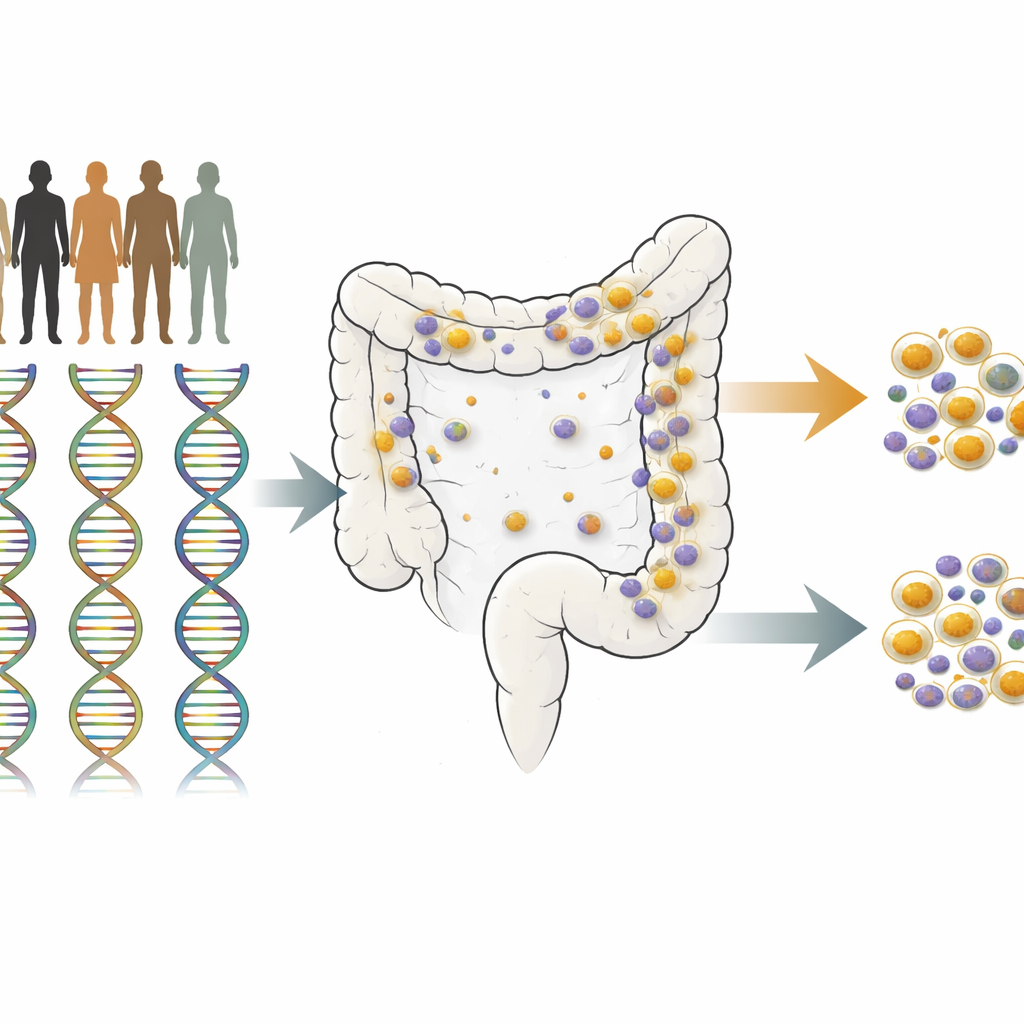
The researchers focused on the idea that our inherited genetic makeup might nudge tumors toward or away from picking up a KRAS mutation as they develop. They reasoned that some people may carry inherited variants in their DNA that subtly change how often KRAS mutations appear, by affecting how cells repair DNA damage or how the immune system reacts to newly mutated cells. To test this, they examined more than seven thousand people with colorectal cancer whose normal (germline) DNA and tumor KRAS status were both available, and then added an extra group of nearly 2,500 patients from diverse genetic backgrounds for follow-up.
A Genome-Wide Scan Across Thousands of Patients
Using a genome-wide association study, the team scanned millions of common genetic markers spread across the genome, asking whether any of them were more common in patients whose tumors carried a KRAS mutation than in those whose tumors did not. The main discovery stage focused on people whose genetic ancestry was most similar to European reference populations, where sample sizes were largest. As expected from earlier work, they confirmed that KRAS-mutant tumors were more frequent among individuals whose genetic ancestry was closer to African reference groups and in tumors located in the upper (proximal) colon. However, when they looked across more than six million genetic markers, none met the strict statistical threshold usually required to declare a true inherited risk factor for KRAS-mutant colorectal cancer.
Following Up on the Most Suspicious Signals
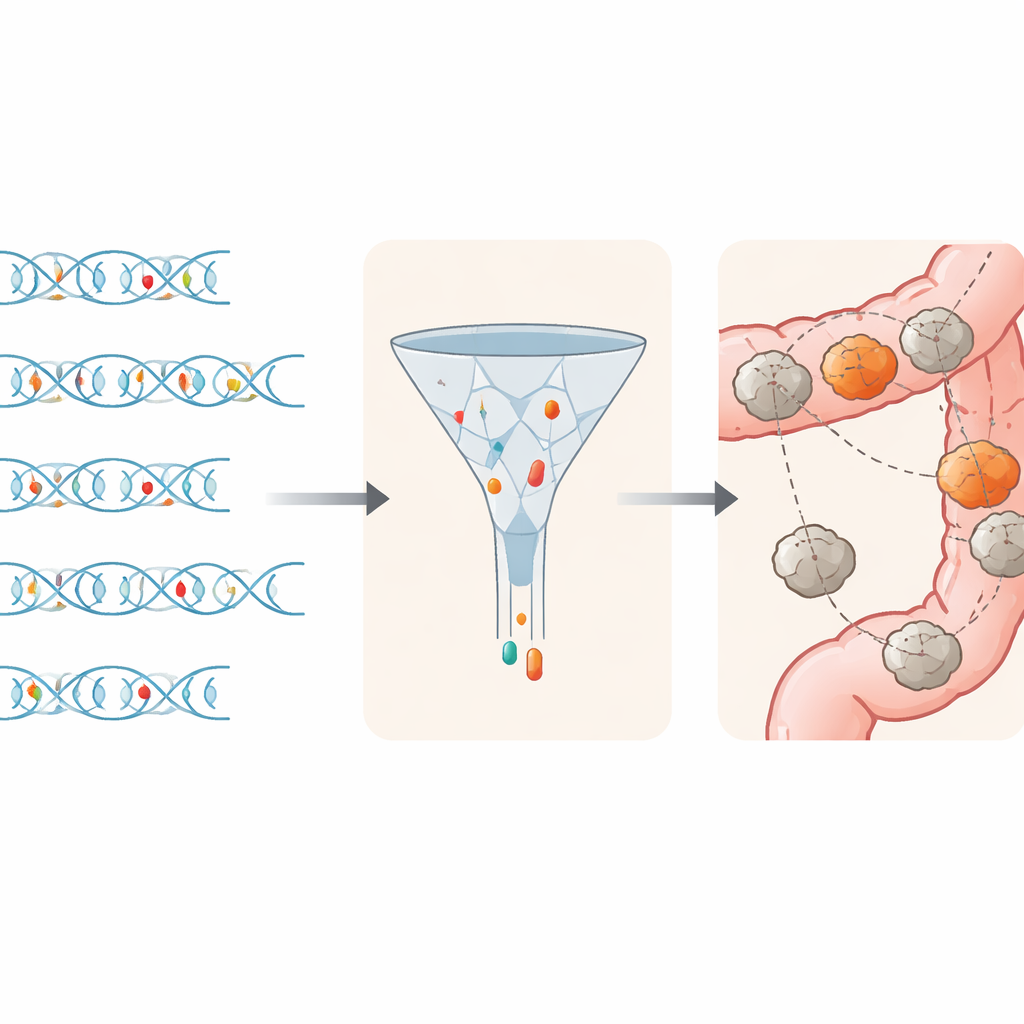
From this initial scan, the investigators chose 101 particularly promising DNA variants for closer study in a multi-ancestry validation set that included people with African-adjacent, European-adjacent, and admixed Hispanic genetic backgrounds. These variants were picked not only for statistical hints, but also for their location near genes that might plausibly affect cancer biology or gene regulation. Even with this targeted follow-up, no single inherited variant clearly and reproducibly tracked with whether a person’s tumor carried a KRAS mutation once the researchers corrected for the large number of tests being performed.
Hints, But No Smoking Gun
Two inherited variants stood out as possible, but still uncertain, contributors. One, called rs73067863, lies within a gene region previously linked in some datasets to regulation of MLH1, a key DNA repair gene. In combined analyses, people carrying one version of this variant appeared slightly less likely to have KRAS-mutant tumors, but the evidence fell short of accepted genome-wide significance. Another variant, rs2298437, showed a potential protective effect against KRAS-mutant tumors among individuals with African-adjacent genetic ancestry, yet seemed to act in the opposite direction in those with European-adjacent ancestry. Because the numbers of African-adjacent participants were modest, the authors caution that these patterns may simply reflect statistical noise rather than true biological differences.
What This Means for Cancer Risk and Equity
To a lay reader, the central message is that, despite combing through the genomes of more than 9,000 people with colorectal cancer, the researchers did not find strong, common inherited DNA changes that reliably predict whether a tumor will harbor a KRAS mutation. The known differences in KRAS mutation rates between population groups therefore likely arise from a mix of many subtle genetic effects, rare or hard-to-measure variants, and non-genetic influences such as where tumors form in the colon, environmental exposures, diet, and the broader impact of social and structural inequalities. The study narrows the search and identifies a few intriguing leads, but also underscores that there is no simple genetic explanation yet for why KRAS-mutant colorectal cancers are more common in some groups, reinforcing the need for larger, more diverse studies and continued attention to social determinants of health.
Citation: Tjader, N.P., Ramroop, J., Gandhi, T. et al. Association of germline variants with KRAS-mutation status in colorectal cancer. Sci Rep 16, 8839 (2026). https://doi.org/10.1038/s41598-026-39644-8
Keywords: colorectal cancer, KRAS mutations, genetic variants, cancer disparities, genome-wide association study