Clear Sky Science · en
Large-scale distribution of cestode infections in wild gentoo penguins and their impact on the host microbiome
Why penguin parasites matter
Gentoo penguins may look perfectly at home on Antarctic ice, but inside their guts lives a hidden world of worms and microbes that can shape their health and resilience. This study explores how common tapeworm infections are in wild gentoo penguins across the Scotia Arc—an island chain around the northern Antarctic Peninsula—and how those worms are linked to the penguins’ gut bacteria. Understanding these invisible relationships can help scientists forecast how penguin populations will cope with a rapidly changing polar environment.
Checking the health of colonies without catching birds
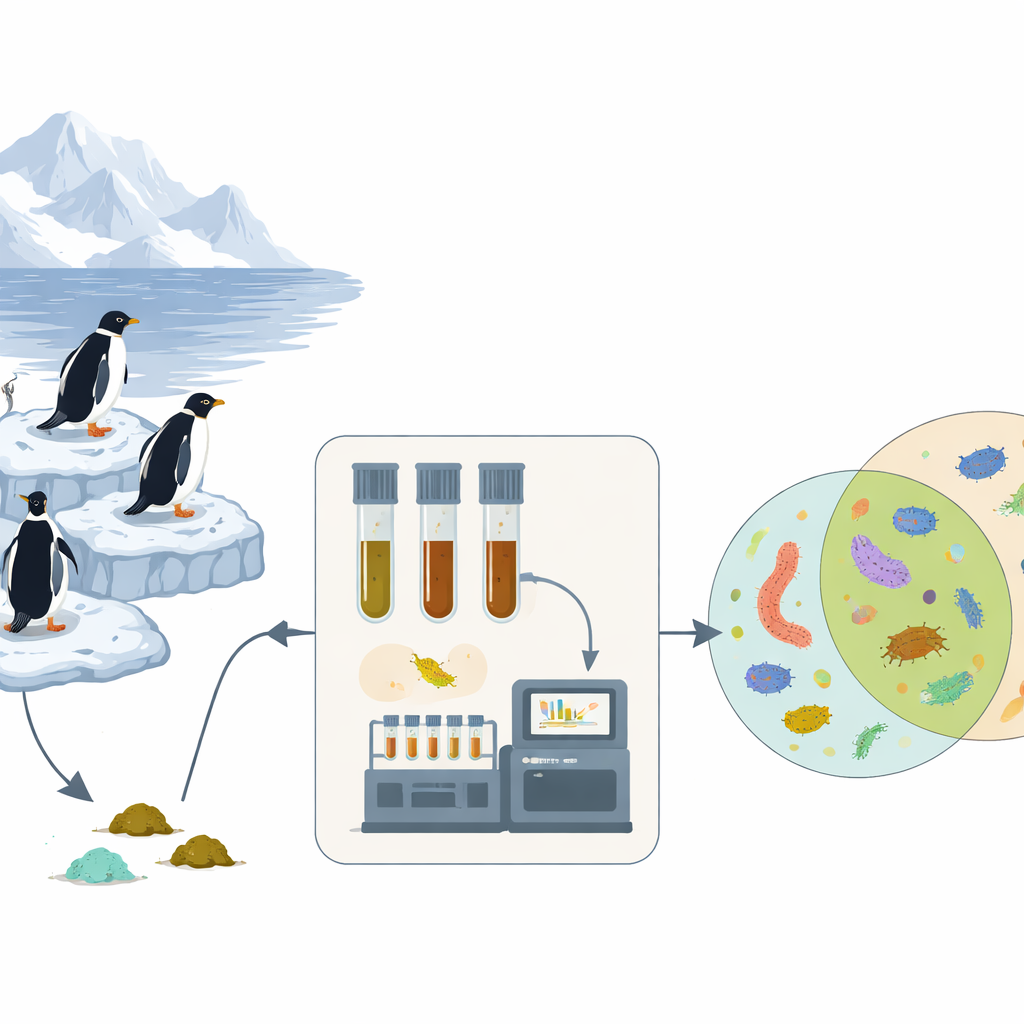
Instead of capturing and dissecting penguins, the researchers used a simple, non-invasive approach: they collected 325 fresh droppings from gentoo colonies at 25 locations around the Scotia Arc. Back in the lab, they extracted DNA from each sample and sequenced short genetic barcodes that reveal which organisms were present. One set of barcodes focused on bacteria, which together form the gut microbiome. Another set targeted a broader group of animal and other eukaryotic DNA, allowing the team to pick out sequences belonging to tapeworms. This high-throughput method made it possible to survey parasite infections and gut communities across a vast, remote region.
Widespread worms with uneven burdens
Tapeworm DNA turned up in the great majority of gentoo samples. When the researchers calculated the fraction of non-penguin animal DNA that came from tapeworms, they found values ranging from none at all to almost the entire animal signal. Most penguins carried relatively low amounts of tapeworm DNA, but a small share had very high levels, producing a long-tailed pattern typical of many wildlife parasite infections. Different colonies showed very different average tapeworm levels, yet these differences did not line up neatly with geography, suggesting that local conditions—such as subtle environmental factors, prey communities, or colony history—may strongly influence infection intensity.
Multiple kinds of worms and a shifting gut community
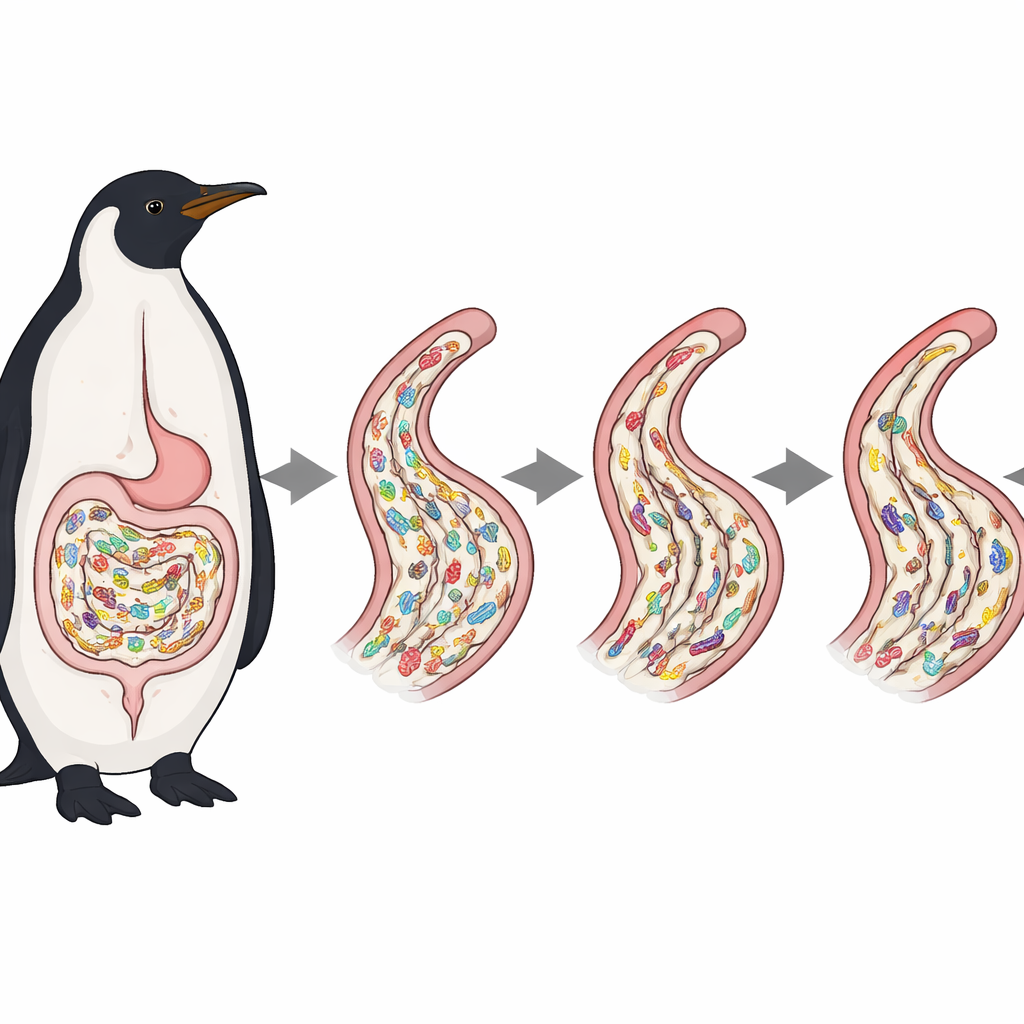
By clustering similar DNA sequences, the team identified ten recurring tapeworm sequence types, likely representing several species or closely related groups. At least two could be matched to known tapeworms of Antarctic penguins, including Parochites zederi and a Tetrabothrius species, while others matched more broadly to tapeworm families without a precise name. Most of these tapeworm types tended to appear together in the same penguin, implying co-infections were common. One type, however, often appeared alone, hinting at a different life cycle or prey source. When the scientists compared gut bacterial communities between birds with more and fewer tapeworm reads, they found clear shifts in overall composition. Certain groups of bacteria became more common as tapeworm levels rose, while others declined, indicating that worms and microbes are tightly intertwined.
What the worms mean for penguin health
To gauge how much tapeworm DNA might matter biologically, the researchers tested a series of thresholds, treating penguins above each cut-off as “infected” and those below as “uninfected.” Around the point where tapeworm sequences made up about two percent of the non-penguin animal DNA, gut bacterial communities showed especially strong differences. The study also compared small sets of gentoo and chinstrap penguins from the same islands. While the two species had distinct microbiomes and differed in how much of some tapeworm types they carried, most of those microbiome differences did not seem to be driven directly by worm levels, with one notable exception involving the common species Parochites zederi.
Hidden players in a changing polar world
For non-specialists, the key message is that gentle-looking gentoo penguins are hosts to a suite of tapeworms that vary dramatically among individuals and colonies, and these worms are closely linked to the penguins’ gut bacteria. The study demonstrates that simple fecal DNA sampling can track both parasites and microbiomes across large, remote regions without disturbing the birds. As Antarctic food webs shift with climate change, such tools will be essential for understanding how infections, diet, and gut microbes interact to influence penguin health and survival. Tapeworms may rarely kill penguins outright, but as part of a web of stressors, they could tip the balance for birds already living at the edge.
Citation: Kaczvinsky, C., Levy, H., Preston, S. et al. Large-scale distribution of cestode infections in wild gentoo penguins and their impact on the host microbiome. Sci Rep 16, 8737 (2026). https://doi.org/10.1038/s41598-026-39642-w
Keywords: penguins, tapeworms, gut microbiome, Antarctica, wildlife health