Clear Sky Science · en
Effects of change in dysfunctional beliefs and self-esteem in avatar-based cognitive therapy for symptoms of social anxiety disorder: a randomized parallel trial
Why talking to a digital double matters
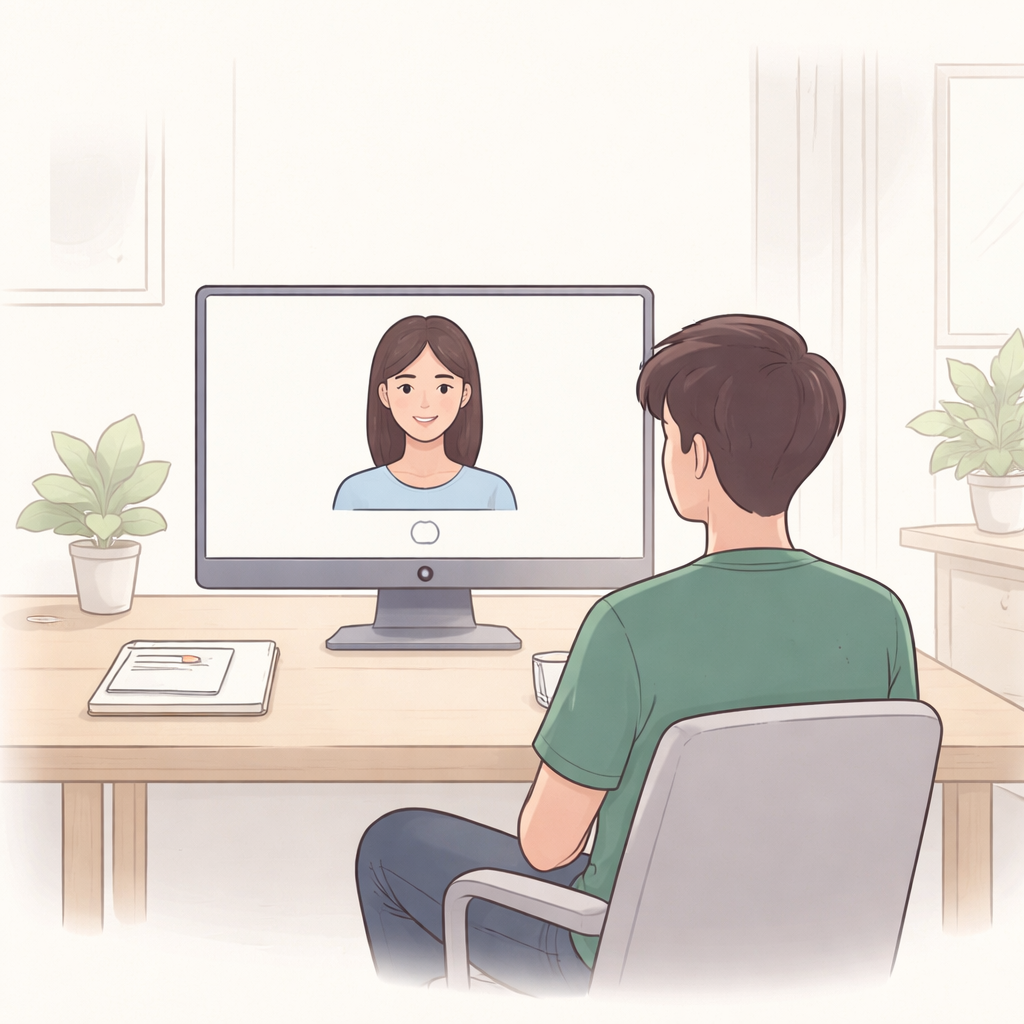
Many people feel their heart race, palms sweat, and thoughts spiral when they have to speak up in a group or meet someone new. For some, this social anxiety is so strong that it interferes with friendships, school, or work. This study tested an unusual idea: could briefly talking back to a computer-generated “avatar” that voices your harsh inner thoughts help ease social anxiety and strengthen self-esteem, all from home?
Social fears and the power of inner talk
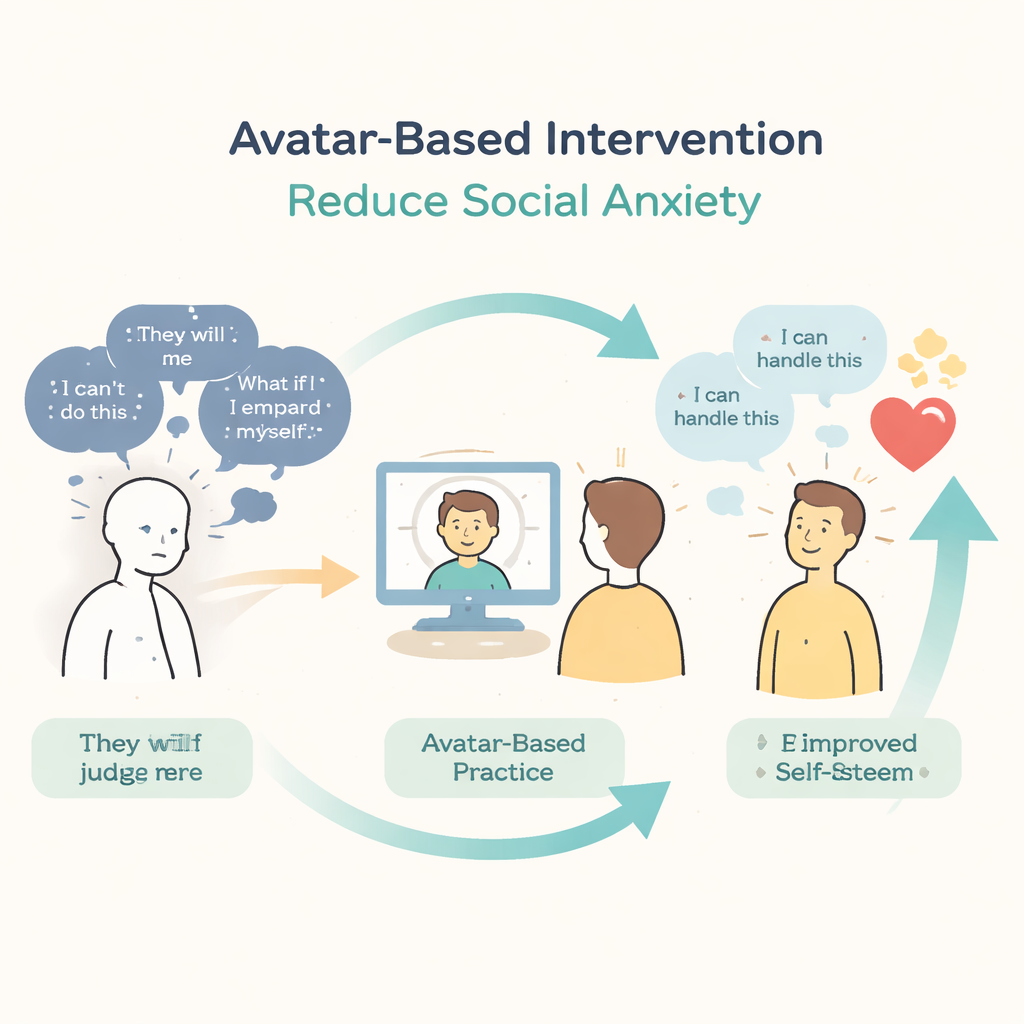
Social anxiety disorder is more than ordinary shyness. People who struggle with it often hold deeply rooted beliefs such as “I will embarrass myself” or “People will think I am stupid.” These thoughts make social situations feel dangerous, push attention inward, and encourage avoidance. Modern cognitive therapy tries to break this cycle by helping people notice, question, and replace such thoughts with more balanced ones. The researchers behind this study wanted to see whether a short, fully online version of this process, delivered by a virtual avatar, could help adults with noticeable but not yet full-blown social anxiety.
A home-based program with a talking avatar
More than 2,000 volunteers were screened, and 235 adults with elevated social anxiety but no current psychotherapy took part in the full experiment. Everyone first received simple digital lessons explaining how unhelpful beliefs fuel anxiety, then wrote down three of their own recurring negative thoughts about social situations, plus healthier alternatives. Participants were randomly assigned to one of two groups. Over three days, both groups completed three short, web-based sessions using a female on-screen avatar that spoke in a calm, neutral voice.
Challenging your own doubts versus random facts
In the main intervention group, the avatar spoke each person’s own negative beliefs, one by one: for example, “People will think I’m boring.” Participants had to immediately talk back out loud with their prepared, more realistic counter-statements. In the control group, the avatar said obviously false trivia such as “Hamburg is the capital of Germany,” and participants corrected these errors instead. Both groups therefore practiced contradicting statements and spent time with the avatar, but only one group directly confronted personal social fears. Questionnaires measuring social anxiety, self-esteem, and typical anxious thoughts were completed before the first session, right after the last one, and again two weeks later.
What changed after three brief sessions
By the two-week follow-up, social anxiety scores had dropped in both groups, but more so in those who argued with their own negative beliefs. On average, their symptoms fell from clearly above the threshold for social anxiety to a noticeably lower level, with a medium-sized improvement. The control group also improved, but to a smaller degree. People who reported bigger boosts in self-esteem tended to show larger reductions in social anxiety, while those whose negative social beliefs actually increased tended to feel more anxious. These links fit long-standing theories that how we see ourselves, and how often we buy into anxious predictions, matter for how distressed we feel in social situations.
Early promise, but not a cure-all
The authors stress that the overall effect of the avatar intervention was modest and the study has limits. The groups differed at the start, many people dropped out, and there was no group that received no intervention at all. Because everyone received general information about thinking patterns and interacted with the avatar, some of the gains may simply come from learning about anxiety or gently facing social fears in a safe, anonymous format. And since self-esteem was not deliberately trained, the study cannot prove that raising self-esteem causes anxiety to fall, only that the two shifted together.
What this means for people who dread social situations
For lay readers, the takeaway is cautiously hopeful: briefly practicing how to stand up to your own harsh inner voice, even when it is spoken by a digital character on your laptop, may help chip away at social anxiety and support a healthier self-view. This is not a replacement for full therapy, especially for people with severe problems, but it suggests that short, remote exercises targeting everyday thinking habits could become a useful addition to other supports. Future work will need to refine these tools, test them in people with more serious symptoms, and figure out which ingredients—exposure to social cues, learning about anxiety, or directly challenging beliefs—matter most for feeling calmer and more confident around others.
Citation: Peperkorn, N.L., Ohse, J., Fox, J. et al. Effects of change in dysfunctional beliefs and self-esteem in avatar-based cognitive therapy for symptoms of social anxiety disorder: a randomized parallel trial. Sci Rep 16, 6144 (2026). https://doi.org/10.1038/s41598-026-39641-x
Keywords: social anxiety, avatar therapy, cognitive restructuring, self-esteem, digital mental health