Clear Sky Science · en
Strategic daytime napping enhances agility and lowers perceived exertion but does not improve fatigue resistance in adolescent soccer players
Why a short daytime sleep can matter on the field
For many young athletes, especially teenage soccer players, afternoon tiredness is a familiar opponent. Between school, training, and games, they often look for quick ways to feel sharper without overhauling their whole routine. This study explored whether a simple, practical habit—taking a short daytime nap—could help adolescent soccer players move more quickly and feel less strained during demanding drills, and whether the length of that nap makes a meaningful difference.
What the researchers wanted to find out
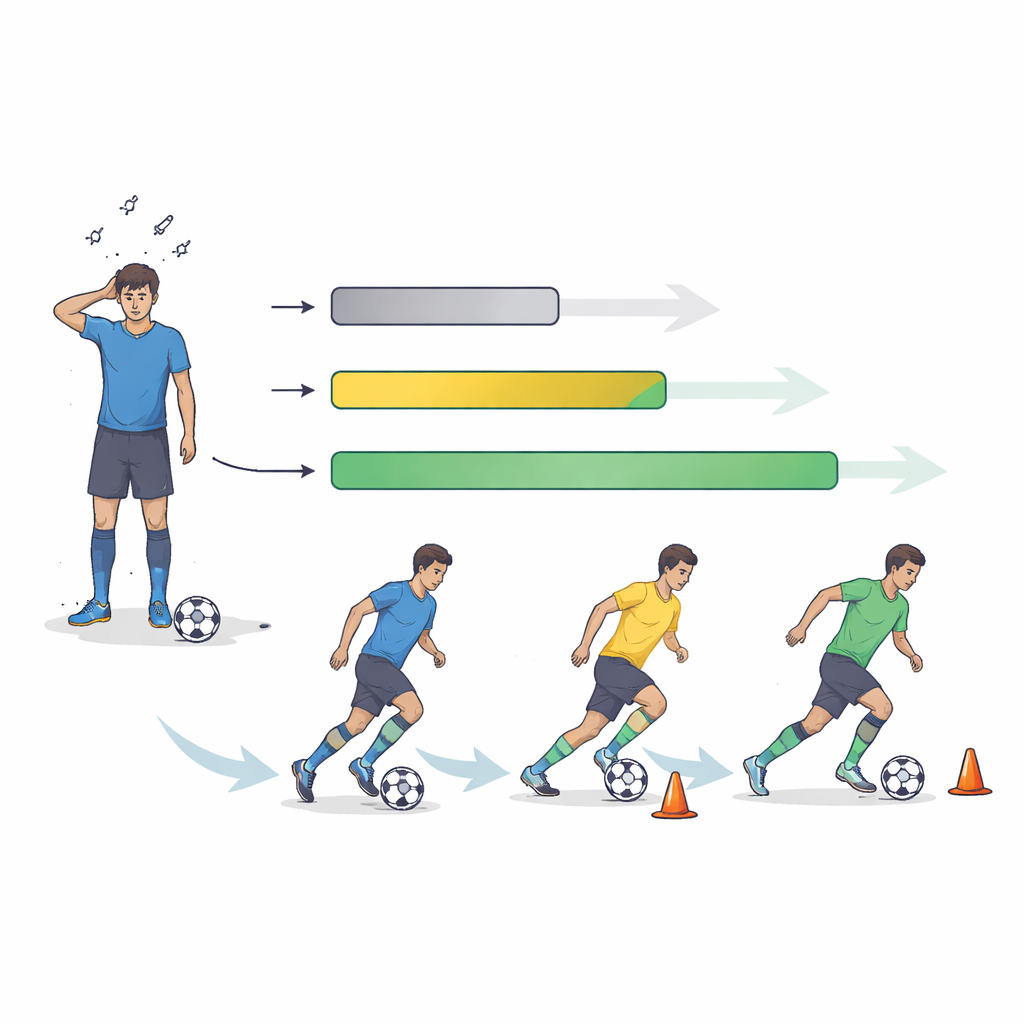
The scientists focused on a key question: does a carefully timed nap improve the kind of fast, stop‑and‑go actions that define modern soccer? They looked at two performance pieces that matter in matches. The first was agility—the ability to sprint, stop, and change direction rapidly. The second was repeated‑sprint ability—how well players can perform several sprints in a row with only brief recovery, a stand‑in for the bursts of speed required throughout a game. Beyond how fast players actually moved, the team also tracked how hard the effort felt, along with basic mood and sleep measures, to see how body and mind responded together.
How the study was set up
Sixteen competitive male soccer players aged 16 to 19 took part. None of them were regular nappers, and all had similar daily body‑clock patterns, which helped keep the group consistent. Each player completed three different afternoon sessions in random order on separate days: one with no nap, one with a 25‑minute nap, and one with a 45‑minute nap. Naps took place in a quiet, dark room during the early afternoon, a natural low point for alertness. A wrist device confirmed who actually slept and for how long. About an hour after waking, the players warmed up and performed a standard agility test followed by a repeated‑sprint test, while also reporting how hard the effort felt and how they were feeling overall.
What happened to speed and effort
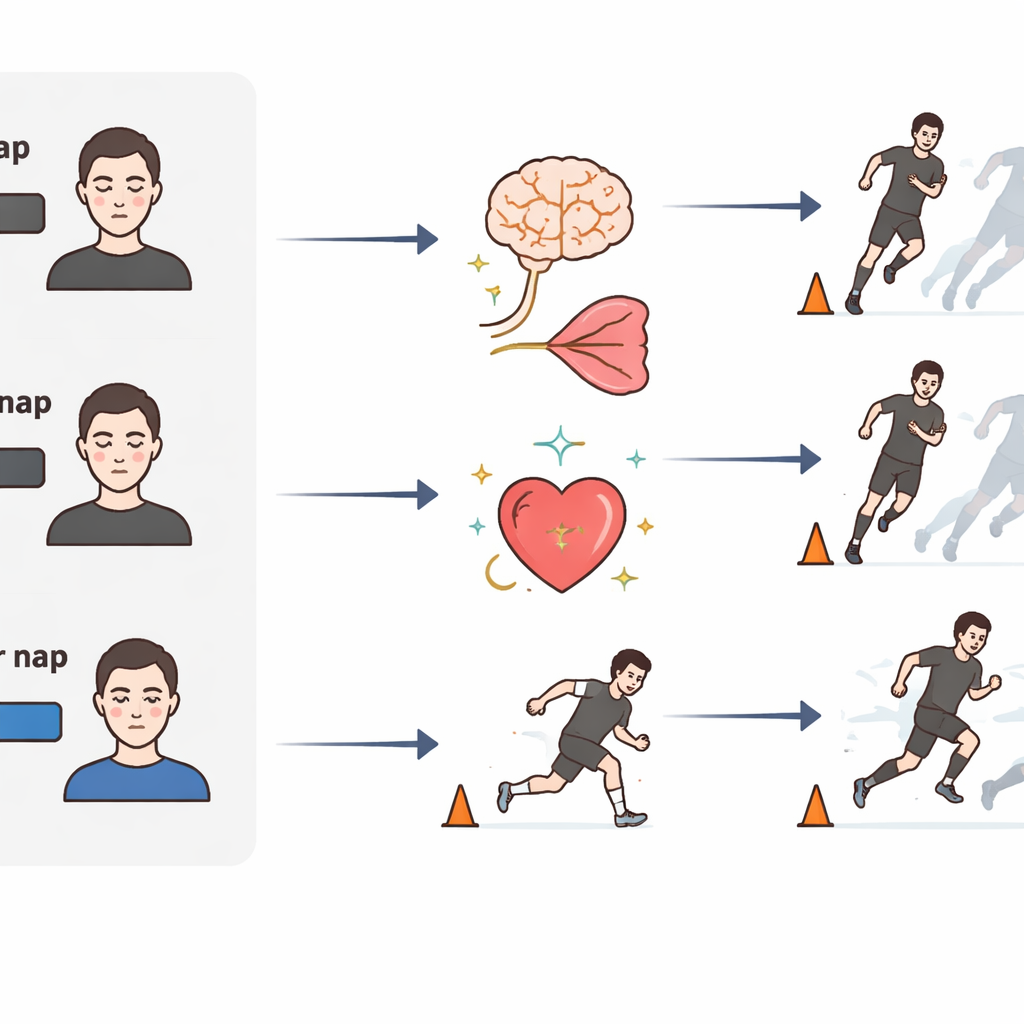
The most striking result was a clear pattern in agility. Players were slowest when they did not nap, faster after the 25‑minute nap, and fastest after the 45‑minute nap. In other words, longer naps led to smoother, quicker changes of direction, suggesting that a bit more daytime sleep sharpened their coordination. Perceived effort told a similar story: after the 45‑minute nap, players said the sprints felt easier, even though the external workload was the same. This hints that napping does not just tune up muscles and nerves—it also changes how hard the work feels from the inside.
What stayed the same and what mood revealed
Repeated‑sprint performance did not shift as much. Overall times across multiple sprints were similar whether players napped or not. There were small signs that a longer nap helped players produce a slightly better single sprint, but it also came with more fatigue building up over the series of sprints. Measures of general recovery and momentary alertness did not move reliably with nap length, suggesting that brief naps may sharpen specific skills more than they change how rested athletes say they feel. Mood scores, however, told an important side story: athletes who reported more fatigue also tended to say the exercise felt harder, while those who felt more energetic reported lower effort, especially after the longer nap. This link between mood and effort underscores that psychological state can color how demanding training feels, even when the drills are identical.
What this means for young players and coaches
For adolescent soccer players, the study suggests that a well‑timed 45‑minute nap in the early afternoon can be a powerful yet simple tool: it improves quick change‑of‑direction moves and makes intense exercise feel less taxing, even if it does not make athletes more resistant to fatigue across many repeated sprints. Coaches and support staff may therefore consider building short and moderate‑length naps into training or pre‑game schedules, while recognizing that a longer nap may trade slightly sharper first efforts for a bit more tiredness over a series of sprints. In everyday terms, a thoughtfully planned nap acts more like a fine‑tuning knob for sharpness and comfort rather than a magic fix for endurance, and its timing and duration should be matched to the specific demands of the upcoming session or match.
Citation: Öncü, M., Eken, Ö. & Aldhahi, M.I. Strategic daytime napping enhances agility and lowers perceived exertion but does not improve fatigue resistance in adolescent soccer players. Sci Rep 16, 7823 (2026). https://doi.org/10.1038/s41598-026-39637-7
Keywords: daytime napping, youth soccer performance, agility training, perceived exertion, sleep and sport