Clear Sky Science · en
Lactobacillus delbrueckii subsp. bulgaricus 2038 and Streptococcus thermophilus 1131 suppress polystyrene nanoplastic transcellular permeability and internalization by intestinal epithelial cells
Why tiny plastics and yogurt bacteria matter
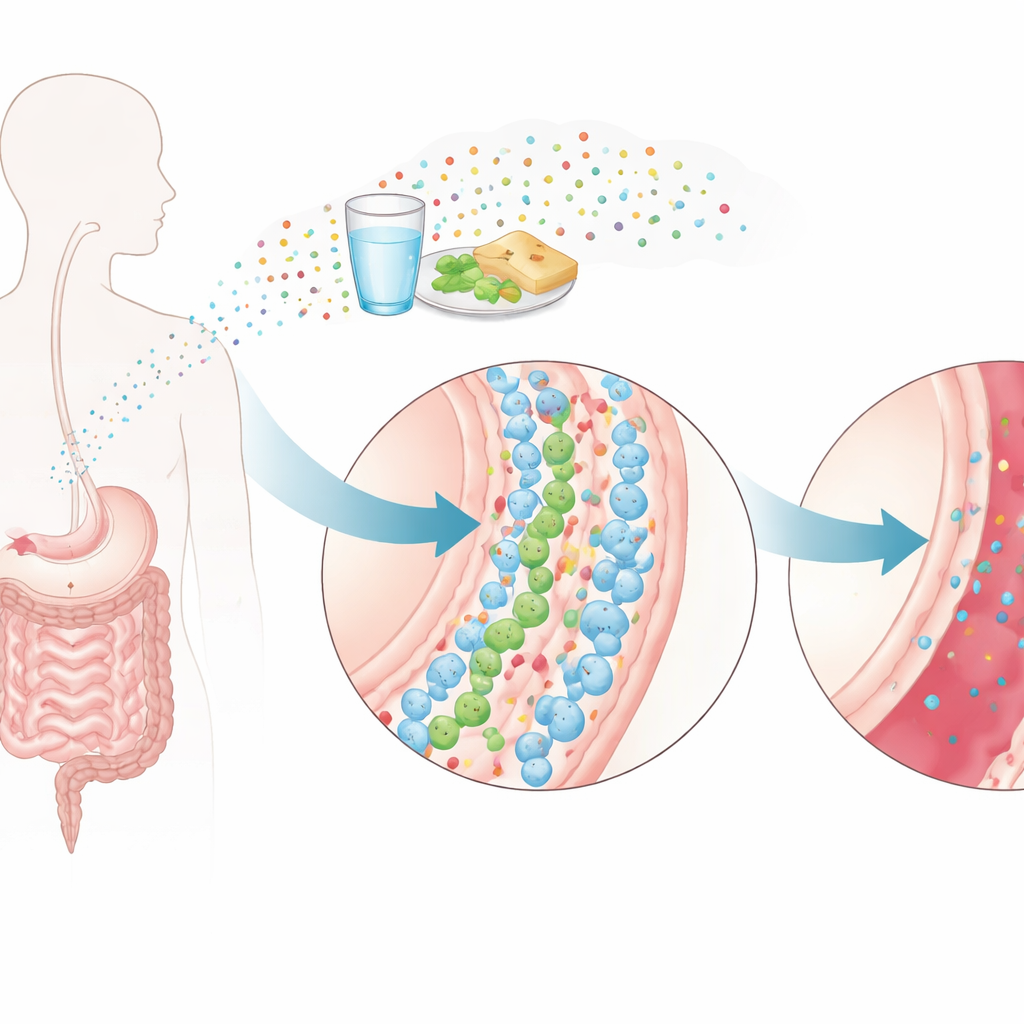
Plastic waste does not simply vanish; over time, it crumbles into particles so small that we can no longer see them. These nanoplastics are now turning up in our food, water and even inside our bodies. Scientists worry that such particles can slip through the gut lining and enter our bloodstream, where they may trigger stress and damage in our cells. This study asks a hopeful question: could common yogurt bacteria help block these invisible intruders from crossing the gut wall and spreading through the body?
Tiny plastic pieces on the move
The researchers focused on polystyrene nanoplastics, a stand‑in for particles that form when everyday items like food packaging and foam containers break down. Earlier work showed that these specks can be swallowed and then taken up by cells lining the small intestine. Once inside, they may disturb cell machinery, weaken the barrier between gut and blood, and travel further into organs. Yet until now, there had been no practical ideas for slowing or stopping this internalization step at the level of the intestinal wall.
Testing a yogurt‑based shield
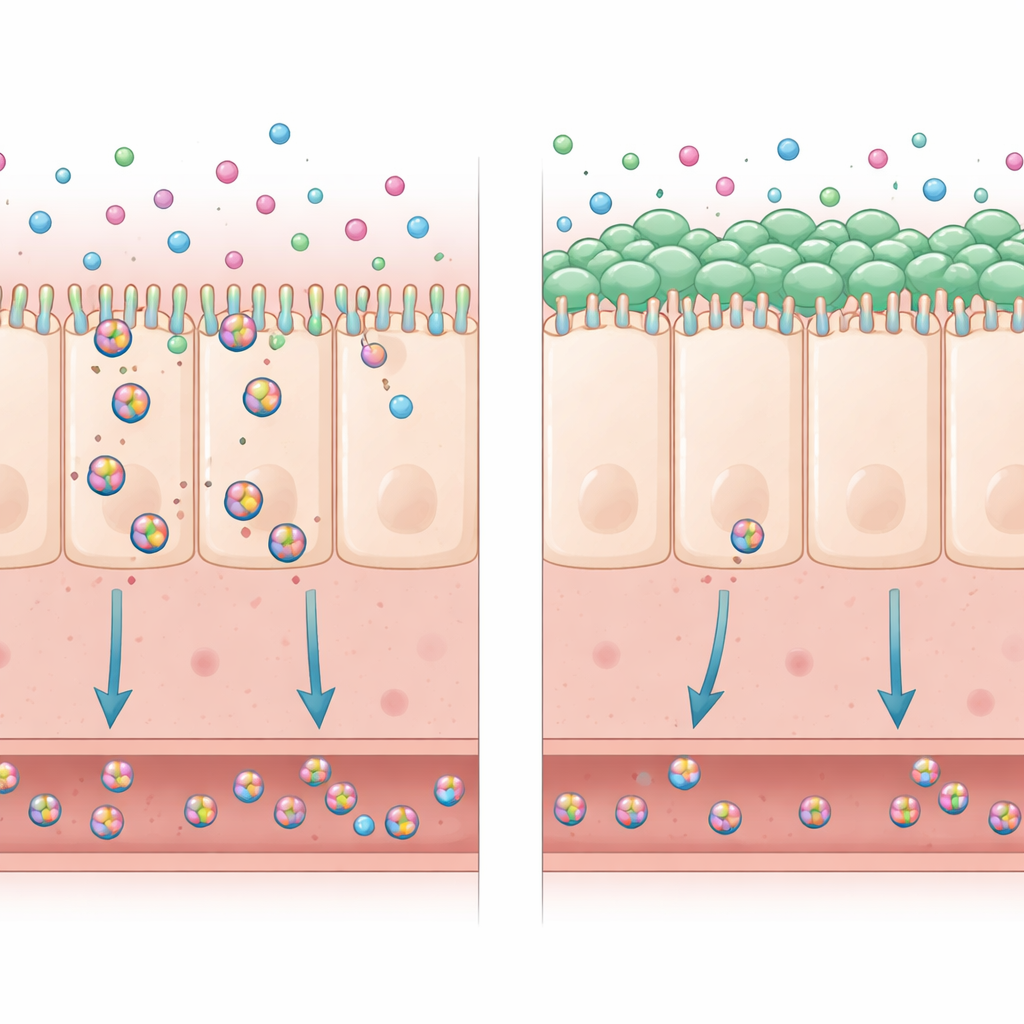
The team studied two strains of lactic acid bacteria widely used to make yogurt: Lactobacillus delbrueckii subsp. bulgaricus 2038 and Streptococcus thermophilus 1131. Using a well‑established lab model of the human small intestine (a sheet of Caco‑2 cells), they exposed the cells to fluorescent polystyrene nanoplastics, either alone or together with these bacteria. By tracking fluorescence with flow cytometry and high‑resolution microscopy, they could measure how many particles entered the cells and how many later emerged on the “blood side” beneath the cell layer. They also tested bacteria that had been heat‑killed to see whether living growth was required.
How the gut cells reacted
Nanoplastics were readily taken up by the intestinal cells, mainly through active uptake pathways in which the cell membrane folds in and pinches off small sacs. When this happened, gene‑activity patterns shifted in ways consistent with oxidative stress and reduced DNA repair capacity. The researchers then asked how the yogurt strains altered this process. Both bacteria—whether alive or heat‑treated—strongly reduced the amount of nanoplastic inside the cells, and they also cut the amount that crossed the cell layer to the far side. Importantly, the bacteria did not clump together with the plastic or simply block it by getting in the way; even when the cells were pre‑treated with bacteria and then washed, the protective effect persisted.
Clues to a protective mechanism
Because the bacteria did not need to be alive, the authors conclude that stable components of their cell walls likely send signals to gut cells that dial down plastic uptake. Previous work with related bacteria suggests that they may act through immune sensors on the cell surface, which then adjust how the cell handles material from the gut. In gene‑activity analyses, nanoplastics alone weakened a key chemical‑processing pathway called glucuronidation, which normally helps intestinal cells handle health‑promoting plant compounds. The yogurt strains partially prevented this drop, hinting that, beyond blocking plastic entry, they may also protect the gut’s ability to process beneficial nutrients.
Why these particular strains stand out
Not all yogurt bacteria behaved the same way. When the team compared several strains from the same two species, every one showed some ability to reduce nanoplastic entry, but the original yogurt starter strains—L. bulgaricus 2038 and S. thermophilus 1131—were the most effective. That suggests a strain‑specific trait that could be selected and optimized, perhaps by screening additional candidates for even stronger protection. The study was done in cultured cells, so it does not yet prove that eating yogurt will block nanoplastics in real people, but it offers a testable strategy for future animal and human trials.
What this could mean for everyday health
In plain terms, the work suggests that certain yogurt bacteria may help line the gut with an invisible shield that makes it harder for nanoplastics to slip into our bodies and travel to sensitive organs. By reducing both the uptake of plastic particles into intestinal cells and their passage beyond the gut wall, these strains could lower the cellular stress and inflammation linked to long‑term plastic exposure. While many questions remain—such as how strong the effect will be in real‑world diets and for other types of plastic—this research points toward a surprisingly simple ally in the battle against microscopic pollution: the microbes in a spoonful of yogurt.
Citation: Kobayashi, K., Ogawa, M., Mochizuki, J. et al. Lactobacillus delbrueckii subsp. bulgaricus 2038 and Streptococcus thermophilus 1131 suppress polystyrene nanoplastic transcellular permeability and internalization by intestinal epithelial cells. Sci Rep 16, 9109 (2026). https://doi.org/10.1038/s41598-026-39631-z
Keywords: nanoplastics, yogurt bacteria, gut barrier, probiotics, plastic pollution