Clear Sky Science · en
Clinical characteristics and risk analysis of lymph node metastasis in patients with cN0 differentiated thyroid carcinoma
Why this matters for people with thyroid nodules
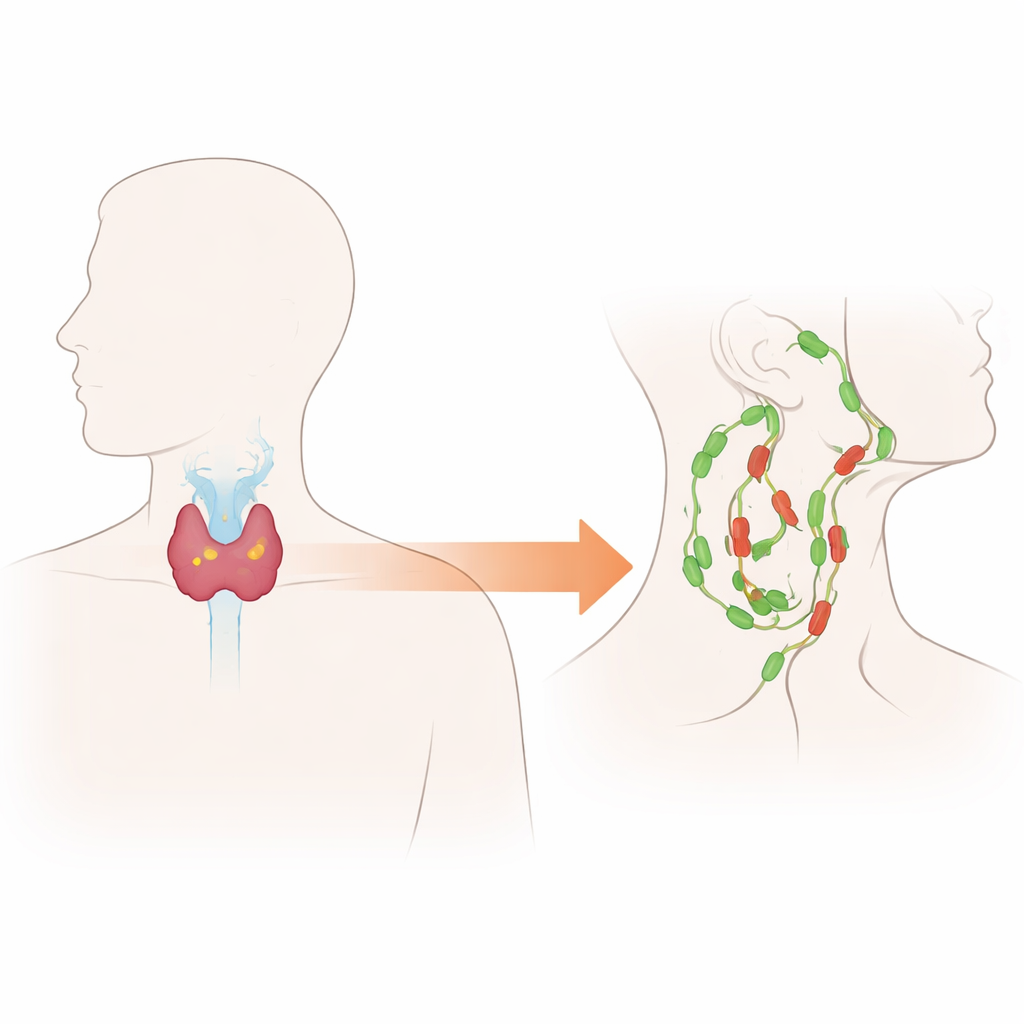
Thyroid cancer is becoming one of the most commonly diagnosed cancers, especially in China, and many patients discover it only after a routine neck ultrasound. A key worry is whether the cancer has already spread to nearby lymph nodes in the neck, which can raise the chance of the disease coming back and may change how extensive surgery needs to be. This study looked closely at which everyday clinical features and simple blood and genetic tests might help doctors predict hidden spread to lymph nodes in patients who, on scans, appear to have no involved nodes.
Who the researchers studied
The team analyzed 232 adults with the most common form of thyroid cancer, called differentiated thyroid carcinoma, whose tumors were between 0.5 and 3 centimeters and who showed no obvious lymph node involvement on preoperative imaging. All were treated by the same surgical team at a large hospital in eastern China and underwent both thyroid surgery and removal of central neck lymph nodes, allowing the doctors to check under the microscope whether the cancer had spread. About half of the patients turned out to have cancer in their lymph nodes, despite appearing “node-negative” beforehand.
Clues from age, sex, scans, and tumor size
When the researchers compared patients with and without lymph node spread, several clear patterns emerged. Younger people and men were more likely to have affected nodes, even though thyroid cancer overall is more common in women. On ultrasound, nodules with higher TI-RADS scores—which reflect more suspicious features—were more often linked to lymph node metastasis. Tumors that were at least one centimeter in diameter were about twice as likely to have spread as smaller cancers, and there was a modest tendency for cancers with multiple foci in the thyroid to show more spread. These simple factors, readily available in routine care, already help flag patients at higher risk.
What blood tests and genes revealed
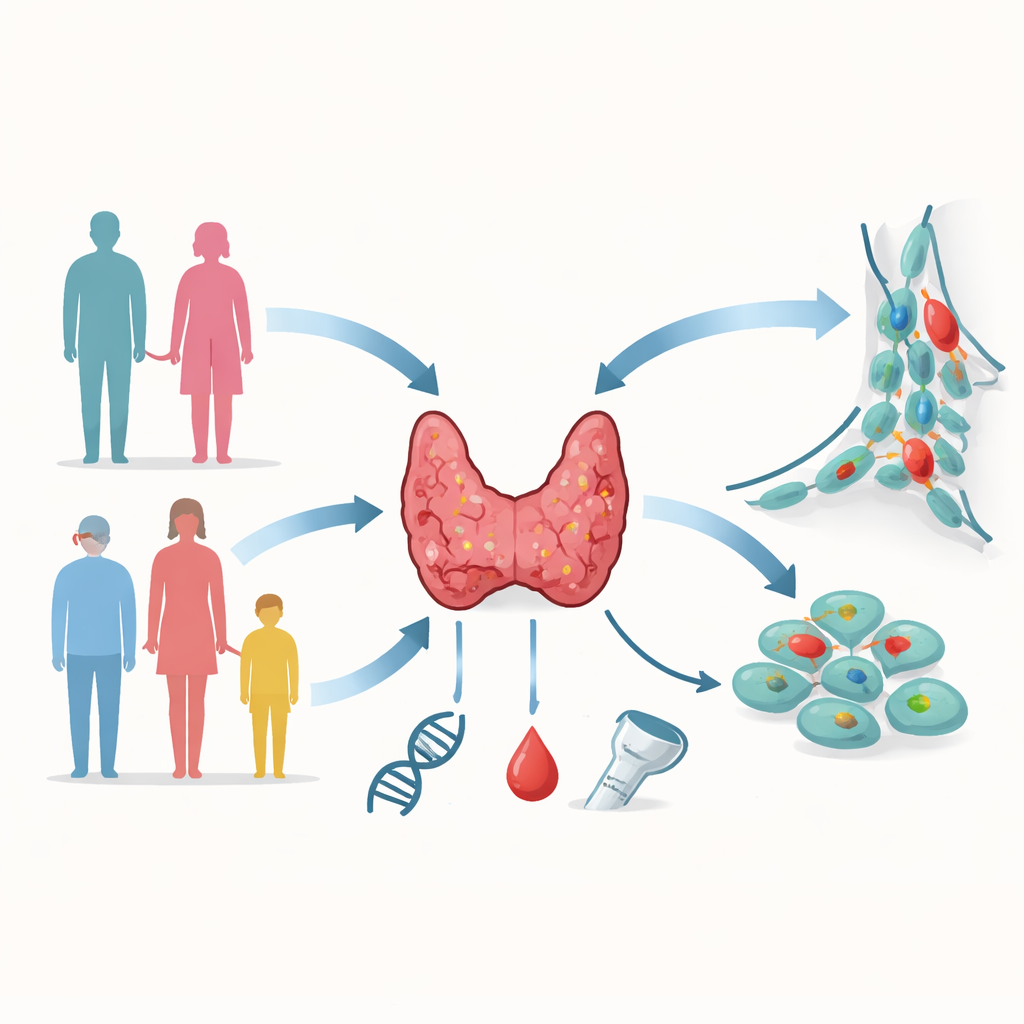
The study also explored standard blood tests and genetic changes in the tumors. Thyroid-stimulating hormone (TSH) levels tended to be higher in patients with lymph node spread, supporting the idea that this hormone may encourage cancer growth. More unexpectedly, patients with spread showed slightly higher prothrombin activity, a measure related to blood clotting, and slightly lower white blood cell counts. Within the group that had lymph node spread, higher body mass index and blood urea nitrogen tracked with higher prothrombin activity, while thyroid hormones T3 and T4 moved in the opposite direction. On the genetic side, common BRAF mutations were not linked to spread, but tumors with RET gene fusions were far more likely to involve lymph nodes, suggesting a more aggressive behavior.
Turning multiple risk clues into a practical tool
To make these findings usable at the bedside, the authors built a visual prediction tool called a nomogram. It combines age, sex, tumor size, and RET gene status into a single score that estimates the chance of lymph node metastasis for an individual patient. When tested on their data, the tool correctly distinguished higher- from lower-risk cases in most instances and offered a reasonable balance between sensitivity and specificity. For example, an older man with a tumor over one centimeter and a RET fusion would receive a high score, indicating a strong likelihood of nodal spread and supporting more extensive lymph node surgery or closer follow-up.
What this means for patients and doctors
For people with small thyroid cancers that appear confined to the gland on imaging, this study shows that not all “quiet-looking” tumors behave the same. Simple features such as being younger or male, having a larger or more suspicious nodule, and carrying a RET fusion can signal a greater chance that cancer cells have already moved into neck lymph nodes. The newly proposed scoring tool, if confirmed in other hospitals, could help personalize care—guiding how far surgeons should go in removing lymph nodes and how closely patients should be monitored—while blood clotting and white cell measures point to new biological links that future research may turn into better treatments.
Citation: Wei, M., Hu, K., Qiu, G. et al. Clinical characteristics and risk analysis of lymph node metastasis in patients with cN0 differentiated thyroid carcinoma. Sci Rep 16, 8792 (2026). https://doi.org/10.1038/s41598-026-39630-0
Keywords: thyroid cancer, lymph node metastasis, ultrasound risk factors, RET gene fusion, prognostic nomogram