Clear Sky Science · en
Evaluating the impact of an educational intervention on reducing work–family conflict through resilience enhancement
Why Balancing Work and Home Matters
For many people, the hardest part of the day is not the job itself, but juggling work demands with the needs of family. This strain is especially intense for nurses, whose long shifts, emotional workload, and night duties can easily spill over into home life. The article summarized here explores whether teaching nurses and their spouses specific coping skills—known together as resilience training—can ease this tug-of-war between hospital and home. Understanding this study matters to anyone who has ever felt that their job is crowding out their family life or peace of mind.
The Hidden Strain on Nurses and Families
Nurses are on the front lines during disasters, epidemics, and everyday medical crises. In Iran, where this study was conducted, frequent natural disasters and the COVID‑19 pandemic placed extraordinary pressure on hospitals and their staff. When work hours are long, shifts unpredictable, and emotions run high, it becomes harder for nurses to be present and patient at home. Researchers describe three types of clashes between work and family life: when time at work leaves too little time at home, when stress and fatigue from the job carry over into family interactions, and when behaviors that fit the workplace—such as being very task‑focused—do not fit as well in intimate relationships. Together, these create a pattern called work–family conflict that can damage health, relationships, and job satisfaction.
Teaching Resilience as a Practical Tool
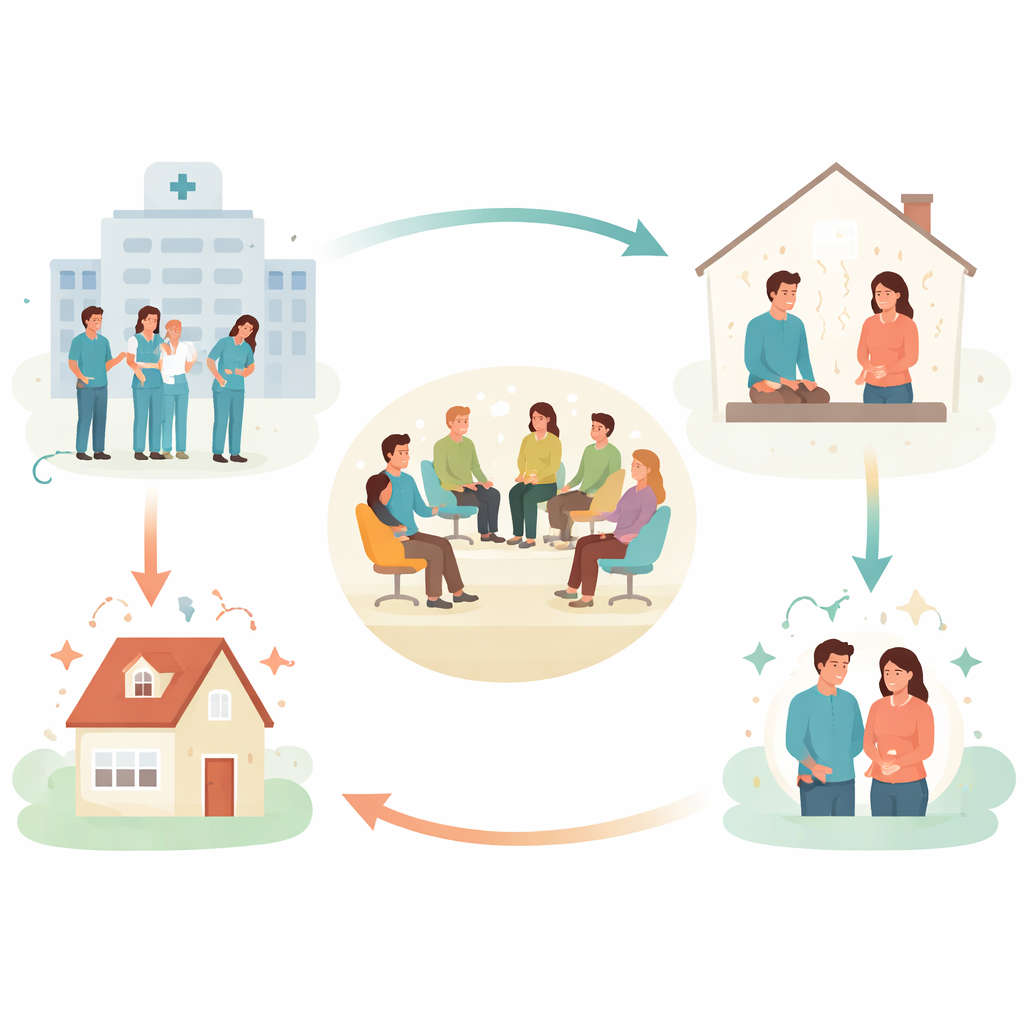
Resilience is the capacity to adapt to difficulties and bounce back from stress. Importantly, the authors treat resilience not as an inborn gift, but as a set of skills that can be taught and strengthened. Drawing on a framework called the Resiliency Wheel, they designed an eight‑week group program for nurses and their spouses at Azarshahr Hospital. Each week, couples attended a one‑hour in‑person session led by a trained psychologist. The sessions covered self‑awareness, setting realistic yet high expectations, forming supportive bonds, communicating clearly, solving problems together, managing emotions, finding meaning in daily life, and applying these tools directly to work–family situations. Couples practiced through discussion, role‑playing real‑life scenarios, and homework exercises meant to bring the lessons into everyday routines.
How the Study Was Carried Out
The researchers recruited 30 married nurses and their spouses, forming 30 couples. These couples were randomly split into two groups: 15 couples received the resilience training, and 15 couples continued life as usual without any training. Both partners in every couple filled out a questionnaire that measured how much work interfered with family life in terms of time pressure, emotional strain, and mismatched behavior. They did this before the program began and again after the eight weeks. To capture how the couple functioned as a unit, the researchers combined the two partners’ scores into a single number for each couple. They then used statistical methods that account for starting differences in age, work experience, and initial stress levels to see whether the training truly made a difference compared with doing nothing.

What Changed After the Training
The results were striking: couples who took part in the resilience program reported clear drops in all three types of work–family conflict. After the training, they felt that work took up less of the time and energy they needed for home, that stress from the hospital bled less into family interactions, and that their behavior shifted more smoothly between workplace expectations and family needs. These improvements were large enough that they were very unlikely to be due to chance. Interestingly, the benefits appeared similar for men and women; gender did not significantly change how well the program worked. This suggests that when both partners are given the same tools and practice opportunities, they may experience similar gains, even if their starting points or social roles differ.
What This Means for Everyday Life
In plain terms, this study shows that structured, skill‑based training can help nurses and their spouses protect family life from the pressures of a demanding job. By learning to understand their stress, communicate better, support each other, and plan together, couples reduced the feeling that work was constantly intruding on home. While the study was relatively small and focused on one hospital, it points toward a practical solution that workplaces and health systems could adopt: making resilience education a normal part of supporting staff. For families living with high‑stress jobs—not just in nursing—programs like this may offer a realistic path toward a more livable balance between earning a living and maintaining close, healthy relationships.
Citation: Amiri, H., Goodarzi, H., Chatrodi, A.Z. et al. Evaluating the impact of an educational intervention on reducing work–family conflict through resilience enhancement. Sci Rep 16, 9052 (2026). https://doi.org/10.1038/s41598-026-39625-x
Keywords: work–family conflict, nursing, resilience training, stress management, couples intervention