Clear Sky Science · en
Integrative bioinformatics and molecular analysis revealed the roles of mTOR/S6K Axis, CASC15, and miR-30a-3p in laryngeal squamous cell carcinoma
Why this throat cancer study matters
Laryngeal squamous cell carcinoma is a common cancer of the voice box that can steal a person’s ability to speak and breathe comfortably. Despite surgery, radiation, and chemotherapy, survival has not improved as much as doctors would like. This study digs into the hidden molecular wiring inside these tumors to find weak points—molecules that help the cancer grow and might serve as new markers for diagnosis or targets for future drugs.
A key growth switch inside cancer cells
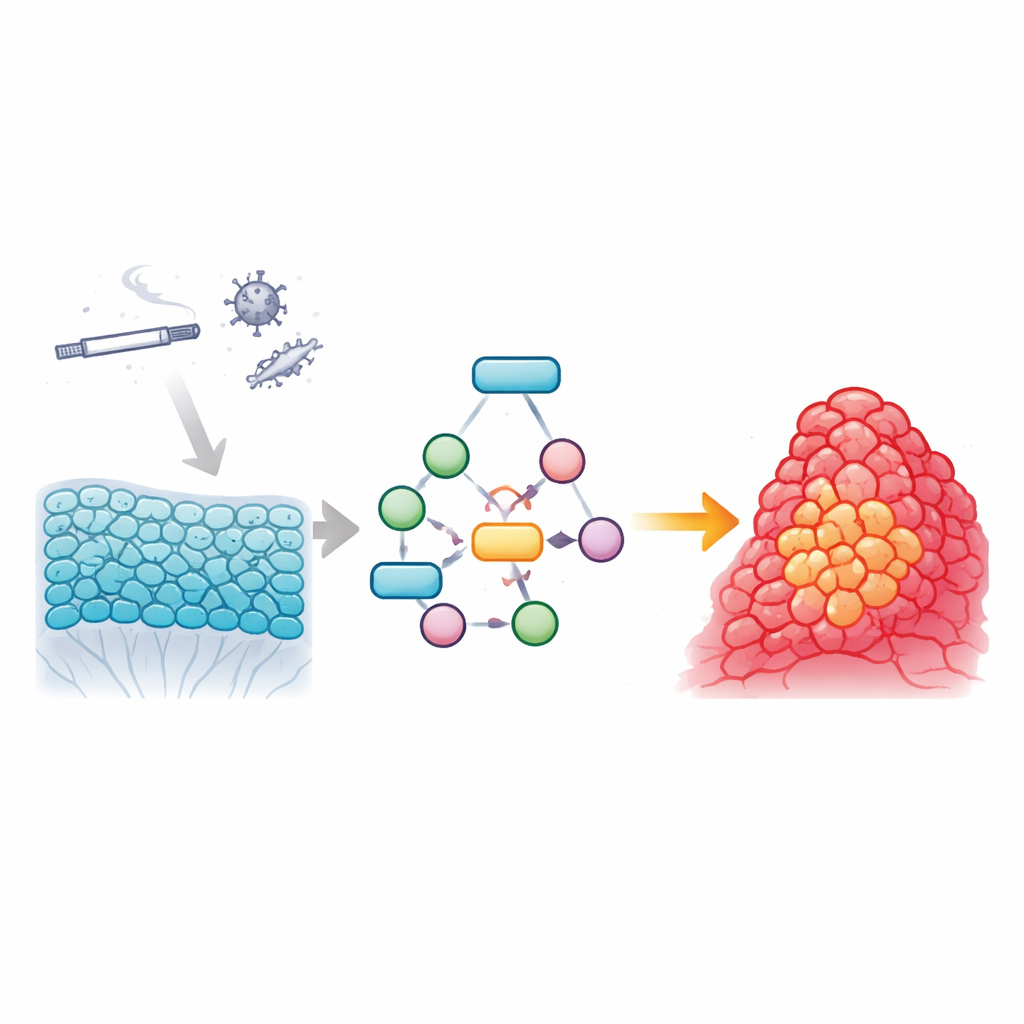
The researchers focused on a central growth-control system in cells known as the mTOR/S6K axis. This system acts like a master switchboard that tells cells when to make new proteins, divide, and survive. Using large public cancer gene databases, they built networks of signaling routes active in laryngeal tumors. Among many cancer-related pathways, the mTOR route stood out as the most strongly connected and active, suggesting it plays a major role in driving this disease.
Mining big data to find influential RNAs
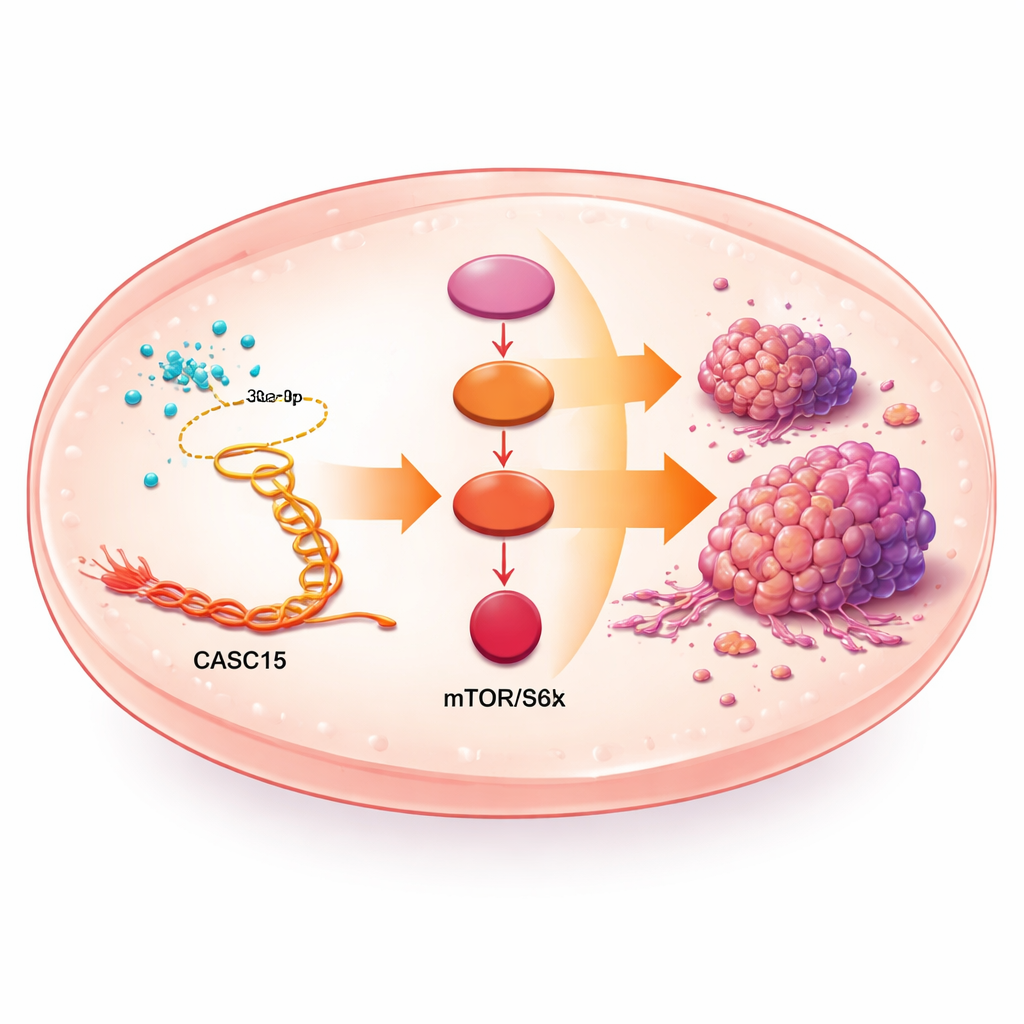
Beyond classic genes, cells are filled with noncoding RNAs—molecules that do not make proteins but regulate how other genes behave. The team combined data from several genomic repositories to search for microRNAs and long noncoding RNAs that might control the mTOR/S6K axis. They identified a small RNA called miR-30a-3p and a long RNA called CASC15 within a regulatory network linked to the mTOR pathway. Computer predictions and network analyses suggested that these RNAs might interact with the growth switch and with each other, potentially acting as brakes or accelerators in tumor cells.
Testing real tumor samples from patients
To move beyond computer models, the scientists analyzed tissue samples from 54 patients with advanced laryngeal cancer, comparing each tumor to nearby noncancerous tissue. They measured both gene activity (RNA levels) and protein levels for mTOR and S6K, and the levels of miR-30a-3p and CASC15. In tumors, mTOR and S6K were clearly increased at both the RNA and protein level, confirming that this growth pathway is switched on. CASC15 was also higher in cancer tissue, whereas miR-30a-3p was sharply reduced, indicating an imbalance between growth-promoting and growth-limiting signals.
How these molecules move together
Statistical analyses revealed telling patterns in how these molecules rise and fall together. miR-30a-3p levels were inversely related to mTOR and S6K—when this small RNA was low, the growth pathway tended to be more active—supporting the idea that miR-30a-3p normally helps keep cell growth in check. In contrast, CASC15 levels moved in the same direction as mTOR and S6K, fitting the profile of a molecule that encourages tumor behavior. The study also found that smokers with laryngeal cancer had higher mTOR and CASC15 levels than nonsmokers, hinting that tobacco exposure may reinforce these dangerous molecular changes.
What this means for future care
Taken together, the findings paint a picture of laryngeal cancer cells in which the mTOR/S6K growth switch is stuck in a high-activity mode, helped along by elevated CASC15 and weakened by the loss of miR-30a-3p. While more laboratory work is needed to prove exactly how these molecules interact, the study suggests that CASC15 behaves like an oncogenic driver and miR-30a-3p like a tumor-suppressive brake. In the long run, measuring these markers could help identify high-risk patients, and therapies that dampen mTOR/S6K signaling or restore healthy RNA balance might offer more precise treatment options for people with cancer of the voice box.
Citation: parvaz, N., Mohammadi, P., Lotfi, M. et al. Integrative bioinformatics and molecular analysis revealed the roles of mTOR/S6K Axis, CASC15, and miR-30a-3p in laryngeal squamous cell carcinoma. Sci Rep 16, 8082 (2026). https://doi.org/10.1038/s41598-026-39618-w
Keywords: laryngeal cancer, mTOR pathway, noncoding RNA, CASC15, miR-30a-3p