Clear Sky Science · en
Uncovering genetic variation in humoral inborn errors of immunity in African populations: insights from the African genome variation database
Why this matters for everyday health
Some people battle lifelong chest infections, sinus trouble, or unusual complications from common viruses, not because of bad luck, but because their immune system is wired a bit differently from birth. This study looks at how that wiring varies in African populations, focusing on the genes that help the body make antibodies. By charting these differences, the researchers hope to improve diagnosis and treatment of hidden immune problems for millions of people who are currently overlooked.
Hidden immune glitches
Doctors use the term “inborn errors of immunity” for rare genetic conditions that weaken the body’s defences. The most common of these involve problems with antibodies—the Y‑shaped proteins that help recognize and neutralize germs. People with such conditions may have frequent infections, autoimmune diseases, or blood cancers, but in many places, especially across Africa, these problems are rarely recognized as inherited immune disorders. Limited access to specialized tests and a heavy burden of infectious disease often mean these patients are treated for infections again and again, while the root cause goes undetected.
Africa’s genetic richness meets a data gap
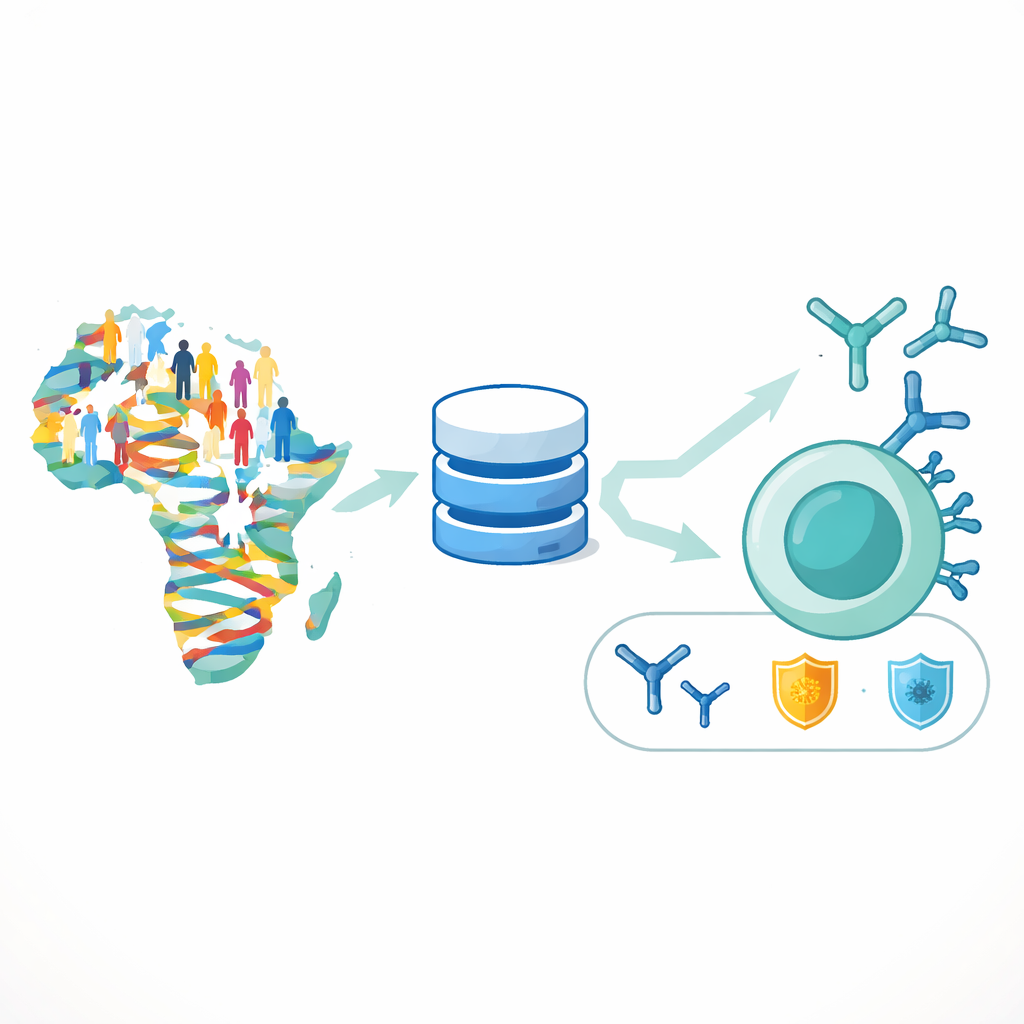
African populations carry more genetic diversity than any other region on Earth, yet most genetic reference data used in medicine comes from European and other non‑African groups. That mismatch can lead to mistakes: a harmless variant in one population may be misclassified as dangerous—or a truly risky change may be missed—if the comparison set is incomplete. To close part of this gap, the researchers turned to the African Genome Variation Database, a resource that compiles genetic information from people across Central, Eastern, Northern, Southern, and Western Africa. They focused on 23 genes strongly linked to antibody‑related immune disorders.
What the gene scan revealed
In these 23 genes, the team found 815 distinct genetic changes. Of these, 335 appeared in people of African ancestry, and 219 were seen only in African populations. Many of the changes altered the structure of the proteins made by these genes, especially in those controlling B cells, the white blood cells that produce antibodies. A handful of variants had already been labelled clearly harmful in international databases and were surprisingly present in people classified as healthy. This suggests that some carriers may have mild or late‑onset symptoms, or that disease appears only when a person inherits two faulty copies or faces certain environmental pressures.
New and possibly important variants
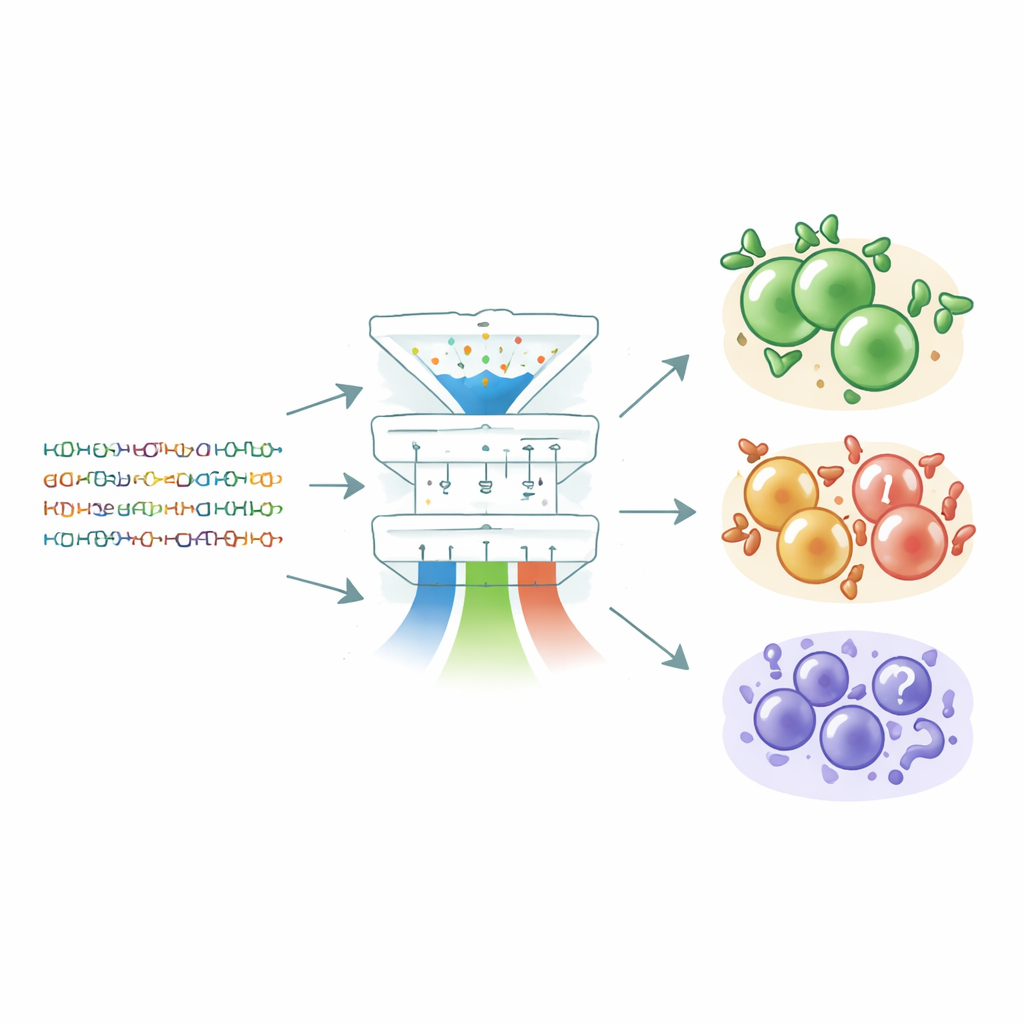
Strikingly, 144 of the African variants had no entry at all in ClinVar, a major catalogue of medically relevant genetic changes. To estimate how serious these might be, the researchers used computer tools that predict whether a change is likely to disrupt protein function. More than a third of these unlisted variants were flagged as potentially damaging. Two of them abruptly cut short proteins in genes called CR2 and CD79A, both central to B‑cell signalling. Some variants predicted to be harmful were surprisingly common, turning up in more than half of the people from certain regions. This pattern hints that what looks harmful in a lab test may sometimes be neutral or even beneficial in real life, possibly influencing how people respond to infections such as Epstein–Barr virus, which is linked to Burkitt lymphoma and is widespread in Africa.
Implications for patients and clinicians
The findings underscore how relying mainly on non‑African genetic data can mislead clinicians when they interpret test results for African patients. Variants that are common and harmless in African groups may be over‑treated, while truly risky changes unique to these populations might be missed or labelled “uncertain.” The authors argue that diagnostic gene panels and interpretation rules need to be tailored to local genetic patterns. They also highlight the need for follow‑up studies that connect specific variants with real‑world symptoms, treatment responses, and infection histories.
What this means going forward
In plain terms, this study shows that African genomes contain many previously under‑appreciated changes in key immune genes, some of which could alter how well people fight infections or respond to vaccines. By mapping this diversity, researchers have taken a crucial step toward fairer, more accurate genetic diagnosis for people of African ancestry. Ultimately, better knowledge of these variants could help doctors recognize immune problems earlier, choose more precise treatments, and understand why some communities bear a heavier burden of certain infections and cancers than others.
Citation: Hlongwa, L., Meintjes, A., Mulder, N. et al. Uncovering genetic variation in humoral inborn errors of immunity in African populations: insights from the African genome variation database. Sci Rep 16, 9148 (2026). https://doi.org/10.1038/s41598-026-39612-2
Keywords: inborn errors of immunity, African genomics, antibody deficiencies, genetic variation, B cell disorders